
Castoroides Facts for Kids
Castoroides was a giant extinct beaver from Ice Age North America. It was not a dinosaur, and it was much larger than modern beavers. Castoroides lived near lakes, wetlands, and waterways, but scientists are cautious about saying it built dams like modern beavers because the evidence is not clear.
Quick Castoroides Facts
- Animal Type: Extinct mammal
- Group: Giant beaver and rodent
- Known For: Huge size, large front teeth, wetland habitats, North American fossils, kits, plant eating, and Ice Age extinction
- Lived During: Pleistocene to early Holocene
- Diet: Aquatic plants, wetland plants, leaves, bark, shrubs, and other vegetation
What You’ll Learn
Explore 10 giant castoroides facts for kids about huge size, giant teeth, swimming, wetlands, and its relationship to modern beavers, with a quiz, glossary, and activity
These easy facts are made for kids, parents, teachers, and curious young learners.
10 Fun Castoroides Facts for Kids
1. Castoroides Was Not a Dinosaur
Castoroides was a giant rodent mammal, not a dinosaur.
Kid Decode: It was Ice Age beaver business, not Jurassic gnawing.
2. It Was a Giant Beaver
Castoroides was related to beavers and could grow far larger than modern beavers.
Kid Decode: Imagine a beaver idea stretched toward bear-sized.
3. It Had Huge Front Teeth
Castoroides had large incisors, the front teeth rodents use for gnawing and feeding.
Kid Decode: Those teeth were the front-door tools of a giant rodent.
4. It Lived in North America
Castoroides fossils are known from North America, including the United States and Canada.
Kid Decode: Ice Age North America had wetlands with jumbo beaver energy.
5. It Liked Wet Habitats
Castoroides likely lived near lakes, ponds, marshes, and slow-moving waterways.
Kid Decode: This was a wetland giant, not a desert digger.
6. It Ate Plants
Castoroides was a herbivore that likely ate aquatic plants and other vegetation.
Kid Decode: Giant body, plant-powered chompers.
7. It May Not Have Built Dams
Modern beavers are famous dam builders, but scientists are not sure Castoroides built dams or lodges the same way.
Kid Decode: Do not hand it a hard hat too quickly. The fossil permit is incomplete.
8. Baby Castoroides Were Kits
Baby beavers are called kits, so baby Castoroides can be called kits too.
Kid Decode: A giant beaver kit still started as a little wetland squeaker.
9. It Lived With Ice Age Giants
Castoroides shared North America with mammoths, mastodons, giant ground sloths, dire wolves, and other Ice Age animals.
Kid Decode: The neighborhood had big teeth, big tusks, and big footprints.
10. It Went Extinct
Castoroides disappeared near the end of the Ice Age as wetlands, climate, and animal communities changed.
Kid Decode: The giant beaver vanished, but its teeth and bones kept gnawing at science questions.
The Weirdest Castoroides Fact
Castoroides was a beaver as big as a bear, but scientists are not sure it built dams like modern beavers.
Try This Castoroides Activity
Castoroides Drawing Activity
Draw Castoroides beside an Ice Age wetland. Add a giant beaver body, huge front teeth, broad tail, kit, pond plants, lily pads, logs, fossil tooth, mammoth silhouette in the distance, and a “giant beaver” label.
Quick Castoroides Quiz
- Was Castoroides a dinosaur? Answer: No, it was an extinct mammal.
- What modern animals was Castoroides related to? Answer: Beavers.
- What kind of animal group are beavers part of? Answer: Rodents.
- What are baby beavers called? Answer: Kits.
- Are scientists sure Castoroides built dams like modern beavers? Answer: No, the evidence is not clear.
Mini Glossary
- Rodent: A mammal group with front teeth that keep growing, including beavers, mice, rats, and squirrels.
- Incisor: A front tooth used for cutting or gnawing.
- Herbivore: An animal that eats plants.
- Kit: A baby beaver.
- Wetland: A habitat with water-soaked ground, such as a marsh, swamp, or pond edge.
 Gaur Facts for Kids
 Emperor Scorpion Facts for Kids
 Water Buffalo Facts for Kids
 Dimetrodon Facts for Kids
More Animal Facts for Kids
Visit the full animal facts library or explore a focused animal group.
More Extinct Animal Facts for Kids
Discover dinosaurs, Ice Age giants, prehistoric sea creatures, recently extinct species, and other animals from the past.
Fact check note: Fact checked with Smithsonian giant beaver resources, Science Museum of Minnesota Castoroides notes, North American Ice Age mammal references, and trusted paleontology education sources.

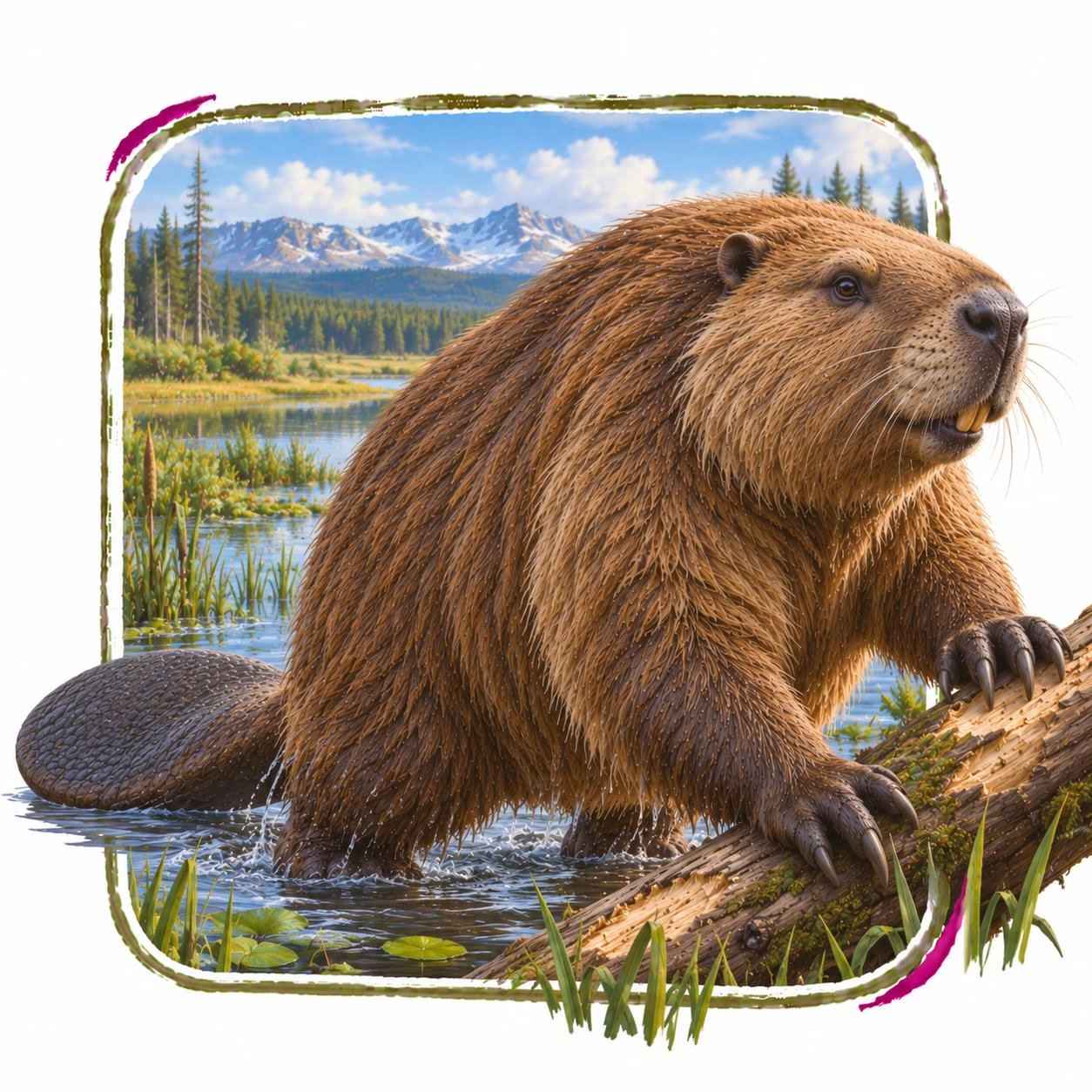
Castoroides in its natural Ice Age wetlands, ponds, lakes, marshes, swamps, rivers, and slow-moving waterways habitat