
Caulkicephalus Facts for Kids
Caulkicephalus was a toothed pterosaur from the Early Cretaceous of the Isle of Wight in England. It was not a dinosaur, but a flying reptile with a long narrow snout, large front teeth, three unusually small tooth positions, and separate crests on its snout and the back of its skull. Scientists named it from partial skull, wing, and other bones found near Yaverland.
Quick Caulkicephalus Facts
- Animal Type: Flying reptile
- Group: Ornithocheirid or anhanguerid pterosaur
- Known For: Three reduced tooth pairs, large fang-like front teeth, two separate skull crests, and Isle of Wight fossils
- Lived During: Early Cretaceous, about 125 million years ago
- Diet: Probably fish and other small animals
What You’ll Learn
Learn 10 crested caulkicephalus facts for kids about its head crest, sharp teeth, wings, fishing, and Cretaceous island life, with a quiz, glossary, and activity
Simple explanations make them fun for children, families, teachers, and young pterosaur fans.
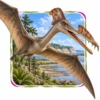
10 Fun Caulkicephalus Facts for Kids
1. Caulkicephalus Was a Pterosaur
Caulkicephalus was a flying reptile rather than a dinosaur, even though it lived alongside dinosaurs.
Kid Decode: It shared dinosaur skies without technically being a dinosaur.
2. It Lived on the Isle of Wight
Its fossils were found near Yaverland on the Isle of Wight, off the southern coast of England.
Kid Decode: This flying reptile became one of the island’s rock-star fossil discoveries.
3. Its Name Means Caulkhead
Caulkicephalus combines Caulkhead, a traditional nickname for Isle of Wight residents, with a Greek word meaning head.
Kid Decode: Its name is a local island nickname wearing a scientific helmet.
4. Three Tooth Pairs Were Tiny
The fifth, sixth, and seventh pairs of tooth sockets were much smaller than the large tooth positions before and after them.
Kid Decode: Its mouth had a curious three-tooth mini-zone tucked between bigger weapons.
5. It Had Large Front Fangs
The front of the snout widened to hold several large, forward-pointing teeth that could help grab slippery prey.
Kid Decode: Those front teeth were built like a fish-catching fence.
6. It Had Two Separate Skull Crests
Fossils show a crest on the snout and another crest on the rear part of the skull, and the two did not join together.
Kid Decode: Two crests, one head, and a gap in the middle: pterosaur architecture got fancy.
7. Its Snout Was Long and Narrow
The preserved front of the skull was long, slim, and slightly upturned, with tooth sockets running along the jaws.
Kid Decode: The snout was a streamlined grabber rather than a chunky crusher.
8. It Probably Ate Fish
Its long jaws and pointed teeth suggest that Caulkicephalus probably caught fish, though its complete menu is not known.
Kid Decode: A fish-shaped snack would have had a hard time slipping past those teeth.
9. Its Fossils Were Incomplete
Scientists know Caulkicephalus from pieces of the snout, braincase, jaw region, wing finger, and possible hind limb.
Kid Decode: Paleontologists rebuilt its story from a scattered pterosaur parts drawer.
10. It May Have Had a Large Wingspan
A later study estimated a wingspan of roughly 5.6 metres, although the incomplete skeleton makes any exact measurement uncertain.
Kid Decode: That wing estimate stretches wider than many family cars are long.
The Weirdest Caulkicephalus Fact
Its species name trimicrodon means three tiny teeth, referring to three reduced tooth positions hidden among much larger fang-like teeth.
Try This Caulkicephalus Activity
Caulkicephalus Drawing Activity
Draw Caulkicephalus flying above an Early Cretaceous Isle of Wight river. Add a long narrow snout, large front fangs, three tiny middle tooth positions, one crest on the snout, another crest behind the head, broad wings, fish below, coastal plants, fossil fragments, and a “Caulkhead” name label.
Quick Caulkicephalus Quiz
- Was Caulkicephalus a dinosaur? Answer: No, it was a pterosaur.
- Where were its fossils found? Answer: The Isle of Wight in England.
- What was unusual about three tooth pairs? Answer: They were much smaller than nearby teeth.
- What did it probably eat? Answer: Fish and other small animals.
- What are baby pterosaurs called after hatching? Answer: Hatchlings.
Mini Glossary
- Pterosaur: A flying reptile from the age of dinosaurs.
- Tooth Socket: A hole in the jaw where a tooth grows.
- Crest: A raised structure on the head or snout.
- Rostrum: The front or snout portion of a skull.
- Wessex Formation: An Early Cretaceous rock formation on the Isle of Wight.
 River Otter Facts for Kids
 Tamarin Facts for Kids
 Gnat Facts for Kids
 Pterodactyl Facts for Kids
More Animal Facts for Kids
Visit the full animal facts library or explore a focused animal group.
More Extinct Animal Facts for Kids
Discover dinosaurs, Ice Age giants, prehistoric sea creatures, recently extinct species, and other animals from the past.
Fact check note: Fact checked with Steel, Martill, Unwin and Winch’s 2005 original description of Caulkicephalus trimicrodon, Wessex Formation research, later wingspan analysis, and trusted pterosaur anatomy references.

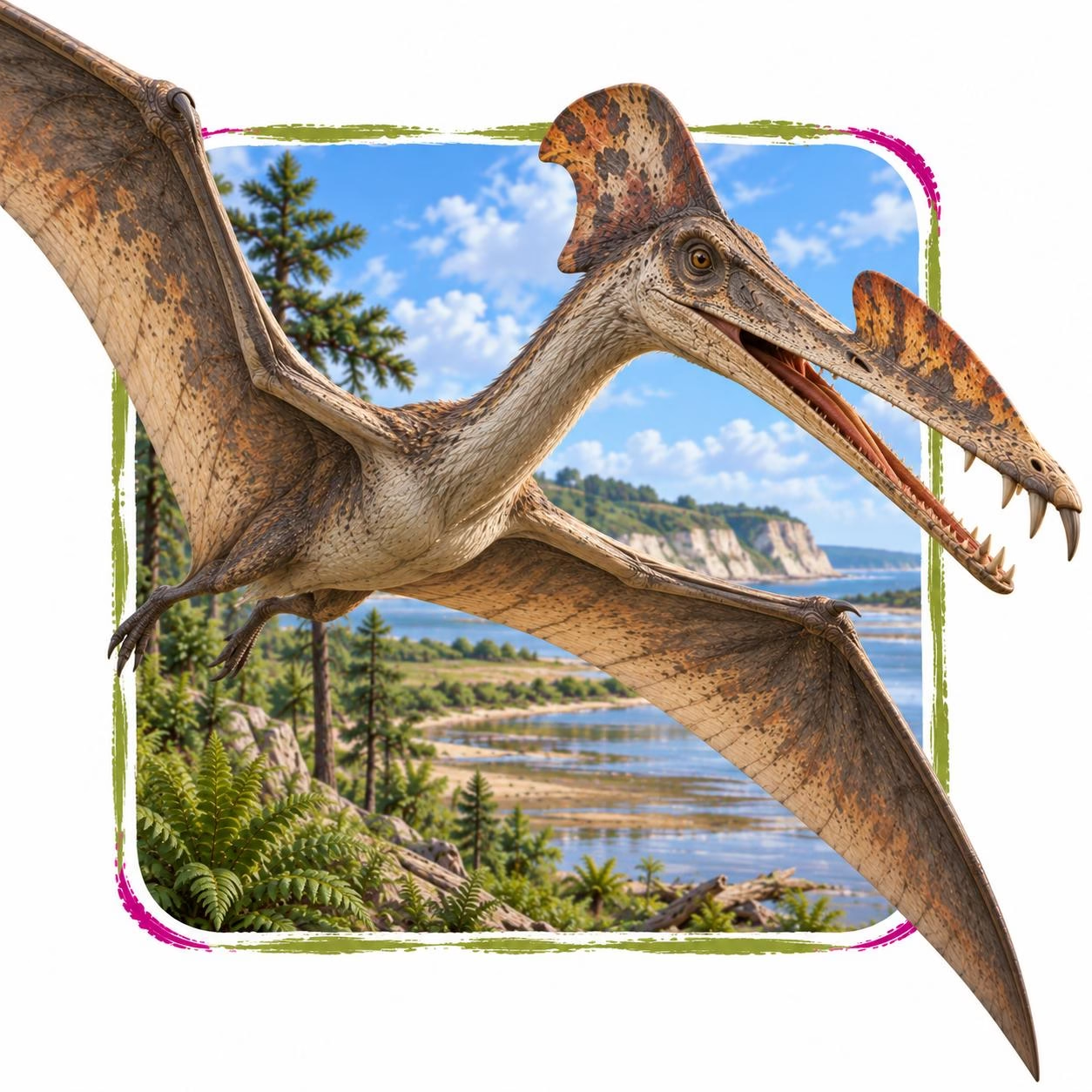
Caulkicephalus in its natural Early Cretaceous floodplains, river channels, coastal lowlands, forested wetlands, lagoons, and plant-rich habitats of the Wessex Formation habitat