
Cave Hyena Facts for Kids
The cave hyena was an extinct Eurasian relative of today’s African spotted hyena. It is often named Crocuta crocuta spelaea as a spotted-hyena subspecies, although some researchers use Crocuta spelaea as a separate species. Cave hyenas lived across much of Europe and Asia during the Pleistocene, hunting and scavenging large mammals on cold steppe, grassland, and open woodland. They used caves and rock shelters as dens, leaving behind bones, teeth marks, droppings, and other clues.
Quick Cave Hyena Facts
- Animal Type: Mammal
- Group: Extinct Crocuta hyena closely related to the spotted hyena
- Known For: Bone-crushing teeth, powerful jaws, cave dens, large prey, and fossil bone piles
- Lived During: Middle and Late Pleistocene
- Diet: Horses, reindeer, bison, rhinoceroses, deer, mammoths, cave bears, carrion, and other available meat
What You’ll Learn
Learn 10 fascinating cave hyena facts for kids about powerful jaws, Ice Age caves, hunting, scavenging, and ancient relatives, with a quiz, glossary, and activity
These easy facts are written for kids, parents, teachers, and curious young animal lovers.
10 Fun Cave Hyena Facts for Kids
1. It Was an Ice Age Spotted-Hyena Relative
Ancient DNA and proteins place cave hyenas close to living spotted hyenas, but Eurasian populations had long and complex histories. Scientists still debate whether European cave hyenas deserve species status or are best treated as a subspecies.
Kid Decode: The family resemblance is clear, but the exact scientific name still rattles around like a loose fossil.
2. The Name Does Not Mean It Lived Underground
Cave hyenas hunted across open landscapes and entered caves mainly to rest, raise cubs, store or eat prey, and shelter. Fossils also occur at open-air sites far from caves.
Kid Decode: The cave was a den and pantry, not a permanent underground kingdom.
3. They Spread Across a Huge Eurasian Range
Different Crocuta lineages occupied areas from western Europe and the British Isles through Central and northern Asia to eastern Asia. Their range shifted as climates, prey communities, and open habitats changed.
Kid Decode: One bone-cracking family once stretched across an enormous ribbon of Ice Age Eurasia.
4. Many Were Large and Powerfully Built
Cave-hyena fossils often show robust skulls, strong forequarters, and heavy limb bones, and some individuals were larger than many living spotted hyenas. Exact body size varied among regions, periods, sexes, and lineages.
Kid Decode: This was no single giant model; it was a sturdy population with plenty of size variation.
5. The Teeth Could Crack Large Bones
Broad premolars, strong jaw muscles, and a reinforced skull allowed Crocuta hyenas to crush limb bones and reach marrow. Sharp carnassial teeth also sliced meat from carcasses.
Kid Decode: The mouth carried both meat scissors and a bone-opening workshop.
6. They Hunted as Well as Scavenged
Like modern spotted hyenas, cave hyenas were capable predators and scavengers. Tooth wear, prey profiles, and den remains indicate that they obtained animals through a mixture of hunting, stealing, and finding carcasses.
Kid Decode: The Ice Age menu came from active hunts, stolen meals, and lucky discoveries.
7. Their Dens Became Fossil Archives
Repeated den use produced heaps of gnawed bones, shed teeth, cub remains, and coprolites. Archaeologists study which body parts were carried in, how bones were broken, and where tooth marks occur to reconstruct hyena behaviour.
Kid Decode: A messy den floor became a stone-age notebook written in teeth, bones, and droppings.
8. They Fed on Impressive Prey
Cave-hyena dens contain remains of horses, bison, reindeer, rhinoceroses, deer, cave bears, and young or scavenged mammoths depending on place and time. A bone in a den does not always prove the hyena killed the animal.
Kid Decode: The pantry could hold giants, but every fossil meal still needs detective work.
9. They Shared Landscapes With Humans
Neanderthals and later modern humans used many of the same caves and hunted some of the same prey. Layers show that people and hyenas often occupied sites at different times, competing for shelter and food across generations.
Kid Decode: The best cave could switch between human camp and hyena den as the centuries turned.
10. Their Disappearance Was Complicated
Cave hyenas vanished from much of Europe during the Late Pleistocene, probably through a combination of climate change, shrinking open habitat, changing prey, and competition with humans and other carnivores. The timing of their final survival differs among datasets and regions.
Kid Decode: Extinction closed the den through several doors rather than one simple trap.
The Weirdest Cave Hyena Fact
Some perforated cave-bear bones once promoted as ancient Neanderthal flutes are better explained as bones punctured and chewed by cave hyenas.
Try This Cave Hyena Activity
Cave Hyena Fossil-Den Drawing Activity
Draw a cave hyena standing outside an Ice Age cave entrance. Add a robust spotted body, sloping back, strong forequarters, powerful jaws, bone-crushing premolars, horses and reindeer on the steppe, cubs inside the den, gnawed bones, tooth marks, coprolites, and separate cave layers showing hyena occupation and a later Neanderthal camp.
Quick Cave Hyena Quiz
- Which living animal was closely related to the cave hyena? Answer: The spotted hyena.
- Did cave hyenas spend all their time inside caves? Answer: No, caves were mainly dens and shelters.
- What did their powerful premolars help them do? Answer: Crush bones and reach marrow.
- What is a fossilised dropping called? Answer: A coprolite.
- Which humans shared some caves and prey landscapes with cave hyenas? Answer: Neanderthals and later modern humans.
Mini Glossary
- Pleistocene: The geological epoch containing repeated Ice Ages before the current Holocene.
- Carnassial: A blade-like cheek tooth used to slice meat.
- Coprolite: Fossilised animal dung.
- Taphonomy: The study of what happens to remains from death until discovery.
- Subspecies: A distinct population within a species; spelling and rank can vary among taxonomic treatments.
 Bighorn Sheep Facts for Kids
 Lyrebird Facts for Kids
 Okapi Facts for Kids
 Fukuisaurus Facts for Kids
More Animal Facts for Kids
Visit the full animal facts library or explore a focused animal group.
More Extinct Animal Facts for Kids
Discover dinosaurs, Ice Age giants, prehistoric sea creatures, recently extinct species, and other animals from the past.
Fact check note: Fact checked with Westbury and colleagues’ 2020 cave-hyena paleogenomes, Hu and colleagues’ 2021 ancient mitochondrial genomes, palaeoproteomic research on Pleistocene Crocuta, zooarchaeological studies of cave-hyena dens and bone accumulations, and recent sedimentary-DNA evidence concerning late European persistence.

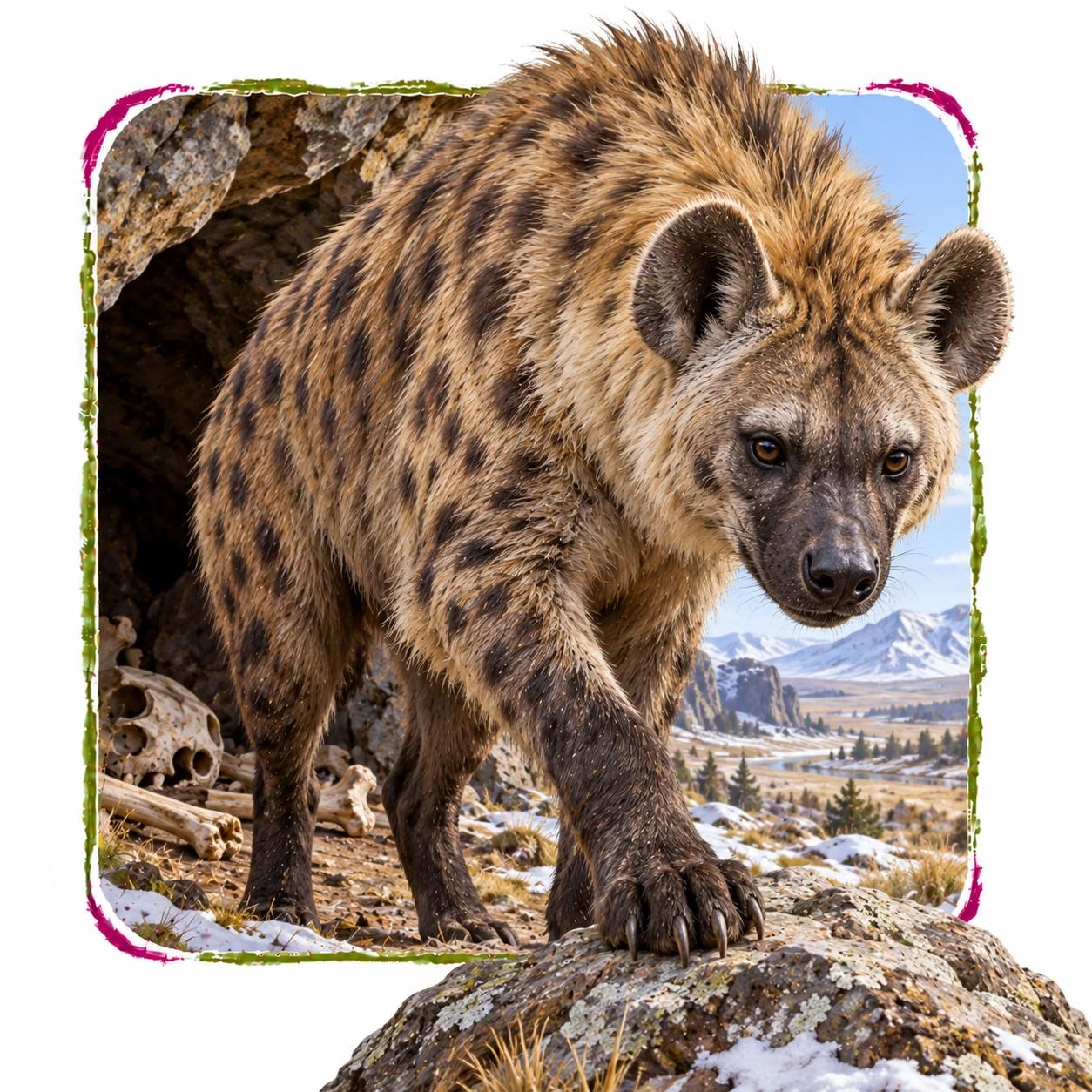
Cave Hyena in its natural Cold steppe, grasslands, open woodland, river valleys, karst landscapes, cave entrances, and rock shelters used as dens across Pleistocene Eurasia habitat