
Columbian Mammoth Facts for Kids
The Columbian mammoth, Mammuthus columbi, was one of the largest elephants ever to roam North America. It appeared during the Middle Pleistocene and spread across much of the continent, from the United States and Mexico into parts of Central America. Large adults stood roughly 3.7 to 4.3 metres at the shoulder and weighed around eight to nine tonnes. Ancient DNA has revealed an unexpected hybrid origin involving two older mammoth lineages.
Quick Columbian Mammoth Facts
- Animal Type: Mammal
- Group: Mammoth in the elephant family, Elephantidae
- Known For: Enormous size, long curved tusks, ridged molars, hybrid ancestry, and North American fossil herds
- Lived During: Middle and Late Pleistocene until near the end of the last Ice Age
- Diet: Grasses, sedges, leaves, twigs, flowers, bark, and shrubs
What You’ll Learn
Learn 10 incredible columbian mammoth facts for kids about giant tusks, huge bodies, grass diets, North American habitats, and Ice Age life, plus a quiz, glossary, and activity
Clear explanations make them ideal for children, families, teachers, and young fact-hunters.
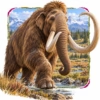
10 Fun Columbian Mammoth Facts for Kids
1. Columbian Is Spelled With a U
The species name honours Christopher Columbus and is spelled Columbian mammoth. It is not named after the modern country Colombia, whose name uses an o in the middle.
Kid Decode: One letter separates an Ice Age giant from a modern South American country.
2. It Towered Above Most Living Elephants
Large adults commonly reached about 3.7 to 4.3 metres at the shoulder and weighed roughly 8,000 to 9,000 kilograms, with some estimates reaching higher. Males were generally larger than females.
Kid Decode: A tall adult could look into a second-storey window without lifting its trunk.
3. Its Ancestry Began With Ancient Hybridisation
Genome research indicates that Columbian mammoths arose after two deeply separated mammoth lineages hybridised during the Middle Pleistocene, contributing roughly equal shares of ancestry.
Kid Decode: The species began when two ancient mammoth family trees braided back into one enormous branch.
4. Later Mammoths Continued to Interbreed
Columbian and woolly mammoths met in northern North America and exchanged genes. Some fossils called Jefferson’s mammoths may represent populations or individuals with mixed ancestry rather than a perfectly separate species.
Kid Decode: The northern border was a genetic meeting place, not a locked line on the map.
5. Its Range Reached Far South
Fossils occur across much of the contiguous United States and Mexico and may extend as far south as Costa Rica. Columbian mammoths generally occupied warmer and more open country than classic woolly mammoths.
Kid Decode: This mammoth crossed North America from cool plains to landscapes close to the tropics.
6. No Frozen Mummy Shows the Exact Coat
Scientists have not found a complete frozen Columbian-mammoth body, so fur thickness, skin colour, and several soft-tissue details remain uncertain. It likely carried less dense insulation than a woolly mammoth but was not necessarily naked.
Kid Decode: The skeleton is clear, but the Ice Age wardrobe remains partly missing from the fossil closet.
7. Tusks Grew Throughout Life
Both males and females grew long upper-incisor tusks that curved forward and inward. Tusks could dig, strip bark, move objects, display age and strength, or clash during competition.
Kid Decode: Each tusk was a giant tooth that never stopped adding new ivory at its base.
8. Ridged Molars Processed Tough Plants
Large plate-like molars moved forward through the jaw as older teeth wore out. Their enamel ridges crushed grasses and other vegetation, and tooth wear helps scientists estimate age.
Kid Decode: The mouth replaced worn plant grinders on a slow-moving dental conveyor belt.
9. Dung and Herd Fossils Reveal Daily Life
Dried dung from Bechan Cave contains mostly grasses, while the Waco site preserves a nursery herd of adult females and young. These finds support a varied herbivorous diet and elephant-like family organisation.
Kid Decode: One cave saved the menu while one Texas flood saved a tragic family portrait.
10. Humans Met the Last Columbian Mammoths
People in North America encountered mammoths and sometimes hunted or butchered them, as shown at several archaeological sites. Climate change, habitat shifts, human pressure, and small populations may all have contributed to extinction near the Pleistocene’s end.
Kid Decode: The final chapter joined changing landscapes with a new two-legged predator carrying stone points.
The Weirdest Columbian Mammoth Fact
Ancient DNA shows that the Columbian mammoth itself originated through hybridisation between two mammoth lineages that had already been separated for a very long time.
Try This Columbian Mammoth Activity
Columbian Mammoth Size-and-Herd Drawing Activity
Draw a Columbian mammoth herd on a North American grassland beside wetlands. Add a 4-metre scale marker, a huge adult male, a female-led nursery herd with calves, long curved tusks on both sexes, a trunk gathering grass, a cutaway ridged molar, dung containing plant fragments, fossil footprints, and a small ancestry diagram showing two mammoth lineages combining.
Quick Columbian Mammoth Quiz
- How is Columbian mammoth spelled? Answer: With a u, not like Colombia.
- How tall could a large adult stand at the shoulder? Answer: Roughly 3.7 to 4.3 metres.
- What surprising event helped create the species? Answer: Hybridisation between two ancient mammoth lineages.
- What did its ridged molars process? Answer: Grasses and other plants.
- Which fossil site preserves a nursery herd? Answer: Waco Mammoth National Monument in Texas.
Mini Glossary
- Proboscidean: A member of the order containing elephants, mammoths, mastodons, and their relatives.
- Hybridisation: Reproduction and gene mixing between different species or distinct lineages.
- Molar: A large back tooth used to crush or grind food.
- Matriarchal Herd: A family group led by an experienced adult female.
- Pleistocene: The geological epoch containing repeated Ice Ages before the Holocene.

 Sturgeon Facts for Kids
 Arctic Hare Facts for Kids
 Sugar Glider Facts for Kids
 Prionosuchus Facts for Kids
More Animal Facts for Kids
Visit the full animal facts library or explore a focused animal group.
More Extinct Animal Facts for Kids
Discover dinosaurs, Ice Age giants, prehistoric sea creatures, recently extinct species, and other animals from the past.
Fact check note: Fact checked with the U.S. National Park Service’s updated Waco, Tule Springs, White Sands, and fossil-resource accounts; van der Valk and colleagues’ ancient-genome study of mammoth ancestry; and research on North American mammoth hybridisation, diet, tracks, herd structure, archaeology, and extinction.

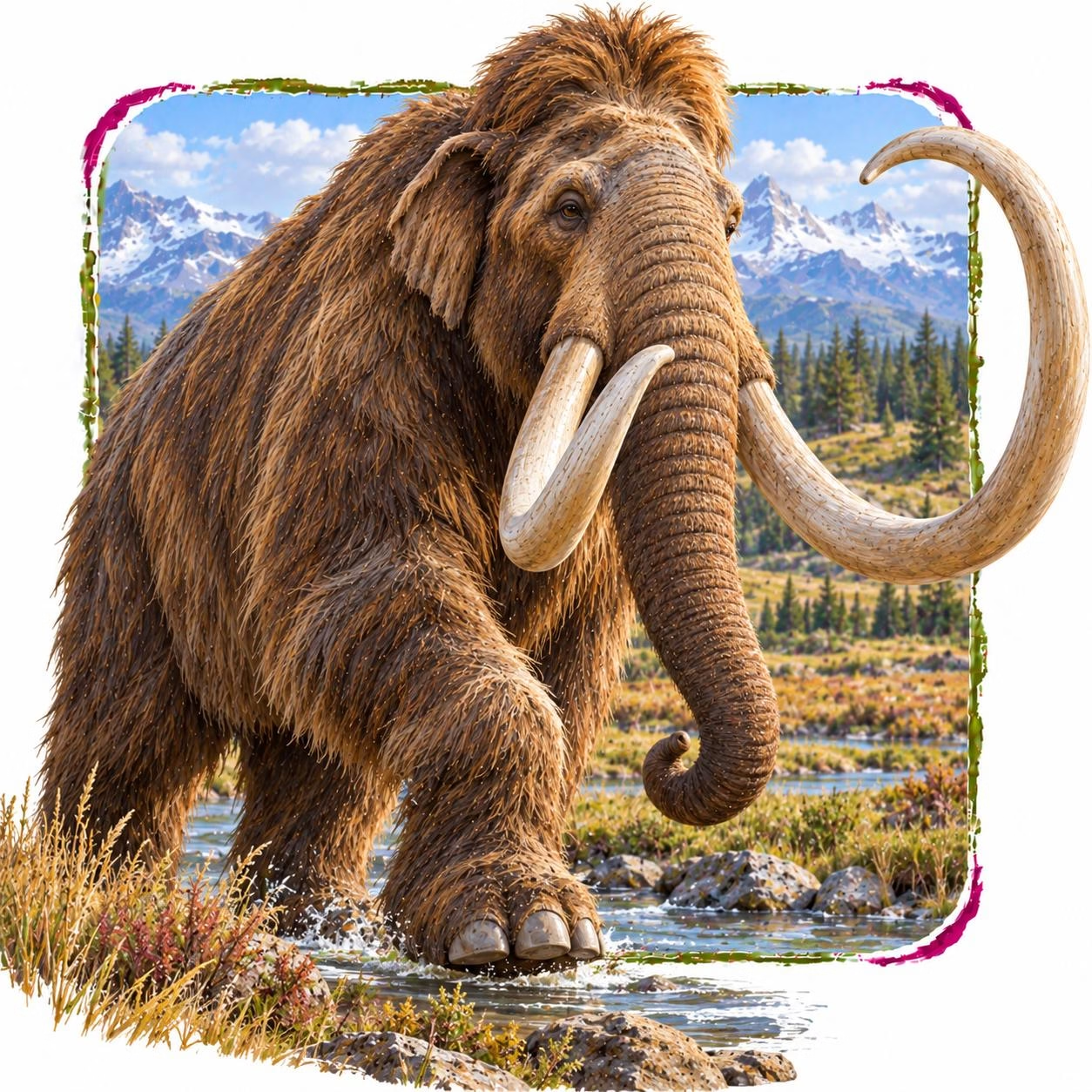
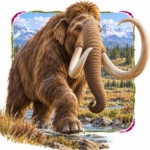
Columbian Mammoth in its natural Grasslands, savannas, open woodland, aspen parkland, river valleys, wetlands, spring-fed meadows, and other productive habitats across Pleistocene North America habitat