
Cuban Macaw Facts for Kids
The Cuban Macaw was a colorful extinct parrot from Cuba and nearby Isla de la Juventud. It was not a dinosaur and not the same as the Scarlet Macaw, though it looked similar. This red, blue, and yellow macaw lived in Caribbean forests and disappeared in the late 1800s after hunting, trapping, and habitat loss.
Quick Cuban Macaw Facts
- Animal Type: Recently extinct bird
- Group: Macaw and parrot
- Known For: Red body, blue wings, yellow markings, Cuba and Isla de la Juventud range, chicks, palm-seed diet, pet trade, and late 1800s extinction
- Lived During: Holocene, until the late 1800s
- Diet: Fruits, palm seeds, nuts, shoots, and other hard plant foods
What You’ll Learn
Explore 10 colorful cuban macaw facts for kids about bright feathers, island forests, strong beaks, diet, and extinction, plus a quiz, glossary, and activity
Simple explanations make them great for kids, families, teachers, and young bird fans.
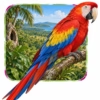
10 Fun Cuban Macaw Facts for Kids
1. Cuban Macaws Were Birds
Cuban Macaws were parrots, not dinosaurs, mammals, or imaginary rainbow pets.
Kid Decode: Real parrot, real island, real extinction gut-punch.
2. They Lived in Cuba
Cuban Macaws lived on the main island of Cuba and nearby Isla de la Juventud.
Kid Decode: One Caribbean corner held the whole red macaw story.
3. They Were Colorful
Cuban Macaws had red feathers, blue wing and tail feathers, and yellowish markings.
Kid Decode: This bird looked like a sunset learned to squawk.
4. They Were Macaws
Cuban Macaws belonged to the macaw group, large parrots with strong curved beaks and long tails.
Kid Decode: Big beak, long tail, loud personality, classic macaw toolkit.
5. They Ate Hard Seeds
Scientists think Cuban Macaws ate fruits, palm seeds, nuts, shoots, and other tough plant foods.
Kid Decode: That strong beak was basically a seed-cracking gadget with feathers.
6. They May Have Nested in Tree Holes
Like many parrots, Cuban Macaws likely used tree hollows for nesting, though details are not well known.
Kid Decode: No tree holes, fewer safe parrot nurseries.
7. Baby Cuban Macaws Were Chicks
Baby Cuban Macaws can be called chicks, like baby parrots and other birds today.
Kid Decode: A chick would have started hidden in a nest before becoming a bright forest flyer.
8. People Trapped Them
People captured Cuban Macaws for pets and collections, and some young birds were taken from nests.
Kid Decode: Being beautiful made this bird dangerously popular.
9. Hunting and Habitat Loss Hurt Them
Hunting, trapping, forest clearing, and possibly storms helped drive the Cuban Macaw to extinction.
Kid Decode: Too many pressures clipped the whole species from the sky.
10. They Vanished in the Late 1800s
The Cuban Macaw was gone by the late nineteenth century, with last reports often placed around 1885.
Kid Decode: The Caribbean kept its colors, but lost one blazing parrot.
The Weirdest Cuban Macaw Fact
The Cuban Macaw is one of the few extinct Caribbean macaws known from preserved skins, making it better known than many vanished island parrots.
Try This Cuban Macaw Activity
Cuban Macaw Drawing Activity
Draw a Cuban Macaw in a Caribbean forest. Add red feathers, blue wings, yellow markings, strong curved beak, chick, palm seeds, fruit, tree hollow nest, island map clue, and a “lost Cuban parrot” label.
Quick Cuban Macaw Quiz
- Was the Cuban Macaw a dinosaur? Answer: No, it was a bird and parrot.
- Where did Cuban Macaws live? Answer: Cuba and Isla de la Juventud.
- What colors were they famous for? Answer: Red, blue, and yellowish markings.
- What are baby macaws called? Answer: Chicks.
- What helped cause their extinction? Answer: Hunting, trapping, pet trade, and habitat loss.
Mini Glossary
- Macaw: A large parrot with a strong curved beak and long tail.
- Parrot: A bird group known for curved beaks, strong feet, and often bright feathers.
- Tree Hollow: A hole inside a tree that some birds use for nesting.
- Chick: A baby bird.
- Pet Trade: Capturing or selling animals to be kept as pets.
 Mako Shark Facts for Kids
 Glass Lizard Facts for Kids
 Tiger Shark Facts for Kids
 Tanystropheus Facts for Kids
More Animal Facts for Kids
Visit the full animal facts library or explore a focused animal group.
More Extinct Animal Facts for Kids
Discover dinosaurs, Ice Age giants, prehistoric sea creatures, recently extinct species, and other animals from the past.
Fact check note: Fact checked with BirdLife Cuban Macaw factsheet, West Indian macaw research, museum specimen notes, and trusted parrot extinction education sources.

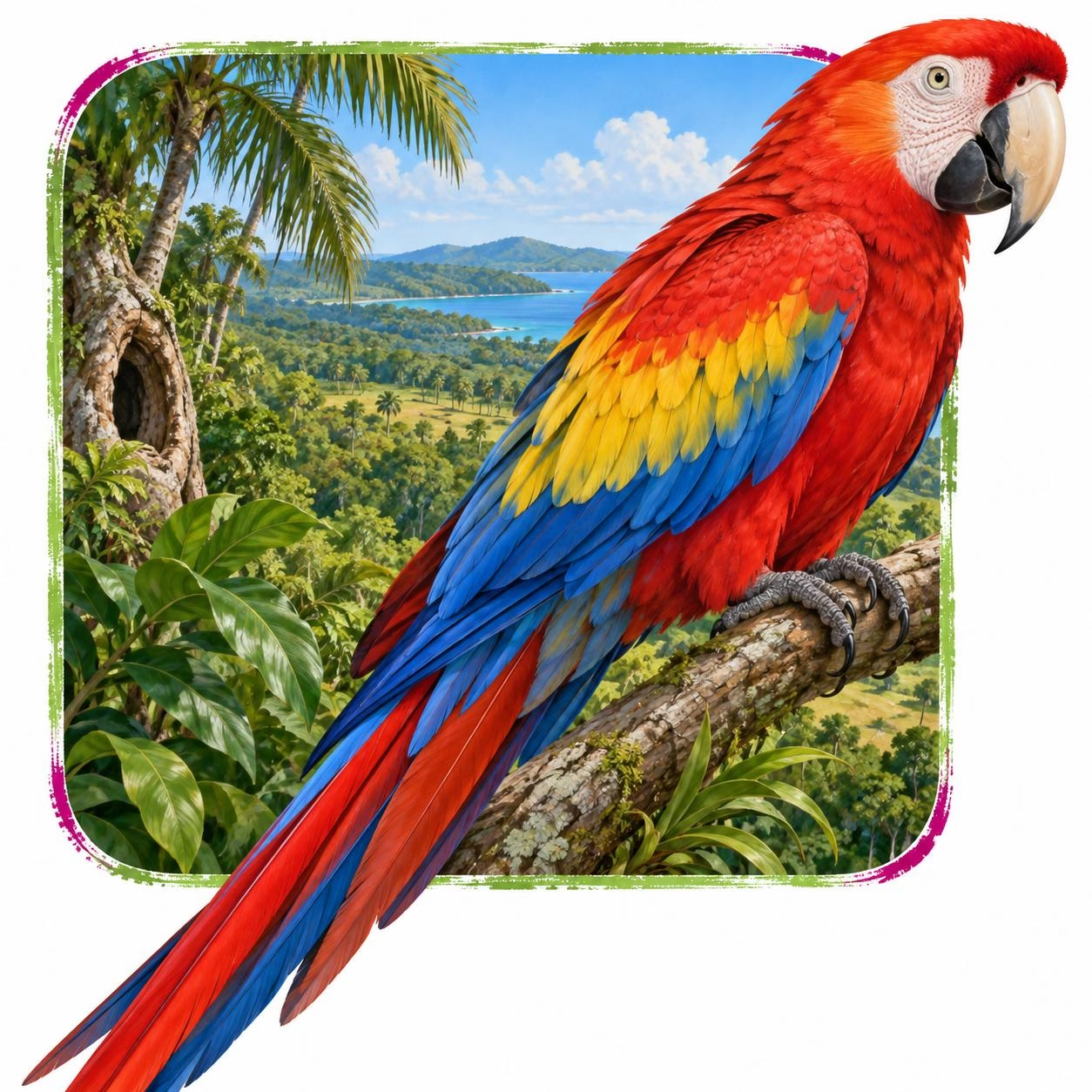
Cuban Macaw in its natural Cuban forests, palm groves, woodlands, savanna edges, tree hollows, island lowlands, and Isla de la Juventud habitats habitat