
Dimetrodon Facts for Kids
Dimetrodon was a sail-backed predatory synapsid that lived during the Early Permian, long before the first dinosaurs. It was more closely related to mammals than to dinosaurs, although it was not a mammal or a direct ancestor of modern mammals. Tall neural spines supported its famous back sail, while differently sized teeth helped it grip and slice prey.
Quick Dimetrodon Facts
- Animal Type: Extinct predatory synapsid
- Group: Sphenacodontid
- Known For: Tall back sail, differently sized teeth, large canine-like teeth, serrated cutting edges, and frequent mistaken identity as a dinosaur
- Lived During: Early Permian, roughly 295–272 million years ago
- Diet: Fish, amphibian-grade tetrapods, and other land animals
What You’ll Learn
Learn 10 iconic dimetrodon facts for kids about its tall back sail, sharp teeth, strong limbs, hunting, and life before dinosaurs, plus a quiz, glossary, and activity
Simple explanations make them fun for children, families, teachers, and young prehistoric explorers.
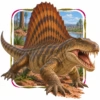
10 Fun Dimetrodon Facts for Kids
1. Dimetrodon Was Not a Dinosaur
Dimetrodon disappeared tens of millions of years before the first dinosaurs evolved.
Kid Decode: It keeps sneaking into dinosaur toy boxes despite arriving far too early for the party.
2. It Was a Synapsid
Dimetrodon belonged to Synapsida, the broad evolutionary branch that later produced mammals.
Kid Decode: It was closer to the mammal side of the family tree than to any dinosaur.
3. It Was Not Our Direct Ancestor
Dimetrodon was an early side branch of synapsid evolution rather than the direct ancestor of mammals.
Kid Decode: It was a distant evolutionary cousin, not a many-times-great grandparent.
4. Its Sail Was Supported by Bone
Extremely tall neural spines rose from the vertebrae and probably supported skin and blood vessels forming the sail.
Kid Decode: The sail was not a loose fin; it stood on a row of skyscraper-sized back bones.
5. The Sail’s Purpose Is Debated
Scientists have proposed display, species recognition, heat control, and combinations of these roles, with display now receiving strong attention.
Kid Decode: The sail may have been billboard, identity badge, and temperature helper all at once.
6. Its Name Means Two Measures of Tooth
Dimetrodon had differently sized teeth, including large canine-like teeth and smaller cutting teeth.
Kid Decode: Its name celebrates a mouth that refused to use one standard tooth size.
7. Some Species Had Serrated Teeth
Later and larger Dimetrodon species developed true tooth serrations that improved their ability to slice flesh.
Kid Decode: Steak-knife teeth appeared in synapsids long before meat-eating dinosaurs evolved.
8. It Could Reach About Three Metres
Large species such as Dimetrodon grandis reached roughly 3 to 3.2 metres, while other species were much smaller.
Kid Decode: The genus ranged from compact sail-backs to predators longer than a sofa.
9. Its Body Probably Stayed Off the Ground
Dimetrodon had a semi-sprawling posture, but its trackways and skeleton suggest that it usually supported its belly and tail above the ground.
Kid Decode: It walked low without dragging itself around like a heavy rug.
10. It Was a Major Permian Predator
Large species hunted fish and land vertebrates in ecosystems across what is now Texas and Oklahoma.
Kid Decode: Before dinosaurs took the predator spotlight, Dimetrodon already owned the dramatic entrance.
The Weirdest Dimetrodon Fact
Dimetrodon was closer to mammals than to dinosaurs, yet it evolved serrated meat-cutting teeth and an enormous sail tens of millions of years before either group became dominant.
Try This Dimetrodon Activity
Dimetrodon Drawing Activity
Draw Dimetrodon stalking across an Early Permian Texas floodplain. Add a tall sail supported by long neural spines, a low but body-lifting posture, large canine-like teeth, smaller serrated teeth, strong limbs, a thick tail, fish and small tetrapod prey, red mud, and a “not a dinosaur” label.
Quick Dimetrodon Quiz
- Was Dimetrodon a dinosaur? Answer: No, it was a synapsid.
- Which living group is it more closely related to? Answer: Mammals.
- What supported its sail? Answer: Tall neural spines growing from the vertebrae.
- What does Dimetrodon mean? Answer: Two measures of tooth.
- What was the sail used for? Answer: Its exact role is debated and may have included display and heat control.
Mini Glossary
- Synapsid: A member of the vertebrate branch containing mammals and their extinct relatives.
- Sphenacodontid: A family of predatory early synapsids that includes Dimetrodon.
- Neural Spine: A bony projection rising from the top of a vertebra.
- Caniniform: A large pointed tooth shaped somewhat like a canine tooth.
- Denticle: A tiny tooth-like serration along a cutting edge.
 Caterpillar Facts for Kids
 Bullfrog Facts for Kids
 Orangutan Facts for Kids
 Saltasaurus Facts for Kids
More Animal Facts for Kids
Visit the full animal facts library or explore a focused animal group.
More Extinct Animal Facts for Kids
Discover dinosaurs, Ice Age giants, prehistoric sea creatures, recently extinct species, and other animals from the past.
Fact check note: Fact checked with Angielczyk’s synapsid relationship review, Brink and Reisz’s 2014 Dimetrodon dental study, research on sail allometry and function, and Early Permian red-bed fossil records.

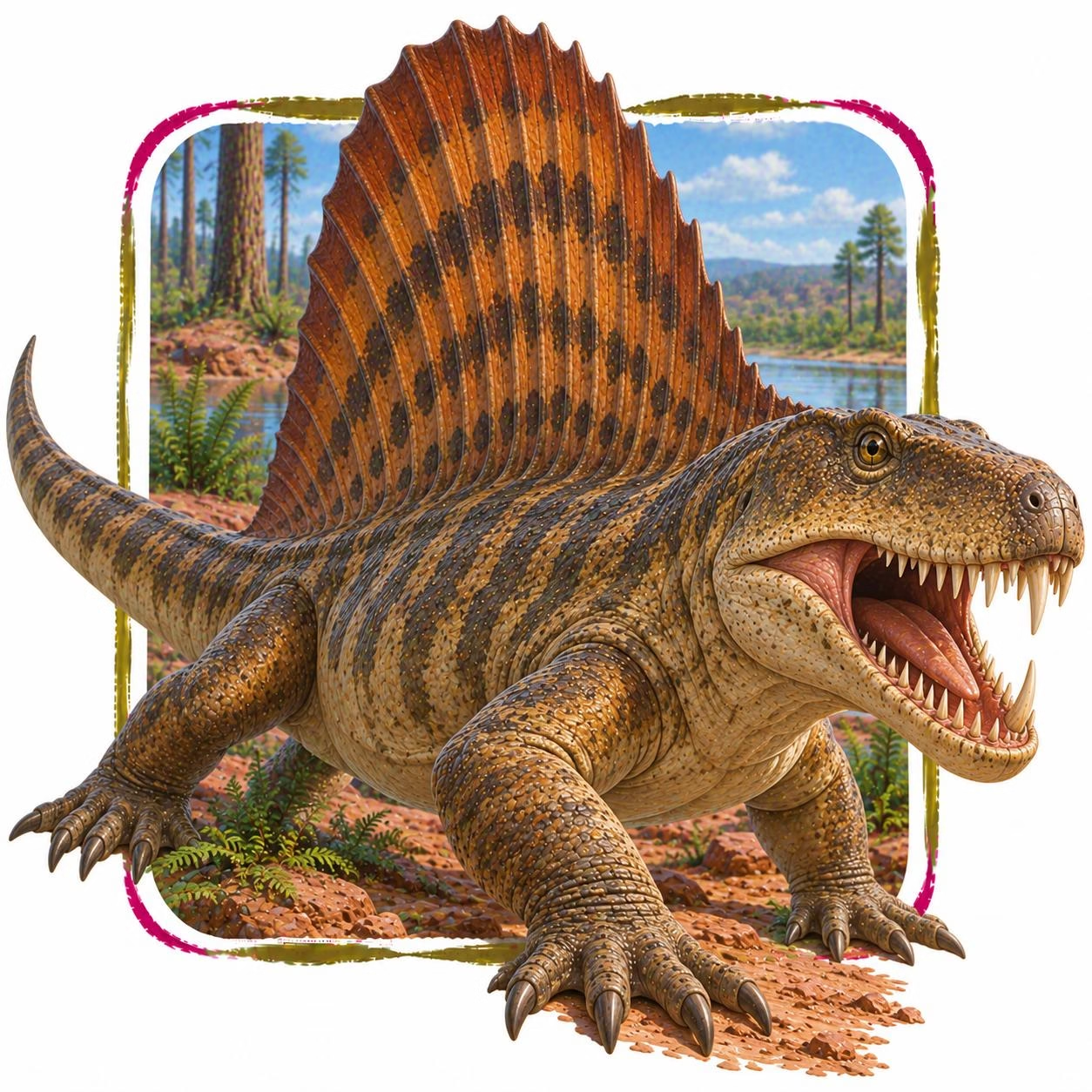
Dimetrodon in its natural Early Permian river floodplains, seasonal wetlands, dry red-bed plains, forest edges, lake margins, and lowland habitats of North America and Europe habitat