
Dinomischus Facts for Kids
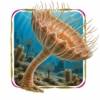
Dinomischus was a tiny stalked animal that lived attached to the Cambrian seafloor. It looked a little like a flower, with a cup-shaped body held above the mud by a slender stem and surrounded by a ring of plate-like bracts. It probably filtered tiny food particles from seawater, and recent studies suggest that Dinomischus may belong near the early evolutionary branch of comb jellies.
Quick Dinomischus Facts
- Animal Type: Extinct stalked marine animal
- Group: Dinomischid, possibly a stem-group ctenophore
- Known For: Flower-like calyx, long stalk, holdfast, ring of bracts, U-shaped gut, and filter-feeding lifestyle
- Lived During: Middle Cambrian, about 505 million years ago
- Diet: Tiny organic particles and plankton filtered from seawater
What You’ll Learn
Learn 10 bizarre dinomischus facts for kids about its stalked body, flower-like top, seafloor life, feeding, and Cambrian oceans, with a quiz, glossary, and activity
Simple explanations make them fun for children, families, teachers, and young fossil explorers.
10 Fun Dinomischus Facts for Kids
1. Dinomischus Was an Animal, Not a Plant
Its flower-like outline can be misleading, but Dinomischus had a gut and belonged to the animal kingdom.
Kid Decode: It looked ready for a vase while quietly doing animal biology.
2. It Was Only About Two Centimetres Tall
Dinomischus isolatus reached roughly 20 millimetres from the base of its stalk to the top of its body.
Kid Decode: The whole creature stood shorter than many paper clips.
3. A Holdfast Anchored It
A small attachment structure at the bottom fixed the animal to the seafloor so currents would not sweep it away.
Kid Decode: Its tiny biological anchor kept the flower-shaped body parked in one spot.
4. A Long Stalk Lifted Its Body
The narrow stem raised the feeding end above the sediment and into moving water.
Kid Decode: The stalk worked like a dinner-table stand for catching passing snacks.
5. Its Body Was Cup-Shaped
At the top sat a soft calyx, or cup-like body, containing much of the digestive system.
Kid Decode: Most of the animal’s important machinery lived inside one tiny Cambrian goblet.
6. A Ring of Bracts Surrounded the Top
Roughly 18 to 20 stiff, petal-like bracts formed a circle around the upper edge of the calyx.
Kid Decode: It grew a crown of fake petals without being a flower at all.
7. It Probably Filtered Seawater
The bracts may have supported fine hairs or created currents that guided suspended food particles toward the mouth.
Kid Decode: Passing seawater delivered meals directly to its petal-shaped food station.
8. Its Gut Curved Into a U Shape
The digestive tract bent so that the mouth and anus opened close together near the top of the body.
Kid Decode: One curled digestive tube kept both openings inside the same tiny neighbourhood.
9. Its Relatives Are Still Debated
Dinomischus was once compared with entoprocts, but newer studies place dinomischids as possible early relatives of comb jellies.
Kid Decode: Its family-tree label has changed from tiny moss animal look-alike to possible comb-jelly cousin.
10. Its Burgess Shale Fossils Are Rare
Only a small number of Dinomischus isolatus specimens are known from the Burgess Shale, although related dinomischids occur at other Cambrian sites.
Kid Decode: This little seafloor goblet left only a thin stack of fossil clues.
The Weirdest Dinomischus Fact
Dinomischus looked like a tiny flower rooted to the seabed, yet recent research suggests that it may have belonged near the stem lineage of free-swimming comb jellies.
Try This Dinomischus Activity
Dinomischus Drawing Activity
Draw Dinomischus standing on a Cambrian seafloor. Add a tiny holdfast, long slender stalk, cup-shaped calyx, a ring of about 18 to 20 petal-like bracts, arrows showing water and food particles moving toward the mouth, a U-shaped gut cutaway, soft mud, sponges, and a 2-centimetre ruler.
Quick Dinomischus Quiz
- Was Dinomischus a plant? Answer: No, it was an animal.
- How tall was it? Answer: About 2 centimetres.
- What attached it to the seafloor? Answer: A small holdfast at the base of its stalk.
- How did it probably eat? Answer: By filtering tiny particles from seawater.
- What modern animal group may be among its distant relatives? Answer: Comb jellies.
Mini Glossary
- Calyx: The cup-shaped main body of a stalked organism.
- Bract: One of the plate-like structures forming a ring around Dinomischus.
- Holdfast: A structure that anchors an organism to a surface.
- Suspension Feeder: An animal that collects tiny food particles floating in water.
- Stem-Group Ctenophore: An extinct relative lying outside the living comb-jelly group but near its evolutionary branch.
 Kangaroo Facts for Kids
 Nudibranch Facts for Kids
 Blue-Tongued Skink Facts for Kids
 Velociraptor Facts for Kids
More Animal Facts for Kids
Visit the full animal facts library or explore a focused animal group.
More Extinct Animal Facts for Kids
Discover dinosaurs, Ice Age giants, prehistoric sea creatures, recently extinct species, and other animals from the past.
Fact check note: Fact checked with Conway Morris’s 1977 original Dinomischus description, O’Brien and Caron’s 2012 comparison of Cambrian stalked filter feeders, Zhao and colleagues’ 2019 stem-ctenophore hypothesis, and Parry and colleagues’ 2025 dinomischid study.
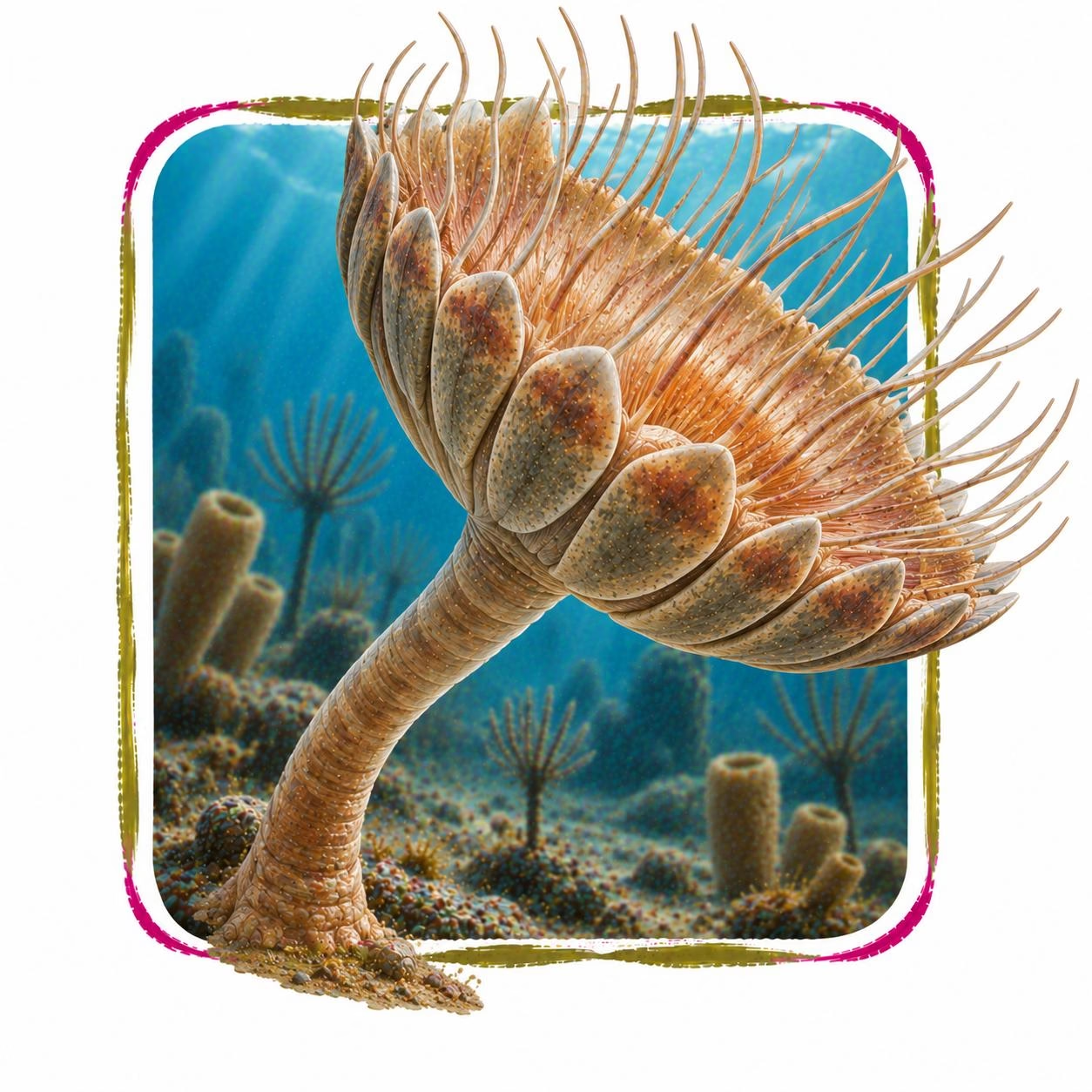
Dinomischus in its natural Middle Cambrian muddy seafloors, quiet offshore shelf habitats, low-current areas above sediment, sponge communities, and particle-rich bottom waters habitat