
Diprotodon Facts for Kids
Diprotodon was the largest known marsupial and one of the giants of Pleistocene Australia. It was a plant-eating vombatiform related more closely to wombats and koalas than to rhinoceroses or hippopotamuses. A barrel-shaped body, pillar-like limbs, enormous lower incisors, ridged molars, and a surprisingly hollow but strong skull helped this multi-tonne herbivore travel widely and process tough vegetation.
Quick Diprotodon Facts
- Animal Type: Extinct giant marsupial
- Group: Diprotodontid vombatiform
- Known For: Largest known marsupial, giant lower incisors, strong bite, seasonal migration, and widespread Australian fossils
- Lived During: Pleistocene, roughly 1.8 million to 40,000 years ago
- Diet: Leaves, twigs, shrubs, herbs, and other vegetation
What You’ll Learn
Learn 10 enormous diprotodon facts for kids about giant size, plant diets, marsupial relatives, Australian habitats, and Ice Age life, with a quiz, glossary, and activity
These simple facts are written for kids, parents, teachers, and curious young minds.
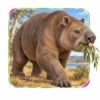
10 Fun Diprotodon Facts for Kids
1. Diprotodon Was the Largest Known Marsupial
Large individuals reached roughly 3 metres in length, stood around 1.8 metres at the shoulder, and may have weighed about 2.5 to 2.7 tonnes.
Kid Decode: The marsupial size record belonged to an animal heavier than many cars.
2. It Was Related to Wombats and Koalas
Diprotodon belonged to Vombatiformes, the marsupial branch containing wombats, koalas, and their extinct relatives.
Kid Decode: Its closest living cousins include a burrowing cube-pooper and a eucalyptus specialist.
3. Its Name Means Two Forward Teeth
The name refers to the pair of large forward-pointing incisors in the lower jaw.
Kid Decode: Two enormous front teeth earned the whole animal its scientific name.
4. Its Incisors Grew Continuously
The long lower incisors kept growing as use and abrasive food wore their tips down.
Kid Decode: Its front teeth ran a permanent replacement program powered by growth.
5. Its Bite Was Extremely Powerful
Computer models estimated about 2,300 newtons at the incisors and more than 11,000 newtons near the rear molars.
Kid Decode: The back of its mouth turned plant chewing into heavyweight engineering.
6. Large Sinuses Lightened Its Skull
Huge air-filled spaces occupied much of the skull, reducing weight while bony struts maintained strength during biting.
Kid Decode: Its head used architectural air pockets instead of filling every room with bone.
7. It Made Seasonal Journeys
Chemical patterns along one incisor suggest annual round trips of up to about 200 kilometres in eastern Australia.
Kid Decode: One giant marsupial carried a year-by-year travel diary inside its growing tooth.
8. Large and Small Adults May Have Been Male and Female
Most researchers recognise one species, Diprotodon optatum, and interpret two adult size groups as probable sexual dimorphism, with males likely larger.
Kid Decode: Several old species names may really describe the two size settings of one giant marsupial.
9. Mothers Probably Carried Joeys in a Pouch
As a marsupial, Diprotodon gave birth to very small young that continued developing while attached to a teat, probably inside a pouch.
Kid Decode: Even the largest marsupial began life as a remarkably tiny joey.
10. Its Extinction Remains Debated
Diprotodon disappeared around 40,000 years ago during Australia’s megafaunal losses, with human impacts, climatic stress, and environmental change still discussed.
Kid Decode: The giant vanished, but the final chapter remains a scientific courtroom with several suspects.
The Weirdest Diprotodon Fact
A continuously growing incisor preserved repeating chemical changes showing that at least one Diprotodon made regular seasonal round trips across Australia.
Try This Diprotodon Activity
Diprotodon Drawing Activity
Draw Diprotodon crossing an Ice Age Australian plain. Add a three-metre barrel-shaped body, pillar-like legs, inward-angled hind feet, two giant lower incisors, ridged molars, a mobile nose, shrubs, and a tooth-isotope timeline tracing a 200-kilometre seasonal journey.
Quick Diprotodon Quiz
- What record did Diprotodon hold? Answer: It was the largest known marsupial.
- Which living animals are among its closest relatives? Answer: Wombats and koalas.
- What does its name refer to? Answer: Two large forward-pointing lower incisors.
- How far may one annual round trip have reached? Answer: Up to about 200 kilometres.
- Why is its extinction difficult to explain? Answer: Human activity, climate, and environmental change may all have contributed.
Mini Glossary
- Marsupial: A mammal whose very small newborns usually continue developing while attached to a teat, often inside a pouch.
- Vombatiform: A marsupial from the branch containing wombats, koalas, and extinct relatives.
- Bilophodont: Having cheek teeth with two major transverse ridges.
- Cranial Sinus: An air-filled space inside the skull.
- Sexual Dimorphism: A consistent physical difference between males and females of one species.
 Sawshark Facts for Kids
 European Badger Facts for Kids
 Macaque Facts for Kids
 Litopterna Facts for Kids
More Animal Facts for Kids
Visit the full animal facts library or explore a focused animal group.
More Extinct Animal Facts for Kids
Discover dinosaurs, Ice Age giants, prehistoric sea creatures, recently extinct species, and other animals from the past.
Fact check note: Fact checked with Sharp and Rich’s 2016 cranial-biomechanics and bite-force study, Price and colleagues’ 2017 seasonal-migration isotope study, Price’s 2008 taxonomic and sexual-dimorphism revision, Price and Piper’s 2009 gigantism study, and recent direct-dating research on Diprotodon fossils.

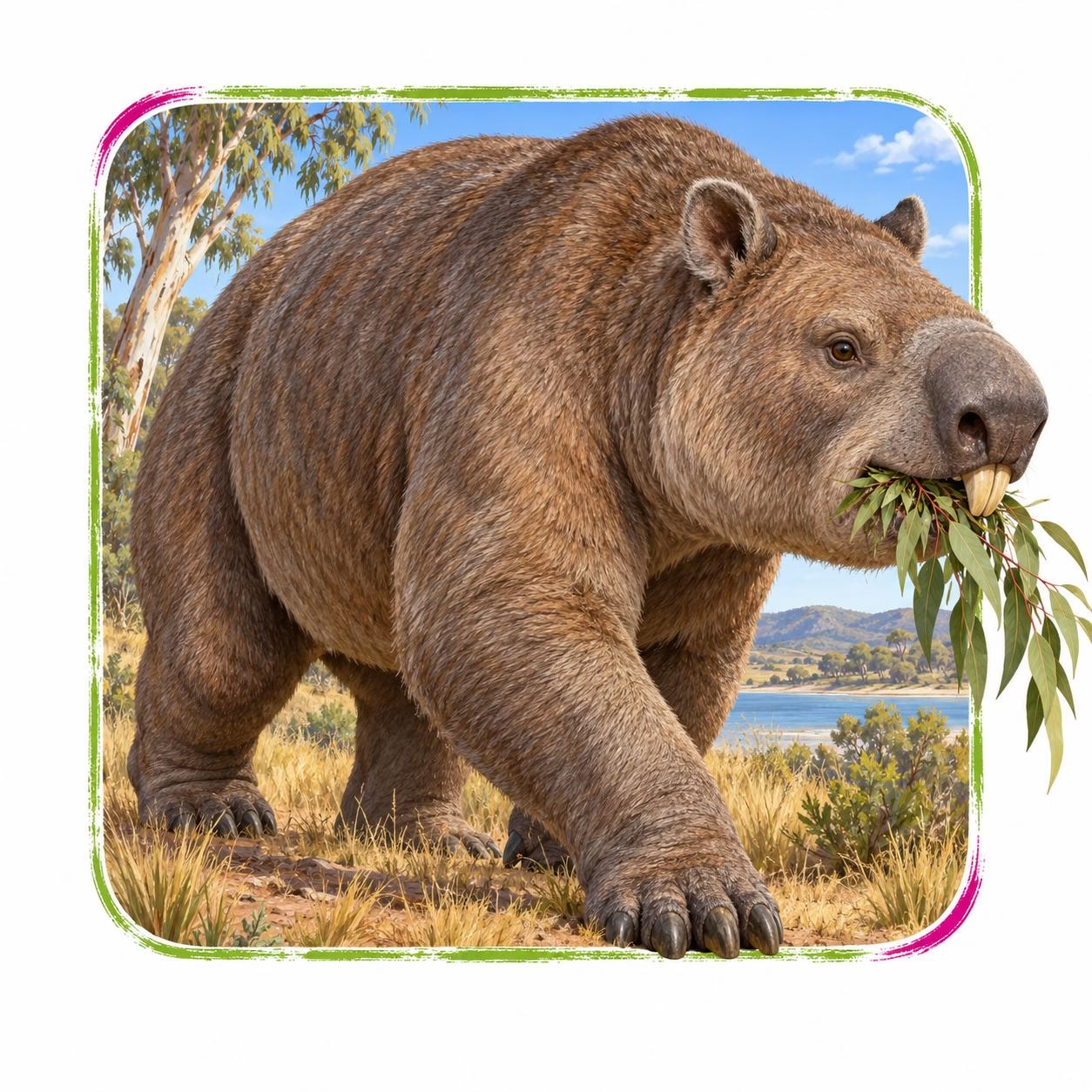
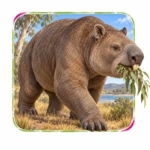
Diprotodon in its natural Pleistocene woodlands, grasslands, shrublands, river valleys, lake margins, dry plains, and seasonally variable habitats across mainland Australia habitat