
Dire Wolf Facts for Kids
The dire wolf was an extinct Ice Age predator from the Americas. It looked wolf-like, but new research shows it was not just a bigger gray wolf. Dire wolves had strong jaws, powerful teeth, and many fossils at La Brea Tar Pits, where they are one of the most famous Ice Age mammals.
Quick Dire Wolf Facts
- Animal Type: Extinct mammal
- Group: Canid-like predator, often classified as Aenocyon dirus
- Known For: Strong jaws, Ice Age hunting, La Brea fossils, wolf-like body, pups, and extinction near the end of the Ice Age
- Lived During: Pleistocene to early Holocene
- Diet: Large herbivores, smaller animals, and carrion
What You’ll Learn
Discover 10 powerful dire wolf facts for kids about strong jaws, pack life, hunting, Ice Age habitats, and ancient relatives, plus a quiz, glossary, and activity
Clear explanations make them fun for children, families, teachers, and little fact-hunters.
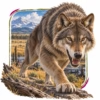
10 Fun Dire Wolf Facts for Kids
1. Dire Wolves Were Not Dinosaurs
Dire wolves were Ice Age mammals, not dinosaurs, and they lived millions of years after non-bird dinosaurs disappeared.
Kid Decode: They were late-arriving mammal predators, not dinosaur-era monsters.
2. They Were Not Just Gray Wolves
Dire wolves looked wolf-like, but DNA research suggests they were a separate ancient lineage, not simply oversized gray wolves.
Kid Decode: Fantasy wolves can be giant gray wolves. Real dire wolves were stranger.
3. They Had Strong Jaws
Dire wolves had powerful jaws and teeth suited for eating meat and sometimes crushing bone.
Kid Decode: Their bite was built for serious Ice Age leftovers.
4. They Hunted Large Prey
Dire wolves likely hunted or scavenged large Ice Age herbivores such as horses, bison, camels, and sloths.
Kid Decode: They lived where the dinner options were big, tough, and dangerous.
5. They May Have Lived in Groups
Many scientists think dire wolves may have lived or hunted in groups, but details of their social life are still studied.
Kid Decode: Pack clues exist, but fossils do not bark out the full story.
6. La Brea Has Many Dire Wolf Fossils
Dire wolves are extremely common in the fossil collections from La Brea Tar Pits in Los Angeles.
Kid Decode: The tar pits saved a whole crowd of Ice Age canid trouble.
7. Baby Dire Wolves Were Pups
Baby dire wolves can be called pups, like baby wolves and dogs today.
Kid Decode: A dire wolf pup was a small growler with a big fossil future.
8. They Lived in the Americas
Dire wolves lived across North America and into parts of South America during the Ice Age.
Kid Decode: Their fossil map stretches across a big chunk of the Americas.
9. They Went Extinct
Dire wolves disappeared near the end of the Ice Age, around the same time many large mammals vanished.
Kid Decode: The howls stopped, but the bones kept telling stories.
10. Their Name Means Fearsome Dog
The old scientific name Canis dirus means fearsome dog, though many scientists now use Aenocyon dirus.
Kid Decode: Even the name sounds like it should echo through a frozen canyon.
The Weirdest Dire Wolf Fact
Dire wolves looked very wolf-like, but ancient DNA suggests they were from a much older and separate canid lineage than gray wolves.
Try This Dire Wolf Activity
Dire Wolf Drawing Activity
Draw a dire wolf in an Ice Age landscape. Add strong jaws, thick body, alert ears, pup, paw prints, bison tracks, tar pit fossil clue, snow patches, grass, and a “not just a gray wolf” label.
Quick Dire Wolf Quiz
- Were dire wolves dinosaurs? Answer: No, they were Ice Age mammals.
- Were dire wolves just bigger gray wolves? Answer: No, research suggests they were a separate ancient lineage.
- Where are many dire wolf fossils found? Answer: La Brea Tar Pits.
- What are baby dire wolves called? Answer: Pups.
- What did dire wolves eat? Answer: Large herbivores, smaller animals, and carrion.
Mini Glossary
- Canid: A member of the dog family or a close dog-like relative.
- Aenocyon dirus: A scientific name now often used for the dire wolf.
- Carrion: Dead animals eaten by scavengers or predators.
- Pup: A baby dog, wolf, or similar mammal.
- Extinction: When a whole group of living things dies out.
 Red-Tailed Hawk Facts for Kids
 Dove Facts for Kids
 Blue-Ringed Octopus Facts for Kids
 Sivatherium Facts for Kids
More Animal Facts for Kids
Visit the full animal facts library or explore a focused animal group.
More Extinct Animal Facts for Kids
Discover dinosaurs, Ice Age giants, prehistoric sea creatures, recently extinct species, and other animals from the past.
Fact check note: Fact checked with La Brea Tar Pits dire wolf resources, Natural History Museum dire wolf notes, ancient DNA research summaries, and trusted paleontology education sources.

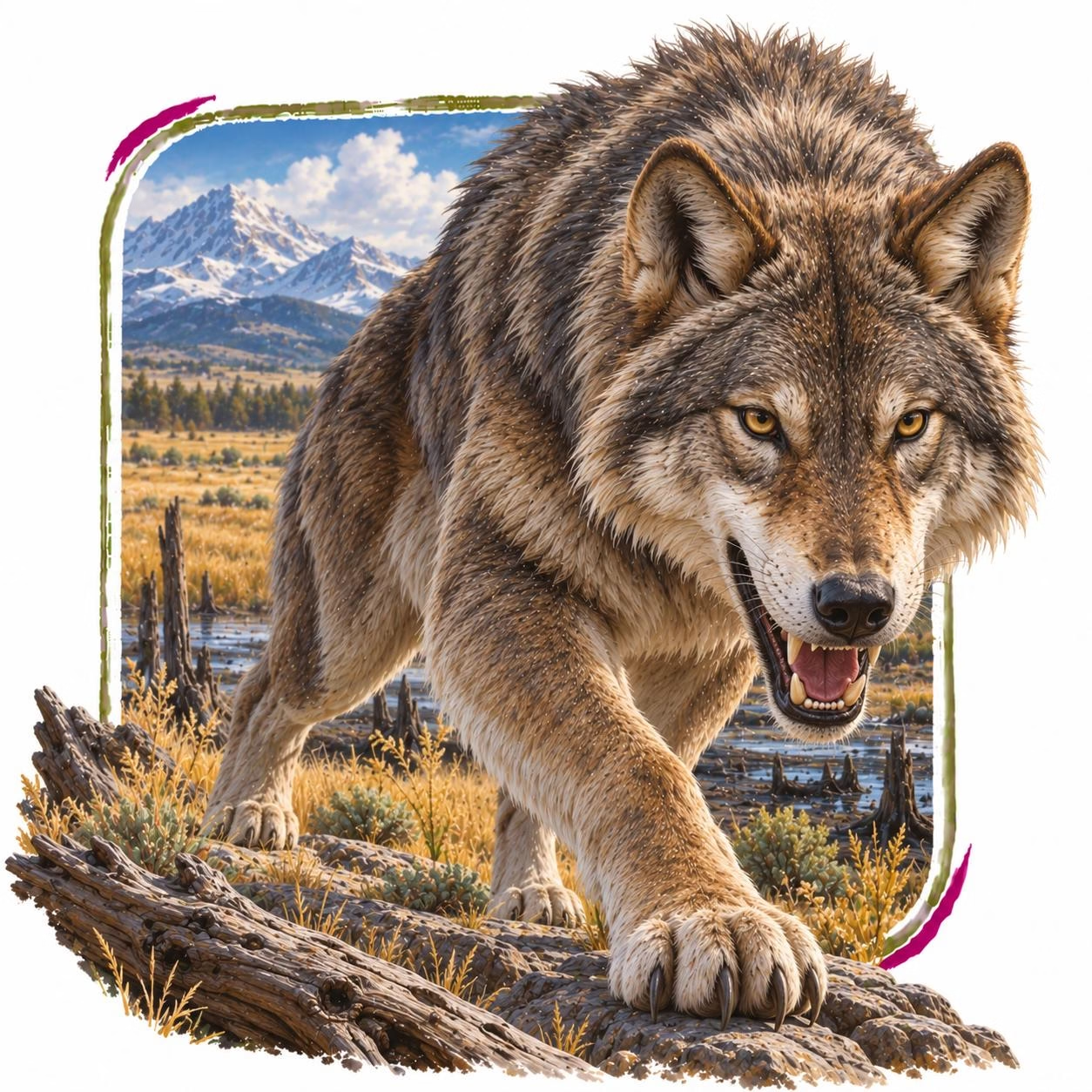
Dire Wolf in its natural Ice Age grasslands, woodlands, scrublands, open plains, valleys, and tar pit regions habitat