
Eastern Hare-Wallaby Facts for Kids
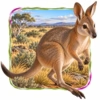
The Eastern Hare-Wallaby was a small extinct wallaby from southeastern Australia. It was not a hare or a rabbit, even though it could bound away with speedy, hare-like jumps. This shy nocturnal marsupial rested in tussocks and saltbush by day, then came out at night in grasslands and open country.
Quick Eastern Hare-Wallaby Facts
- Animal Type: Recently extinct marsupial
- Group: Hare-wallaby and macropod
- Known For: Southeastern Australian range, hare-like hopping, solitary behavior, joeys, saltbush shelter, grassland habitat, last known female specimen in 1889, and extinction
- Lived During: Holocene, last known specimen in 1889
- Diet: Grasses, herbs, leaves, shrubs, and other low plants
What You’ll Learn
Learn 10 fascinating eastern hare-wallaby facts for kids about powerful legs, grassland life, speed, feeding, and extinction, plus a quiz, glossary, and activity
Clear explanations make them ideal for children, families, teachers, and young fact-hunters.
10 Fun Eastern Hare-Wallaby Facts for Kids
1. Eastern Hare-Wallabies Were Marsupials
Eastern Hare-Wallabies were marsupials, meaning mothers carried tiny young in a pouch.
Kid Decode: Pouch life, hopping legs, grassland secrecy.
2. They Were Not Hares
The name came from their hare-like body shape and fast bounding, not because they were true hares.
Kid Decode: Rabbit-ish nickname, wallaby reality.
3. They Lived in Southeastern Australia
Eastern Hare-Wallabies lived in southeastern Australia, including parts of Victoria, New South Wales, and nearby regions.
Kid Decode: Their old home was open country with grass, shrubs, and hiding places.
4. They Were Small Macropods
They belonged to the macropod family, the same broad group as kangaroos and wallabies.
Kid Decode: Macropod means big-footed, and these little jumpers used those feet well.
5. They Were Nocturnal
Eastern Hare-Wallabies were active at night and rested quietly during the day.
Kid Decode: Night shift helped them avoid heat and danger.
6. They Rested in Seats
During the day, they sat in well-made resting spots called seats, often under saltbush or tussocks.
Kid Decode: A wallaby seat was not furniture. It was a hidden grassland hideout.
7. They Could Leap High
Historical accounts describe them bounding away quickly and leaping impressively when chased.
Kid Decode: Small wallaby, surprise trampoline mode.
8. Baby Hare-Wallabies Were Joeys
Baby Eastern Hare-Wallabies can be called joeys, like baby wallabies and kangaroos today.
Kid Decode: A joey would have begun hidden in its mother’s pouch.
9. The Last Known Specimen Was in 1889
The last known Eastern Hare-Wallaby specimen was a female collected in New South Wales in August 1889.
Kid Decode: One female became the final confirmed clue.
10. The Cause Is Uncertain
Possible causes include grazing by sheep and cattle, changed fire patterns, introduced cats, habitat trampling, and other land changes.
Kid Decode: Extinction left clues, but not a clean confession.
The Weirdest Eastern Hare-Wallaby Fact
John Gould described one Eastern Hare-Wallaby suddenly doubling back during a chase and leaping over his head, which sounds like a wallaby escape trick from a tiny acrobat.
Try This Eastern Hare-Wallaby Activity
Eastern Hare-Wallaby Drawing Activity
Draw an Eastern Hare-Wallaby in a southeastern Australian grassland. Add slender body, long tail, big hopping feet, joey in pouch, saltbush shelter, tussock seat, moon, sheep tracks, cat warning sign, and a “lost hare-wallaby” label.
Quick Eastern Hare-Wallaby Quiz
- Was the Eastern Hare-Wallaby a hare? Answer: No, it was a marsupial wallaby.
- Where did it live? Answer: Southeastern Australia.
- Was it active mostly by day or night? Answer: Mostly at night.
- What are baby wallabies called? Answer: Joeys.
- When was the last known specimen collected? Answer: 1889.
Mini Glossary
- Hare-Wallaby: A small wallaby with hare-like shape and bounding movements.
- Macropod: A member of the kangaroo and wallaby family.
- Nocturnal: Active mostly at night.
- Joey: A baby marsupial.
- Saltbush: A tough shrub found in dry Australian habitats.
 Ibis Facts for Kids
 Deer Facts for Kids
 Great White Shark Facts for Kids
 Canadaspis Facts for Kids
More Animal Facts for Kids
Visit the full animal facts library or explore a focused animal group.
More Extinct Animal Facts for Kids
Discover dinosaurs, Ice Age giants, prehistoric sea creatures, recently extinct species, and other animals from the past.
Fact check note: Fact checked with Victorian Eastern Hare-Wallaby assessment, IUCN-linked species summaries, historical John Gould behavior notes, and trusted Australian marsupial extinction education sources.

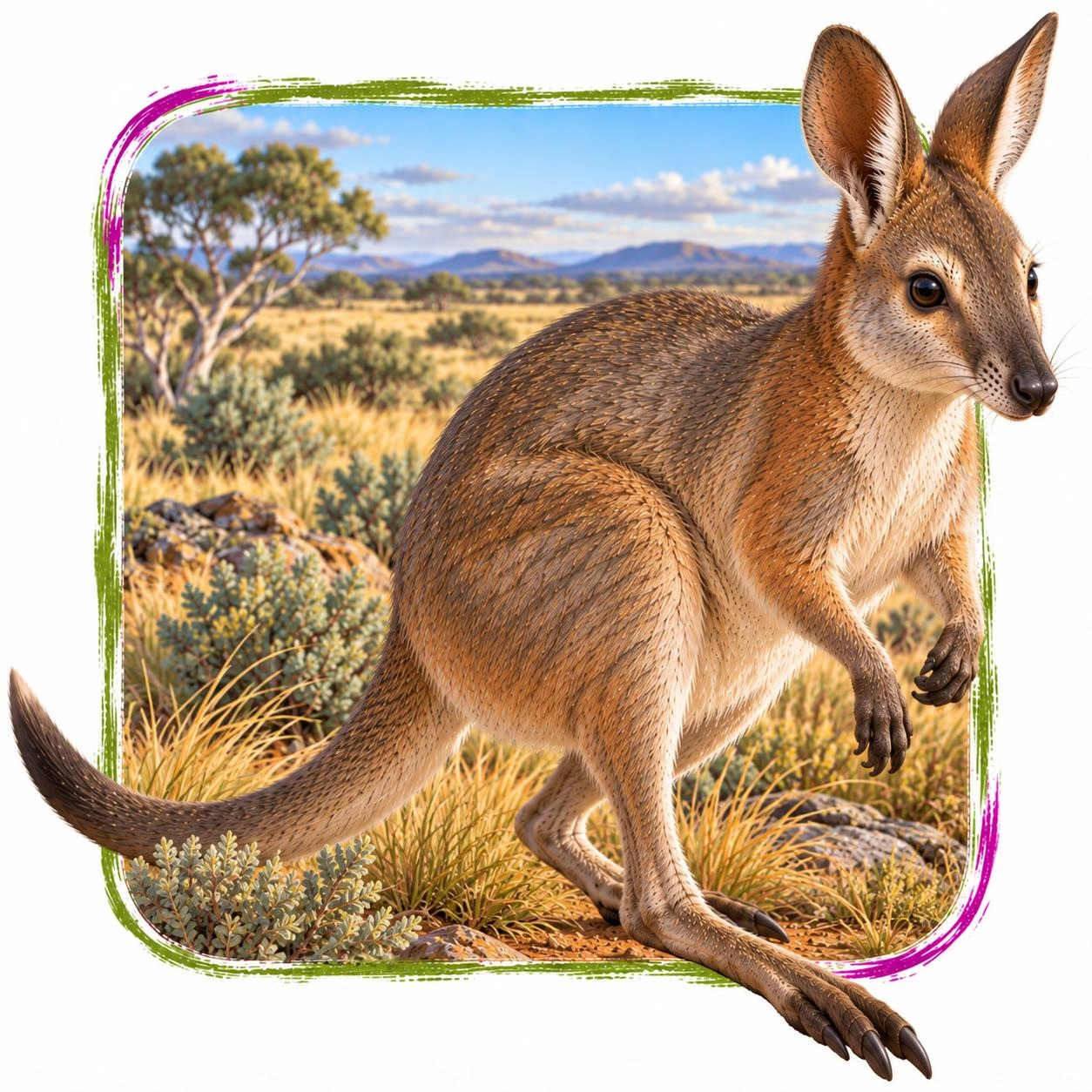
Eastern Hare-Wallaby in its natural Southeastern Australian grasslands, open plains, saltbush country, tussock shelter, shrublands, dry woodlands, and ground resting seats habitat