
Enhydriodon Facts for Kids
Enhydriodon was a genus of giant prehistoric otters that lived in Africa and Asia. The largest known species, Enhydriodon omoensis, inhabited the Lower Omo Valley of Ethiopia between about 3.4 and 2.5 million years ago. It may have weighed around 200 kilograms or more and probably spent much more time on land than living otters, using broad rounded teeth to crush a varied diet of aquatic and terrestrial prey.
Quick Enhydriodon Facts
- Animal Type: Extinct giant otter
- Group: Bunodont lutrine mustelid
- Known For: Lion-sized body, rounded crushing teeth, possible terrestrial hunting, and African fossil sites shared with early hominins
- Lived During: Late Miocene to Early Pleistocene, with E. omoensis around 3.4–2.5 million years ago
- Diet: Aquatic and terrestrial animals, carrion, and possibly hard-shelled prey
What You’ll Learn
Explore 10 giant enhydriodon facts for kids about its enormous otter-like body, powerful teeth, water habitats, hunting, and prehistoric life, plus a quiz, glossary, and activity
Simple explanations make them fun for children, families, teachers, and young animal fans.
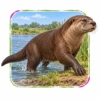
10 Fun Enhydriodon Facts for Kids
1. Enhydriodon Was a True Otter
Enhydriodon belonged to the otter subfamily Lutrinae within Mustelidae, the family containing otters, weasels, badgers, and relatives.
Kid Decode: It was a real otter stretched into a size category normally occupied by lions and bears.
2. It Was Much Larger Than Living Otters
Several species were enormous, and Enhydriodon omoensis has been estimated at around 200 kilograms or more.
Kid Decode: The biggest known otter may have outweighed several adults standing on one bathroom scale.
3. Its Size Is Still Approximate
No complete skeleton of E. omoensis is known, so scientists estimate its mass from isolated teeth and limb bones.
Kid Decode: The giant is certain; the exact number remains wrapped in fossil fog.
4. Its Teeth Were Broad and Rounded
Enhydriodon had bunodont cheek teeth with broad rounded cusps suited to crushing rather than only slicing flesh.
Kid Decode: Its back teeth looked more like sturdy grinding hills than delicate fish-cutting blades.
5. It Could Process Hard Food
The strong bunodont teeth may have helped crack bones, shells, or other tough foods depending on the species and habitat.
Kid Decode: Its mouth carried the otter version of a heavy-duty kitchen crusher.
6. Some Species May Have Been Mostly Terrestrial
Limb anatomy and isotope evidence suggest that E. omoensis spent substantial time on land instead of living like a modern river or sea otter.
Kid Decode: This otter may have prowled the floodplain more often than it paddled through the river.
7. It Ate Both Aquatic and Land Prey
Chemical evidence indicates that E. omoensis probably consumed terrestrial animals regularly while also having access to aquatic food.
Kid Decode: Its menu may have ranged from river snacks to meals caught on dry ground.
8. It Lived Beside Early Hominins
E. omoensis inhabited the Lower Omo Valley during a time when australopithecines and other early human relatives lived in eastern Africa.
Kid Decode: A lion-sized otter once shared the landscape with members of our distant family tree.
9. The Genus Spread Across Africa and Asia
Enhydriodon fossils are known from several African countries and from parts of southern Asia.
Kid Decode: Its fossil passport travelled across two continents before the giant otters vanished.
10. Its Lifestyle Remains Debated
Different Enhydriodon species may have ranged from semi-aquatic to more land-based, so one reconstruction cannot represent the entire genus.
Kid Decode: The family included several otter experiments, not one copy-and-paste lifestyle.
The Weirdest Enhydriodon Fact
The largest Enhydriodon may have been a lion-sized otter that hunted or scavenged on land, a lifestyle unlike that of any otter alive today.
Try This Enhydriodon Activity
Enhydriodon Drawing Activity
Draw Enhydriodon omoensis walking beside a Pliocene Ethiopian river. Add a lion-sized otter body, broad rounded cheek teeth in a cutaway, powerful limbs, a thick tail, fish, turtle or shellfish clues, terrestrial prey tracks, woodland grassland, and a small australopithecine silhouette safely in the distance.
Quick Enhydriodon Quiz
- Was Enhydriodon a true otter? Answer: Yes, it belonged to the otter subfamily.
- Which species was the largest known? Answer: Enhydriodon omoensis.
- How much may E. omoensis have weighed? Answer: Around 200 kilograms or more.
- What shape were its cheek teeth? Answer: Broad and rounded, or bunodont.
- Did every Enhydriodon species live exactly like a modern otter? Answer: No, some may have spent much more time on land.
Mini Glossary
- Mustelid: A member of the mammal family containing otters, weasels, badgers, and relatives.
- Lutrine: A member of the otter subfamily.
- Bunodont: Having teeth with broad rounded cusps.
- Isotope: A form of an element that can preserve clues about ancient diet or habitat.
- Terrestrial: Living mainly on land.
 Southern Brown Bandicoot Facts for Kids
 Locust Facts for Kids
 Seahorse Facts for Kids
 Daeodon Facts for Kids
More Animal Facts for Kids
Visit the full animal facts library or explore a focused animal group.
More Extinct Animal Facts for Kids
Discover dinosaurs, Ice Age giants, prehistoric sea creatures, recently extinct species, and other animals from the past.
Fact check note: Fact checked with Grohé, Uno and Boisserie’s 2022 description of Enhydriodon omoensis, Geraads and colleagues’ 2011 study of Enhydriodon dikikae, Lewis’s research on African bunodont-otter limb anatomy, and Lower Omo isotope evidence.

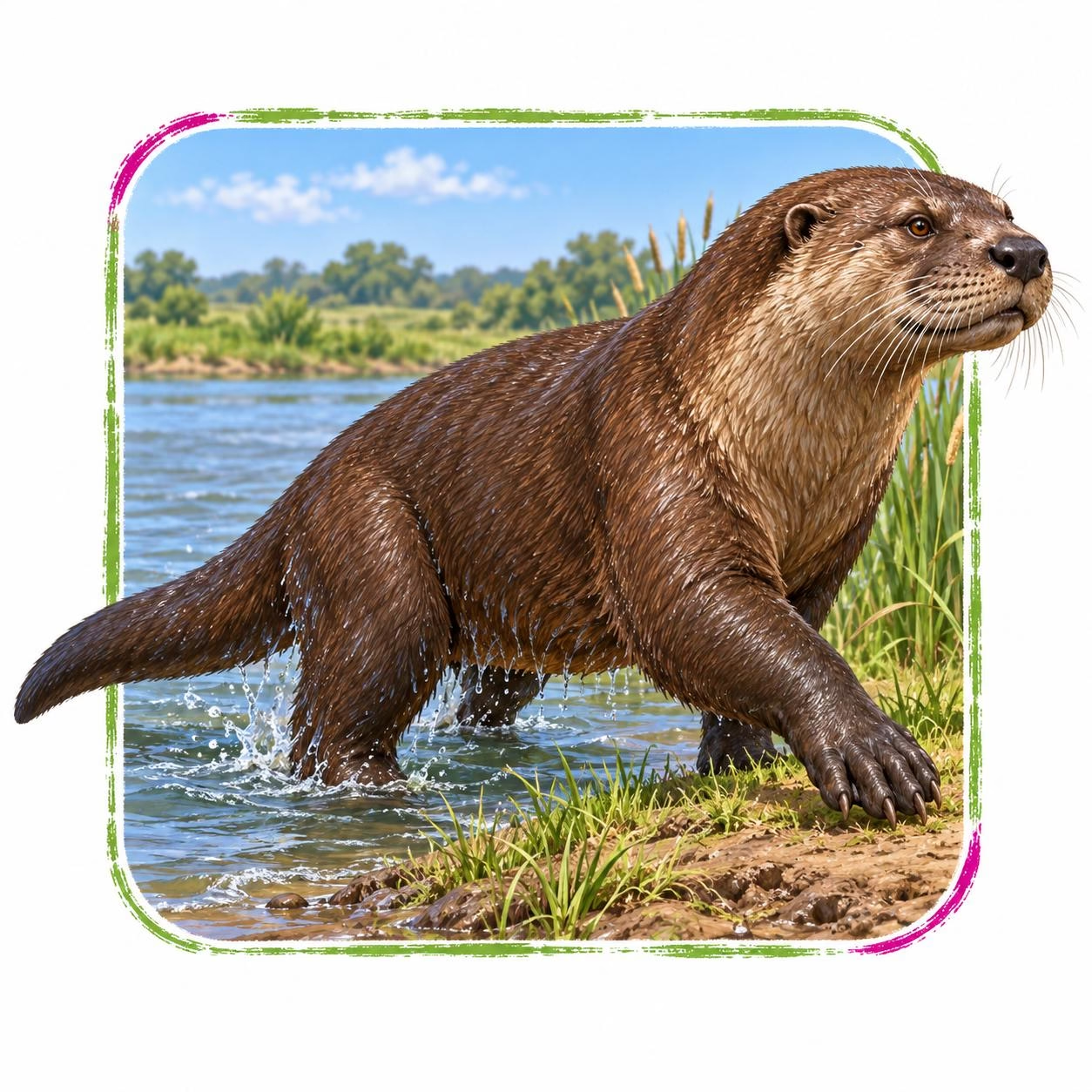
Enhydriodon in its natural Late Miocene to Early Pleistocene river valleys, lake margins, wooded grasslands, floodplains, wetlands, and nearby terrestrial habitats across Africa and southern Asia habitat