
Eurypterid Facts for Kids
Eurypterids were extinct aquatic arthropods often nicknamed sea scorpions. They were not true scorpions, dinosaurs, fish, or reptiles, but relatives of the chelicerate group that includes spiders, scorpions, and horseshoe crabs. Some eurypterids were small, while a few giant species became some of the largest arthropods ever.
Quick Eurypterid Facts
- Animal Type: Extinct aquatic arthropod
- Group: Eurypterid chelicerate arthropod
- Known For: Sea scorpion nickname, claws, paddle-like limbs in many species, hard exoskeleton, molting, Paleozoic fossils, and giant species
- Lived During: Ordovician to Permian periods
- Diet: Fish, worms, trilobites, smaller arthropods, and other aquatic prey
What You’ll Learn
Explore 10 giant eurypterid facts for kids about clawed limbs, swimming paddles, armored bodies, hunting, and ancient waters, with a quiz, glossary, and activity
These easy facts are made for kids, parents, teachers, and curious young learners.
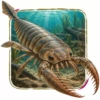
10 Fun Eurypterid Facts for Kids
1. Eurypterids Were Not Dinosaurs
Eurypterids were aquatic arthropods that lived before and during parts of the Paleozoic Era, not dinosaurs.
Kid Decode: They were ancient clawed swimmers from a much older fossil chapter.
2. They Are Nicknamed Sea Scorpions
Eurypterids are often called sea scorpions because some had scorpion-like bodies and grabbing claws.
Kid Decode: Great nickname, but not true scorpions with scuba gear.
3. They Were Chelicerates
Eurypterids belonged to the chelicerate branch of arthropods, related to spiders, scorpions, ticks, and horseshoe crabs.
Kid Decode: Their family tree has more legs, claws, and drama than expected.
4. Some Had Paddle-Like Legs
Many eurypterids had broad swimming limbs that helped them move through water.
Kid Decode: Those paddles made them look like armored rowboats with claws.
5. They Had Exoskeletons
Eurypterids had hard outer coverings called exoskeletons that protected their bodies.
Kid Decode: The armor was on the outside, like nature’s shell suit.
6. They Molted to Grow
Like many arthropods, eurypterids grew by shedding old exoskeletons in a process called molting.
Kid Decode: Growing meant changing your whole outer outfit.
7. Some Were Giant
The biggest eurypterids, such as pterygotids, could grow longer than many humans.
Kid Decode: Some sea scorpions were less “little bug” and more “ancient armored canoe.”
8. They Lived in Different Waters
Eurypterids lived in marine, brackish, and freshwater habitats depending on the species and time period.
Kid Decode: They were not locked to one watery address.
9. They Were Predators
Many eurypterids were predators or scavengers that used claws, mouthparts, and body armor to handle prey.
Kid Decode: Paleozoic snack animals had plenty of reasons to avoid them.
10. They Went Extinct
Eurypterids disappeared before the age of dinosaurs was over, with the group gone by the end of the Paleozoic Era.
Kid Decode: They left the stage before T. rex ever got a script.
The Weirdest Eurypterid Fact
Some eurypterids grew to more than 8 feet long, making them among the largest arthropods ever known.
Try This Eurypterid Activity
Eurypterid Drawing Activity
Draw a eurypterid swimming through a Paleozoic waterway. Add grabbing claws, paddle-like legs, hard exoskeleton, segmented body, tail, small fish, trilobite, molted shell, muddy seafloor, bubbles, and a “sea scorpion” label.
Quick Eurypterid Quiz
- Were eurypterids dinosaurs? Answer: No, they were aquatic arthropods.
- What nickname do eurypterids have? Answer: Sea scorpions.
- Were eurypterids true scorpions? Answer: No.
- What hard body covering did eurypterids have? Answer: An exoskeleton.
- What did eurypterids do to grow? Answer: They molted.
Mini Glossary
- Arthropod: An animal with a segmented body, jointed limbs, and an exoskeleton.
- Chelicerate: An arthropod group that includes spiders, scorpions, horseshoe crabs, and eurypterids.
- Exoskeleton: A hard outer covering that protects the body.
- Molt: To shed an old exoskeleton while growing.
- Paleozoic: A long era of ancient life before the age of dinosaurs.
 Parrot Facts for Kids
 Monitor Lizard Facts for Kids
 Red Panda Facts for Kids
 Ichthyosaurus Facts for Kids
More Animal Facts for Kids
Visit the full animal facts library or explore a focused animal group.
More Extinct Animal Facts for Kids
Discover dinosaurs, Ice Age giants, prehistoric sea creatures, recently extinct species, and other animals from the past.
Fact check note: Fact checked with Yale Peabody eurypterid resources, sea scorpion fossil references, Paleozoic arthropod summaries, and trusted paleontology education sources.

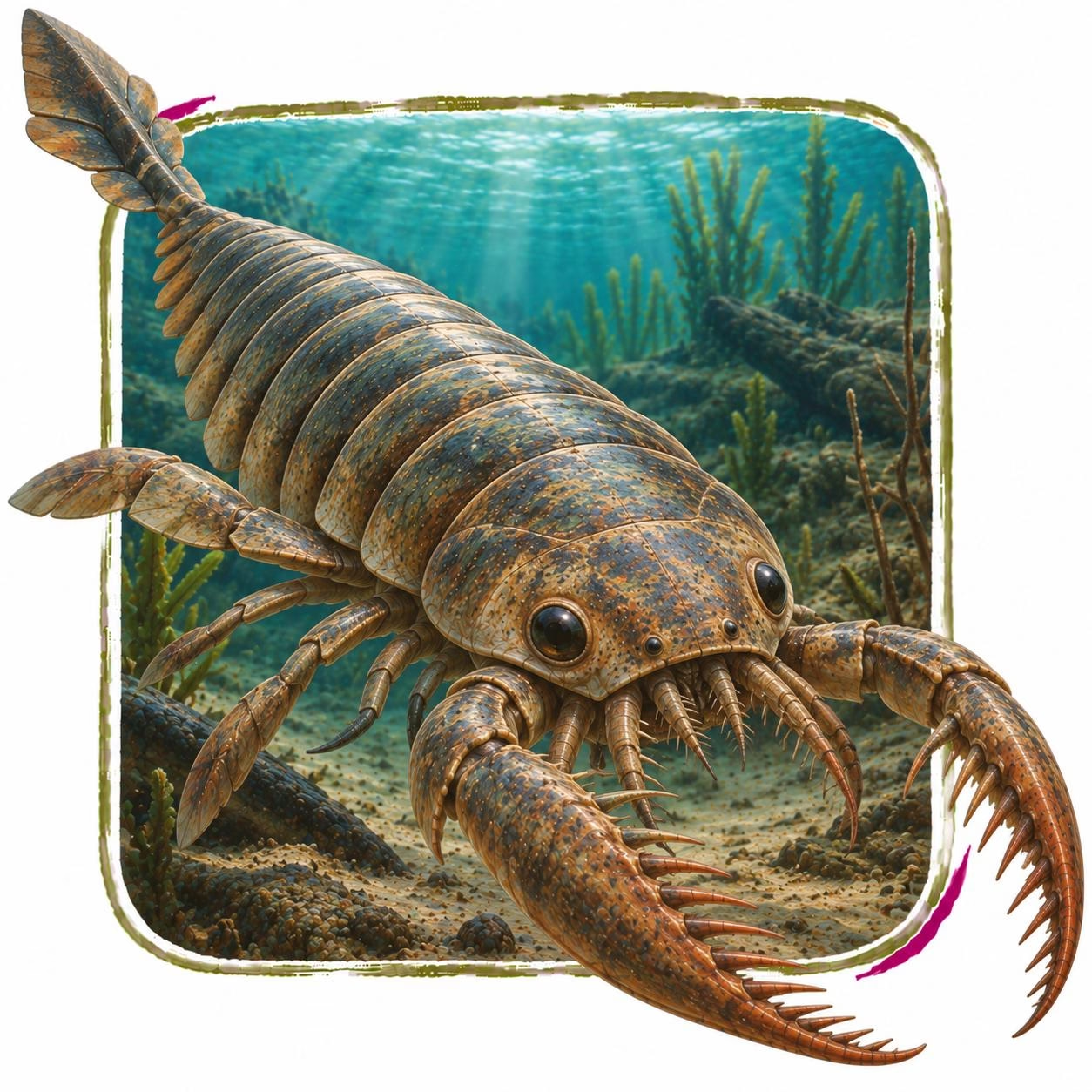
Eurypterid in its natural Paleozoic seas, brackish waters, freshwater habitats, muddy bottoms, and coastal waterways habitat