
Giant Beaver Facts for Kids
Giant beavers were enormous extinct rodents in the genus Castoroides. They lived in North American wetlands during the Pleistocene Ice Age and survived until roughly 10,000 years ago. Two species are generally recognized: Castoroides ohioensis across much of Canada and the United States, and Castoroides dilophidus in the southeastern United States. Giant beavers could reach about two metres in length and weigh around 100 kilograms. Despite their name, evidence suggests they ate aquatic plants and probably did not cut trees or build dams like modern beavers.
Quick Giant Beaver Facts
- Animal Type: Extinct mammal
- Group: Giant beavers in the extinct genus Castoroides and family Castoridae
- Known For: Bear-like size, huge ridged incisors, wetland dependence, aquatic-plant diet, narrow tail, and survival near the end of the Ice Age
- Habitat: Shallow lakes, marshes, swamps, ponds, slow waterways, and glacial wetlands
- Diet: Mainly submerged and emergent aquatic plants
What You’ll Learn
Discover 10 enormous giant beaver facts for kids about huge bodies, giant teeth, swimming, wetlands, and Ice Age North America, plus a quiz, glossary, and activity
These facts are explained simply for kids, parents, teachers, and curious little fact-finders.
10 Fun Giant Beaver Facts for Kids
1. It Was the Largest Known Beaver
Castoroides was far larger than any living beaver. Large individuals may have approached two metres in length and around 100 kilograms, giving them the mass of a small black bear.
Kid Decode: The beaver family once produced a marsh dweller built on small-bear proportions.
2. Two Species Are Generally Recognized
Castoroides ohioensis ranged widely across Canada and the United States, while Castoroides dilophidus lived in the southeastern United States. Older names and species assignments have been revised as fossils are reexamined.
Kid Decode: One giant-beaver branch spread across the continent while another occupied the warm southeast.
3. Its Front Teeth Were Huge and Ridged
The incisors could reach about 15 centimetres and carried strong vertical enamel ridges. They were rounded rather than sharpened into the flat chisel edges modern beavers use to slice wood.
Kid Decode: The mouth carried enormous striped chisels that were strangely poor at actual tree chopping.
4. It Ate Water Plants Instead of Wood
Stable carbon and nitrogen isotopes from fossil bones indicate a diet dominated by submerged aquatic plants. The evidence does not support trees or woody shrubs as major foods.
Kid Decode: The bear-sized rodent grazed an underwater salad garden instead of chewing through a forest.
5. It Probably Did Not Build Dams
No confirmed giant-beaver dam, lodge, or cut wood has been found. Its tooth shape and aquatic-plant diet make modern-beaver-style engineering unlikely, although its exact behavior cannot be observed directly.
Kid Decode: The biggest beaver may have skipped the construction career that made its smaller cousin famous.
6. The Tail Was Probably Long and Narrow
Skeletal evidence suggests a tail more like that of a muskrat than the broad paddle of a modern beaver. Because soft tissues rarely fossilize, the exact outline remains a reconstruction rather than a certainty.
Kid Decode: The Ice Age giant likely steered with a narrow rope-like tail instead of a flat paddle.
7. Wetlands Provided Food and Safety
Short limbs and a bulky body were better suited to water than long journeys on land. Shallow lakes, marshes, and swamps offered both aquatic food and escape from large terrestrial predators.
Kid Decode: The wetland served as restaurant, road, hiding place, and emergency exit.
8. Its Range Followed Ice Age Water
Fossils occur from Alaska and Yukon to the Great Lakes, central United States, and Florida. Northern populations expanded during warmer intervals when retreating ice sheets created chains of lakes and marshes.
Kid Decode: Melting glaciers rolled out a blue-green highway for giant beavers moving north.
9. It Lived Beside People and Megafauna
Giant beavers shared North America with mammoths, mastodons, giant bison, and early people. Fossils and human artifacts overlap in time and place, but no clear evidence shows people hunted or butchered them.
Kid Decode: Humans may have watched the last giants swim, but the archaeological case for hunting remains empty.
10. Wetland Loss Helped End the Genus
As the Ice Age ended, many shallow glacial wetlands filled with sediment or disappeared under warmer, drier conditions. A highly specialized aquatic-plant eater may have struggled as food and refuge shrank, possibly alongside competition from modern beavers.
Kid Decode: When the wetland map folded away, the giant specialist had nowhere else to build a future.
The Weirdest Giant Beaver Fact
The largest beaver known probably could not cut down trees efficiently, and no confirmed giant-beaver dam or lodge has ever been discovered.
Try This Giant Beaver Activity
Giant Beaver Wetland Reconstruction
Draw a Castoroides ohioensis in an Ice Age marsh. Add a bear-sized body, short legs, large hind feet, a long narrow muskrat-like tail, huge vertically ridged incisors, submerged water plants, shallow lakes formed near melting glaciers, mammoths and giant bison in the distance, a modern beaver comparison, and a scientific evidence panel explaining that no confirmed giant-beaver dams or tree-cut wood have been found.
Quick Giant Beaver Quiz
- What genus contained the Giant Beaver? Answer: Castoroides.
- How large could it grow? Answer: About two metres long and roughly 100 kilograms.
- What did isotope evidence show it ate? Answer: Mainly aquatic plants.
- Did it definitely build dams? Answer: No evidence confirms dam building.
- When did it disappear? Answer: Near the end of the Pleistocene, roughly 10,000 years ago.
Mini Glossary
- Pleistocene: The geological epoch containing the repeated Ice Ages before the modern Holocene.
- Megafauna: Very large animals, especially those of the prehistoric past.
- Macrophyte: A large aquatic plant growing in or beside water.
- Stable Isotope: A chemical form used by scientists to reconstruct ancient diets and environments.
- Extinction: The complete disappearance of a species or larger animal group.
 Peahen Facts for Kids
 Panda Facts for Kids
 Alligator Facts for Kids
 Steller's Sea Cow Facts for Kids
More Animal Facts for Kids
Visit the full animal facts library or explore a focused animal group.
More Extinct Animal Facts for Kids
Discover dinosaurs, Ice Age giants, prehistoric sea creatures, recently extinct species, and other animals from the past.
Fact check note: Fact checked with Plint, Longstaffe and Zazula’s Scientific Reports stable-isotope study of Castoroides diet and wetland dependence; Bell Museum and Science Museum of Minnesota giant-beaver fossil resources; North American fossil records and taxonomic research distinguishing Castoroides ohioensis and Castoroides dilophidus; and studies of giant-beaver teeth, tail reconstruction, chronology, human overlap, and late-Pleistocene wetland loss.

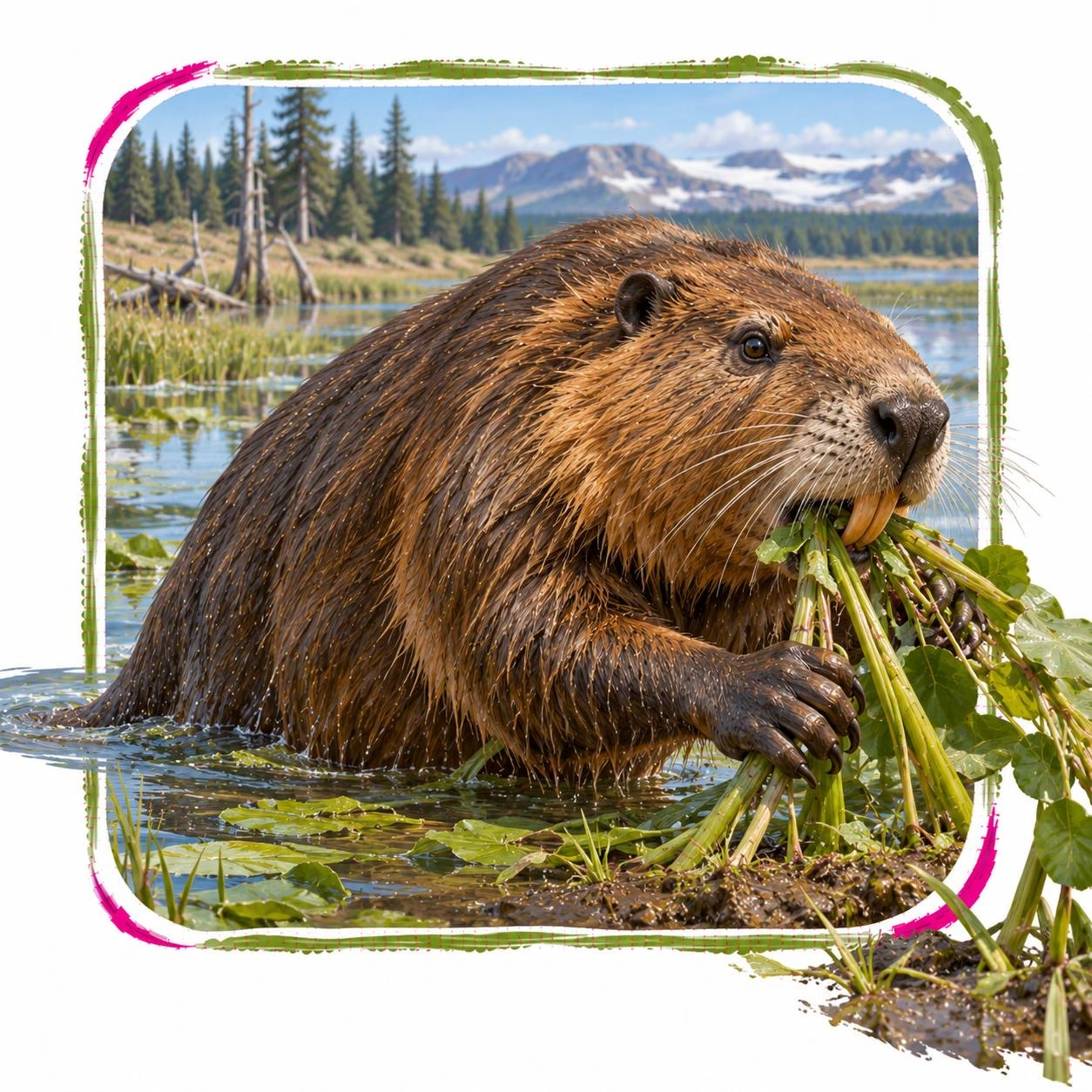
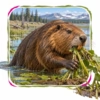
Giant Beaver in its natural Shallow lakes, marshes, swamps, ponds, slow rivers, glacial wetlands, and wet tundra or open conifer landscapes across Pleistocene North America habitat