
Giant Short-Faced Bear Facts for Kids
The Giant Short-Faced Bear, Arctodus simus, was an enormous North American bear of the middle and late Pleistocene. It ranged from Alaska and Yukon through much of Canada and the United States into Mexico before disappearing near the end of the Ice Age. Large males were among the heaviest bears ever to live in North America, while females were much smaller. Despite dramatic old artwork, modern studies suggest it was not a long-legged pursuit specialist or meat-only superpredator. It was probably a flexible omnivore that ate plants, hunted when possible, and scavenged carcasses.
Quick Giant Short-Faced Bear Facts
- Animal Type: Extinct mammal
- Group: Tremarctine bear in the family Ursidae
- Known For: Huge body, deep muzzle, powerful limbs, strong sexual size differences, flexible feeding, enormous range, and late Ice Age extinction
- Habitat: Open woodland, grassland, shrubland, parkland, tundra-steppe, valleys, caves, and mixed Ice Age landscapes
- Diet: Omnivorous; plants, fruits, roots, insects, carrion, and hunted animals probably varied by region and season
What You’ll Learn
Discover 10 massive giant short-faced bear facts for kids about long legs, huge size, powerful jaws, Ice Age habitats, and diet, with a quiz, glossary, and activity
Clear explanations make them ideal for children, families, teachers, and little fact-hunters.

10 Fun Giant Short-Faced Bear Facts for Kids
1. It Was One of North America’s Largest Bears
Arctodus simus varied greatly in size. Some adults weighed only a few hundred kilograms, while the largest presumed males may have approached a metric tonne, depending on the estimation method.
Kid Decode: The species ranged from large-bear size to individuals built like furry compact cars.
2. Males Could Be Much Larger Than Females
Fossil measurements reveal two strong size classes that researchers interpret largely as sexual dimorphism. The biggest robust skeletons were probably males, while females were more lightly built.
Kid Decode: One species placed a giant heavyweight and a much smaller partner on the same family tree.
3. The Short Face Was Partly an Illusion
The muzzle looked short because the skull was broad and deep, but scaled comparisons show it was not exceptionally shortened relative to other bears. The nickname exaggerates a real but modest feature.
Kid Decode: A wide powerful head fooled the eye into seeing a face shorter than the measurements reveal.
4. Its Legs Were Not Built Like a Cheetah’s
Older reconstructions imagined a high-speed pursuit predator with extremely long limbs. Later analyses found bear-like limb proportions better suited to powerful walking and general movement than prolonged fast chasing.
Kid Decode: The giant owned sturdy hiking equipment, not four stilts designed for racing horses.
5. It Probably Ate Many Kinds of Food
Teeth, jaws, limb anatomy, and isotope evidence fit an omnivore that could eat vegetation, fruit, roots, insects, meat, and carrion. Northern populations may have relied more heavily on animal foods.
Kid Decode: The Ice Age menu could shift from berries and roots to a scavenged bison without changing species.
6. Huge Size Helped It Claim Carcasses
Even without being a specialized hunter, a large adult could intimidate wolves or big cats and take over a kill. Modern brown bears use the same strategy when they displace smaller predators.
Kid Decode: The bear could win dinner by arriving as the largest argument at the carcass.
7. Its Nose Probably Found Food Far Away
No soft nose tissue survives, but Arctodus shared the bear family’s enlarged smell-processing anatomy. Strong scent would have helped locate carcasses, plants, mates, and rivals across broad landscapes.
Kid Decode: An invisible odor trail could lead the giant to food long before its eyes found it.
8. It Roamed Across a Huge Continent
Fossils occur from Alaska and Yukon through Canada and the continental United States into Mexico. Populations experienced very different climates, prey communities, plants, and competitors.
Kid Decode: One bear species crossed frozen northlands, open plains, forests, deserts, and warm southern valleys.
9. It Shared the Ice Age With Fierce Rivals
Arctodus lived beside American lions, saber-toothed cats, dire wolves, gray wolves, brown bears, and people. These animals competed for some foods while exploiting different habitats and hunting strategies.
Kid Decode: The dinner table included claws, fangs, packs, ambush hunters, scavengers, and tool-carrying humans.
10. Its Extinction Has No Single Proven Cause
The species vanished near the end of the Pleistocene as climate, vegetation, prey, competitors, and human influence changed rapidly. Researchers debate how much each factor contributed.
Kid Decode: The final disappearance looks like a tangled web of changing climate, food, rivals, and people.
The Weirdest Giant Short-Faced Bear Fact
When scientists compared its skull with other bears at the same scale, the famous short face was not exceptionally short, making the animal’s best-known nickname partly misleading.
Try This Giant Short-Faced Bear Activity
Giant Short-Faced Bear Evidence Activity
Draw Arctodus simus in a late Ice Age North American parkland. Add a deep-muzzled head, high shoulders, powerful forelimbs, long-looking but bear-like legs, a large male beside a smaller female, plant foods and a carcass showing omnivory, strong-smell scent trails, a cave shelter, mammoths, bison, horses, dire wolves, and saber-toothed cats in the distance, plus a myth panel crossing out a cheetah-style pursuit sprint.
Quick Giant Short-Faced Bear Quiz
- What was the Giant Short-Faced Bear’s scientific name? Answer: Arctodus simus.
- Where did it live? Answer: Across much of North America.
- Was it definitely a meat-only superpredator? Answer: No, evidence supports a flexible omnivorous diet.
- Were males and females the same size? Answer: No, large males could be much heavier.
- When did it disappear? Answer: Near the end of the Pleistocene Ice Age.
Mini Glossary
- Tremarctine: A bear in the group containing short-faced bears and the living Spectacled Bear.
- Pleistocene: The geological epoch containing repeated Ice Ages before the modern Holocene.
- Omnivore: An animal that eats both plant and animal foods.
- Stable Isotope: A chemical form in fossil tissue that can reveal ancient diet and habitat.
- Sexual Dimorphism: A consistent physical difference between males and females of one species.

 Wasp Facts for Kids
 Hedgehog Facts for Kids
 Loggerhead Sea Turtle Facts for Kids
 Beelzebufo Facts for Kids
More Animal Facts for Kids
Visit the full animal facts library or explore a focused animal group.
More Extinct Animal Facts for Kids
Discover dinosaurs, Ice Age giants, prehistoric sea creatures, recently extinct species, and other animals from the past.
Fact check note: Fact checked with Figueirido and colleagues’ Journal of Vertebrate Paleontology reassessment of Arctodus simus locomotion, skull proportions, and diet; body-mass and sexual-dimorphism studies; stable-isotope research from Beringia and other North American sites; fossil range and chronology records; and current discussions of late-Pleistocene extinction.

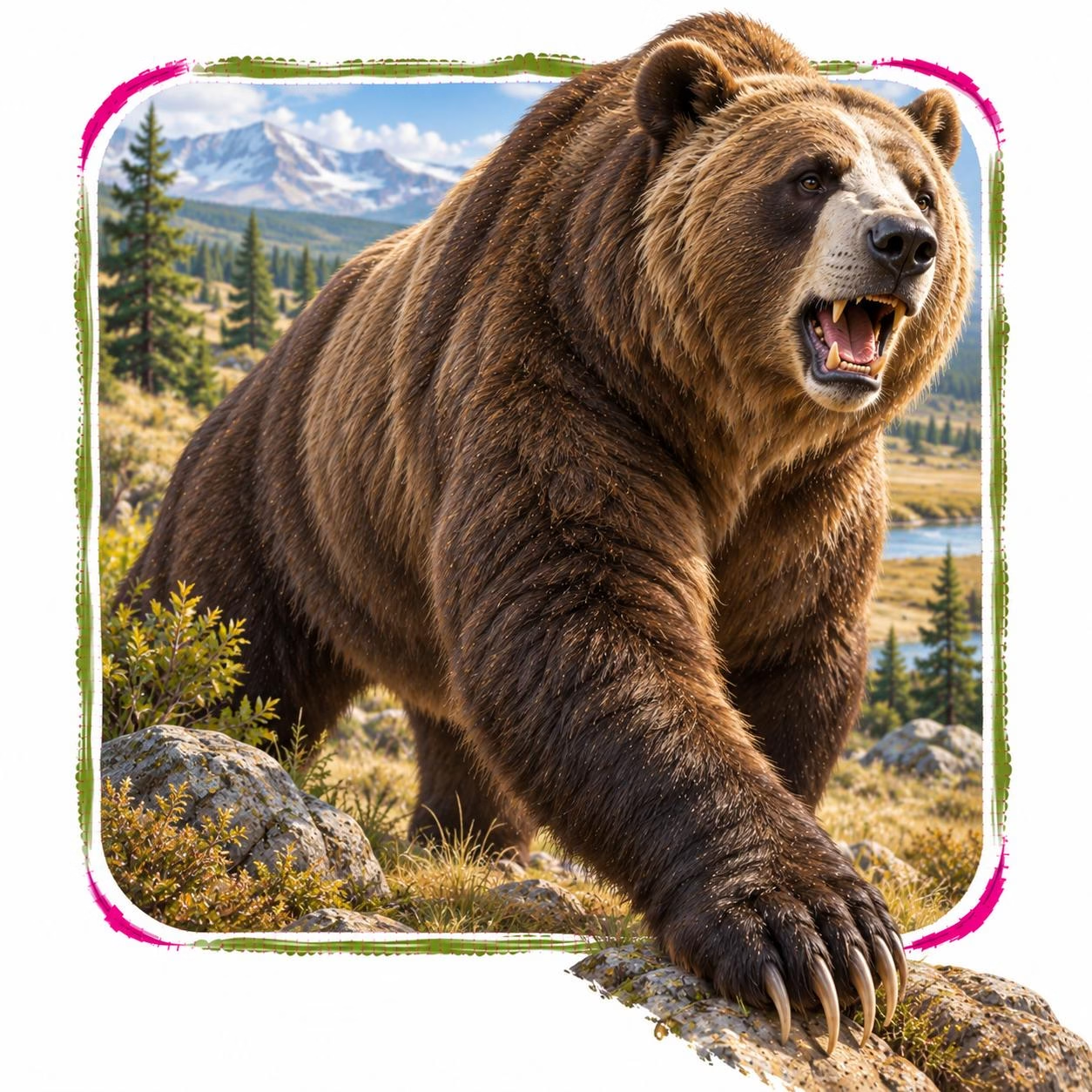
Giant Short-Faced Bear in its natural Open woodland, grassland, shrubland, parkland, tundra-steppe, valleys, caves, and mixed Pleistocene landscapes across North America habitat