
Gigantophis Facts for Kids
Gigantophis garstini was a giant extinct snake that lived in North Africa during the late Eocene, about 37 million years ago. Its fossils come mainly from the Fayum region of Egypt, with related or referred material reported elsewhere in North Africa. Gigantophis belonged to Madtsoiidae, a long-lived extinct snake family separate from modern boas and pythons. It was once estimated at more than ten metres long, but a detailed 2017 study revised the best estimate to roughly seven metres, with substantial uncertainty because the animal is known mostly from vertebrae.
Quick Gigantophis Facts
- Animal Type: Extinct reptile
- Group: Giant madtsoiid snake in the extinct family Madtsoiidae
- Known For: Huge vertebrae, roughly seven-metre estimated length, late Eocene age, North African fossils, and a former largest-snake reputation
- Habitat: Warm river floodplains, wetlands, coastal lowlands, forests, and waterways near the ancient Tethys Sea
- Diet: Carnivorous; probably medium and large vertebrates, but exact prey is unknown
What You’ll Learn
Explore 10 enormous gigantophis facts for kids about giant size, powerful coils, ancient tropical habitats, hunting, and fossil evidence, plus a quiz, glossary, and activity
These easy facts are made for kids, parents, teachers, and curious young learners.
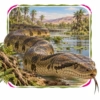
10 Fun Gigantophis Facts for Kids
1. It Lived About 37 Million Years Ago
Gigantophis inhabited North Africa during the late Eocene, when the region was warmer and wetter than today. Rivers, swamps, forests, and coastal environments spread across areas now bordering the Sahara.
Kid Decode: The giant snake lived where today’s desert once held a green maze of water and forest.
2. It Belonged to an Extinct Snake Family
Madtsoiids survived for tens of millions of years across Africa, Europe, South America, India, Madagascar, and Australia. They were not pythons, boas, or anacondas despite superficial reconstructions.
Kid Decode: Gigantophis came from a global snake dynasty with no living member.
3. Fossil Vertebrae Revealed the Species
The animal is known primarily from large backbone bones rather than a complete skeleton. Vertebra shape identifies its family, body region, relative size, and evolutionary relationships.
Kid Decode: A handful of backbone pieces became the puzzle clues for an entire giant snake.
4. Modern Estimates Put It Near Seven Metres
An older comparison suggested more than ten metres, but later analysis of the available vertebrae produced an estimate around 6.9 metres. Different comparison methods can still give different answers.
Kid Decode: The snake shrank on paper when better mathematics examined the same giant bones.
5. It Was Longer Than Most Living Snakes
A roughly seven-metre Gigantophis would exceed most wild pythons and anacondas, although exceptional modern individuals can approach comparable lengths. It was giant without needing the older record-breaking estimate.
Kid Decode: Losing three estimated metres still leaves a snake longer than a small bus.
6. No Complete Skull Has Been Found
Without a well-preserved skull, scientists cannot confidently reconstruct the exact head shape, jaw mechanics, teeth, or feeding style. Art must borrow cautiously from related snakes.
Kid Decode: The most recognizable end of the animal is also the part missing from the fossil puzzle.
7. Its Hunting Method Remains Unknown
A snake of this size probably ambushed vertebrate prey and used powerful jaws and body muscles, but no complete skull, stomach contents, bite marks, or behavior reveal exactly how Gigantophis subdued animals.
Kid Decode: The giant hunter left a body-size clue but no instruction manual for catching dinner.
8. Its Neighbors Included Early African Mammals
The Fayum ecosystem contained primitive elephants, hyracoids, primates, rodents, bats, crocodilians, turtles, and many fish. Gigantophis could have preyed on some vertebrates, but no stomach contents or bite-marked meal confirms which ones.
Kid Decode: The riverbank offered a crowded menu, yet the snake left no receipt.
9. It Was Named in 1901
British paleontologist Charles William Andrews described Gigantophis garstini from Egyptian fossils. The species name honored Sir William Garstin, an engineer and administrator associated with Egyptian public works.
Kid Decode: One giant snake carried an engineer’s surname from the Nile into paleontology.
10. Later Giants Took the Record
Gigantophis was once celebrated as the largest known snake. Discoveries and revised estimates for Titanoboa and Vasuki changed the rankings, showing how fossil records evolve with every new bone and method.
Kid Decode: The prehistoric size leaderboard keeps rearranging whenever another vertebra enters the room.
The Weirdest Gigantophis Fact
Nearly its entire giant reputation was reconstructed from a small collection of vertebrae, because no complete skull or skeleton has ever been found.
Try This Gigantophis Activity
Gigantophis Fossil-Reconstruction Activity
Draw Gigantophis moving beside a late Eocene Egyptian river. Add a roughly seven-metre scale bar, a thick muscular snake body, a cautious head reconstruction, giant vertebrae as the known evidence, palms and warm wetland forest, crocodilians, turtles, fish, early elephants and other mammals, a 1901 discovery timeline, and a size-estimate panel showing the older ten-metre claim revised downward by modern vertebral analysis.
Quick Gigantophis Quiz
- What was the full scientific name? Answer: Gigantophis garstini.
- Which extinct snake family contained it? Answer: Madtsoiidae.
- Where were the best-known fossils found? Answer: The Fayum region of Egypt.
- What is the revised length estimate? Answer: Roughly seven metres, with uncertainty.
- Do scientists know its exact prey? Answer: No.
Mini Glossary
- Eocene: A warm geological epoch lasting from about 56 to 34 million years ago.
- Madtsoiid: A member of an extinct widespread family of snakes called Madtsoiidae.
- Vertebra: One of the bones forming the backbone.
- Allometry: The study of how body proportions change with size.
- Fayum: An Egyptian region famous for late Eocene and early Oligocene fossils.
 Chinstrap Penguin Facts for Kids
 Pheasant Facts for Kids
 Catfish Facts for Kids
 Kritosaurus Facts for Kids
More Animal Facts for Kids
Visit the full animal facts library or explore a focused animal group.
More Extinct Animal Facts for Kids
Discover dinosaurs, Ice Age giants, prehistoric sea creatures, recently extinct species, and other animals from the past.
Fact check note: Fact checked with Rio and Mannion’s 2017 Journal of Vertebrate Paleontology osteological revision of Gigantophis garstini, late Eocene Fayum snake-fauna research, Charles William Andrews’ original 1901 description, and comparative studies of madtsoiid anatomy, vertebral allometry, body-length estimation, North African paleoenvironments, and giant-snake evolution.

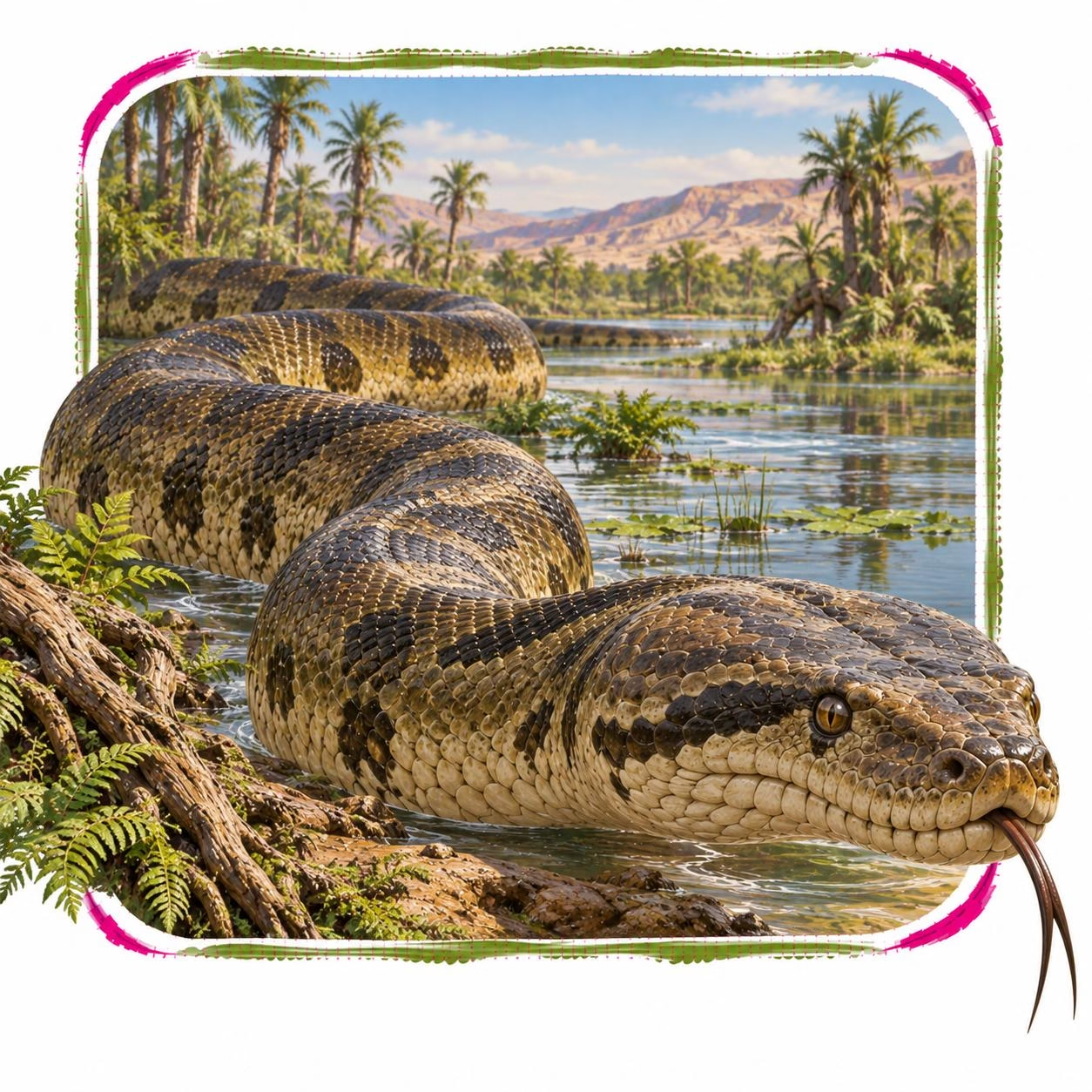
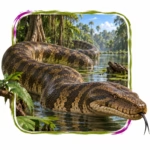
Gigantophis in its natural Warm late Eocene river floodplains, wetlands, coastal lowlands, forests, and waterways in North Africa near the ancient Tethys Sea habitat