
Hatzegopteryx Facts for Kids
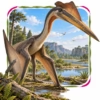
Hatzegopteryx thambema was a giant azhdarchid pterosaur that lived in what is now Transylvania, Romania, near the end of the Cretaceous Period. It inhabited Hațeg Island, a subtropical island in the ancient Tethys Sea, roughly 70 to 66 million years ago. Hatzegopteryx was not a dinosaur but a flying reptile with a long toothless beak, enormous wings, and a body supported on all four limbs when walking. Fragmentary fossils suggest a wingspan around 10 to 12 metres, a remarkably broad skull, and a shorter, more powerful neck than those of many other giant azhdarchids.
Quick Hatzegopteryx Facts
- Animal Type: Extinct flying reptile
- Group: Giant azhdarchid pterosaur in the family Azhdarchidae
- Known For: Enormous wingspan, broad skull, giant toothless beak, robust foam-like skull bones, short powerful neck, and probable role as a large terrestrial predator
- Habitat: Subtropical island floodplains, rivers, forests, wetlands, and open ground on Late Cretaceous Hațeg Island
- Diet: Carnivorous; probably small and medium-sized vertebrates, hatchlings, eggs, carrion, and other available prey, although direct diet evidence is absent
What You’ll Learn
Discover 10 enormous Hatzegopteryx facts for kids about giant wings, massive skulls, long necks, walking on land, and Cretaceous Europe, plus a quiz, glossary, and activity
Clear explanations make them ideal for children, families, teachers, and little fact-hunters.
10 Fun Hatzegopteryx Facts for Kids
1. It Was a Pterosaur, Not a Dinosaur
Hatzegopteryx belonged to a separate group of flying reptiles that shared the Mesozoic world with dinosaurs. Its wings were supported mainly by an enormously lengthened fourth finger.
Kid Decode: The giant crossed dinosaur country on wings built around one super-sized finger.
2. It Lived on Hațeg Island
During the latest Cretaceous, much of Europe was an island chain in the Tethys Sea. Hatzegopteryx fossils come from rocks formed on Hațeg Island in present-day Romania.
Kid Decode: Modern Transylvania once sat inside a warm island world filled with miniature dinosaurs.
3. The Wingspan Was Probably Around 10 to 12 Metres
No complete wing exists, so size is estimated from skull and limb fragments compared with better-known giant azhdarchids. It ranked among the largest flying animals, but a single exact number is not defensible.
Kid Decode: Its shadow may have stretched wider than a small city bus, but the fossil ruler is incomplete.
4. The Skull Was Huge and Broad
Known skull fragments indicate a deep, wide head rather than a narrow delicate one. Reconstructions suggest a skull and beak possibly exceeding two metres, although the full outline is unknown.
Kid Decode: The head may have been longer than a child is tall and built more like a battering ram than tweezers.
5. Foam-Like Bone Kept the Head Light
The skull combined thin outer bone with a dense internal mesh of tiny struts and air spaces. This unusual construction could make a very large skull lighter without leaving it hollow and flimsy.
Kid Decode: Inside the giant head was a natural engineering foam made from bone and air.
6. Its Neck Was Unusually Powerful
A giant neck vertebra referred to Hatzegopteryx is short, broad, and thick-walled compared with those of many azhdarchids. Biomechanical work suggests a neck able to resist strong bending and twisting forces.
Kid Decode: Instead of a fishing-rod neck, this giant may have carried a muscular lifting boom.
7. It Probably Walked Well on Land
Azhdarchids had long limbs and could move quadrupedally with their folded wings helping support the front of the body. Trackways and anatomy support competent walking across firm ground.
Kid Decode: The flying giant spent plenty of time marching on four limbs through dinosaur habitat.
8. It May Have Been the Island’s Top Predator
Hațeg Island lacked known giant meat-eating theropod dinosaurs. Hatzegopteryx may have hunted small and medium vertebrates or scavenged carcasses, but no stomach contents or direct kill evidence reveal its exact menu.
Kid Decode: The island’s largest hunter may have arrived from the sky, though its dinner receipts never fossilized.
9. A Giant Lived Among Dwarf Dinosaurs
Limited island resources helped several Hațeg dinosaurs evolve smaller bodies than mainland relatives. Hatzegopteryx remained enormous, perhaps because flight allowed it to travel widely and exploit scattered food.
Kid Decode: The island shrank its dinosaurs but somehow kept one flying reptile colossal.
10. It Vanished in the End-Cretaceous Extinction
Hatzegopteryx disappeared around 66 million years ago during the mass extinction that ended all non-bird dinosaurs and every pterosaur lineage. No pterosaur survived into the modern world.
Kid Decode: The final Cretaceous curtain fell on both giant wings and dinosaur kingdoms.
The Weirdest Hatzegopteryx Fact
Hațeg Island was famous for dwarf dinosaurs, yet its skies and plains were occupied by one of the largest and most powerfully built flying animals known.
Try This Hatzegopteryx Activity
Reconstruct Hatzegopteryx Activity
Draw Hatzegopteryx walking across Hațeg Island. Add a giraffe-height quadrupedal stance, an estimated 10–12-metre wingspan, a huge broad toothless beak, a deep skull, a short muscular neck, folded wing fingers touching the ground, and long hind legs. Surround it with dwarf titanosaurs, small ornithopods, crocodilians, turtles, rivers, forests, and wetlands. Add fossil panels for the skull fragments, humerus, and referred neck vertebra, plus labels showing which features are strongly supported and which remain uncertain.
Quick Hatzegopteryx Quiz
- Was Hatzegopteryx a dinosaur? Answer: No, it was a pterosaur.
- Where did it live? Answer: On Hațeg Island in what is now Romania.
- What was unusual about its neck? Answer: It was probably shorter, thicker, and stronger than the necks of many other giant azhdarchids.
- Did it have teeth? Answer: No evidence indicates teeth; it had a giant toothless beak.
- Is its exact wingspan known? Answer: No, estimates are based on incomplete fossils.
Mini Glossary
- Pterosaur: A flying reptile that lived during the age of dinosaurs.
- Azhdarchid: A long-legged, long-beaked pterosaur in the family Azhdarchidae.
- Maastrichtian: The final stage of the Cretaceous Period, ending 66 million years ago.
- Pneumatic Bone: A bone containing air spaces that reduce weight while retaining strength.
- Insular Dwarfism: Evolution toward smaller body size in animals living on islands with limited resources.
 Caiman Facts for Kids
 Golden Snub-Nosed Monkey Facts for Kids
 Grey Squirrel Facts for Kids
 Epicyon Facts for Kids
More Animal Facts for Kids
Visit the full animal facts library or explore a focused animal group.
More Extinct Animal Facts for Kids
Discover dinosaurs, Ice Age giants, prehistoric sea creatures, recently extinct species, and other animals from the past.
Fact check note: Fact checked with the original scientific description of Hatzegopteryx thambema, Naish and Witton’s PeerJ study of the referred robust neck vertebra and neck biomechanics, research on azhdarchid terrestrial locomotion and feeding, and geological and paleontological studies of Late Cretaceous Hațeg Island. Wingspan, body mass, complete skull shape, exact neck length, flight performance, and diet remain estimates because the fossils are fragmentary.

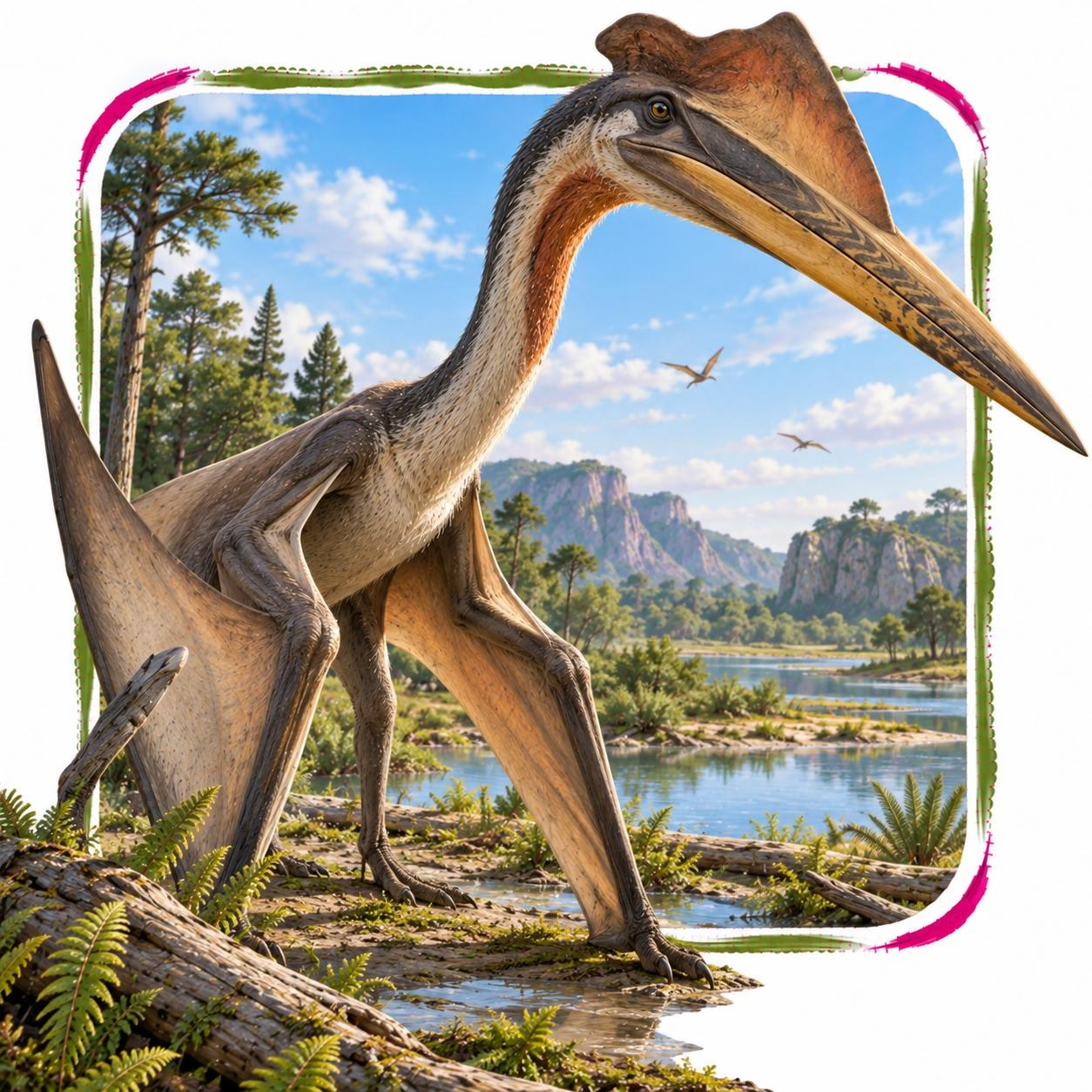
Hatzegopteryx in its natural Subtropical island floodplains, rivers, wetlands, forests, and open ground on Late Cretaceous Hațeg Island in what is now Romania habitat