
Hesperocyon Facts for Kids
Hesperocyon was one of the earliest well-known members of the dog family. It lived in North America from the Late Eocene into the Oligocene, long before wolves, foxes, or domestic dogs appeared. Although its teeth and ear region reveal a true canid, its long flexible body, low limbs, plantigrade feet, and possible climbing ability made it look more like a civet or small mongoose than a modern dog.
Quick Hesperocyon Facts
- Animal Type: Extinct early canid
- Group: Hesperocyonine dog
- Known For: Primitive dog anatomy, long body and tail, plantigrade feet, and mixed climbing and running traits
- Lived During: Late Eocene to Oligocene, roughly 40–31 million years ago
- Diet: Small animals, insects, eggs, and possibly fruit or other plant food
What You’ll Learn
Explore 10 early hesperocyon facts for kids about small size, dog-like features, sharp teeth, running, and canine evolution, plus a quiz, glossary, and activity
Easy explanations make them great for children, families, teachers, and young animal explorers.
10 Fun Hesperocyon Facts for Kids
1. Hesperocyon Was a True Canid
Its specialised middle-ear region and dog-family tooth pattern identify Hesperocyon as an early member of Canidae.
Kid Decode: The body looked unusual, but the ears and teeth carried a genuine dog-family membership card.
2. It Lived Before Wolves and Foxes
Hesperocyon appeared tens of millions of years before modern canid groups diversified.
Kid Decode: The dog story began with a small forest animal, not a howling wolf on an open plain.
3. It Was About Cat-Sized
Hesperocyon gregarius was a small carnivoran with a body and tail together reaching roughly 70 to 80 centimetres, though estimates vary.
Kid Decode: It carried early dog history in a package closer to house-cat scale than wolf scale.
4. Its Body Was Long and Flexible
A relatively long back, low limbs, and a long tail produced proportions more like those of a civet than a modern running dog.
Kid Decode: Its outline stretched low across the forest floor instead of standing tall like a wolf.
5. It Walked More Flat-Footed
Limb and ankle anatomy show that Hesperocyon was plantigrade or partly plantigrade rather than fully toe-walking like modern dogs.
Kid Decode: Its heels stayed closer to the ground while later dogs lifted themselves onto running toes.
6. It Mixed Running and Climbing Features
Some bones show early running adaptations, while others retain flexible joints, broad shoulder anatomy, and hooked claws associated with climbing.
Kid Decode: Its skeleton packed a little forest climbing gear beside the first pieces of a dog’s running kit.
7. One Claw May Have Been Partly Retractile
A short, deep, hooked terminal toe bone suggests that at least one claw could have been more retractile than the claws of living dogs.
Kid Decode: This early dog relative may have carried one surprisingly cat-like claw trick.
8. It Was Probably an Opportunistic Feeder
Its teeth suited cutting meat but were not highly specialised for bone crushing or large prey, suggesting a diet of small animals and possibly varied foods.
Kid Decode: Its menu probably depended on what a small hunter could catch, find, or nibble.
9. It Had Five Digits on the Forefoot
Hesperocyon retained a more primitive five-digit forefoot rather than the more reduced and specialised running foot seen in later canids.
Kid Decode: Its paws had not yet finished the dog family’s long-running redesign.
10. Some Individuals Had a Hereditary Bone Disorder
Several Hesperocyon fossils preserve mushroom-like bony growths identified as multiple hereditary osteochondromas.
Kid Decode: A disease passed through an ancient dog population left family medical records written directly on bone.
The Weirdest Hesperocyon Fact
Hesperocyon was a true dog-family member that walked more flat-footed, may have climbed, and retained a hooked possibly retractile claw.
Try This Hesperocyon Activity
Hesperocyon Drawing Activity
Draw Hesperocyon moving through an Oligocene North American woodland. Add a cat-sized long body, low legs, long tail, narrow dog-like muzzle, five-digit front paws, partly flat-footed posture, and a hooked claw. Include comparison footprints showing its plantigrade step beside a modern dog’s digitigrade step.
Quick Hesperocyon Quiz
- Was Hesperocyon a true member of the dog family? Answer: Yes.
- Did it look exactly like a modern dog? Answer: No, it had a long low body and more primitive limbs.
- How did its feet differ from modern dogs? Answer: They were more plantigrade or flat-footed.
- What extra ability may its limb anatomy have supported? Answer: Climbing.
- What unusual disease appears in several fossils? Answer: Multiple hereditary osteochondromas.
Mini Glossary
- Canid: A member of the dog family.
- Hesperocyonine: A member of the earliest major radiation of North American canids.
- Plantigrade: Walking with much of the foot placed on the ground.
- Cursorial: Adapted for efficient running.
- Osteochondroma: A usually non-cancerous bony growth capped with cartilage.
 Gannet Facts for Kids
 Oyster Facts for Kids
 Nyala Facts for Kids
 Anomalocaris Facts for Kids
More Animal Facts for Kids
Visit the full animal facts library or explore a focused animal group.
More Extinct Animal Facts for Kids
Discover dinosaurs, Ice Age giants, prehistoric sea creatures, recently extinct species, and other animals from the past.
Fact check note: Fact checked with Wang’s 1993 functional study of locomotion in Hesperocyon, Wang’s 1994 phylogenetic systematics of Hesperocyoninae, Wang and Rothschild’s 1992 osteochondroma report, and Wang, Tedford and Taylor’s review of canid evolution.

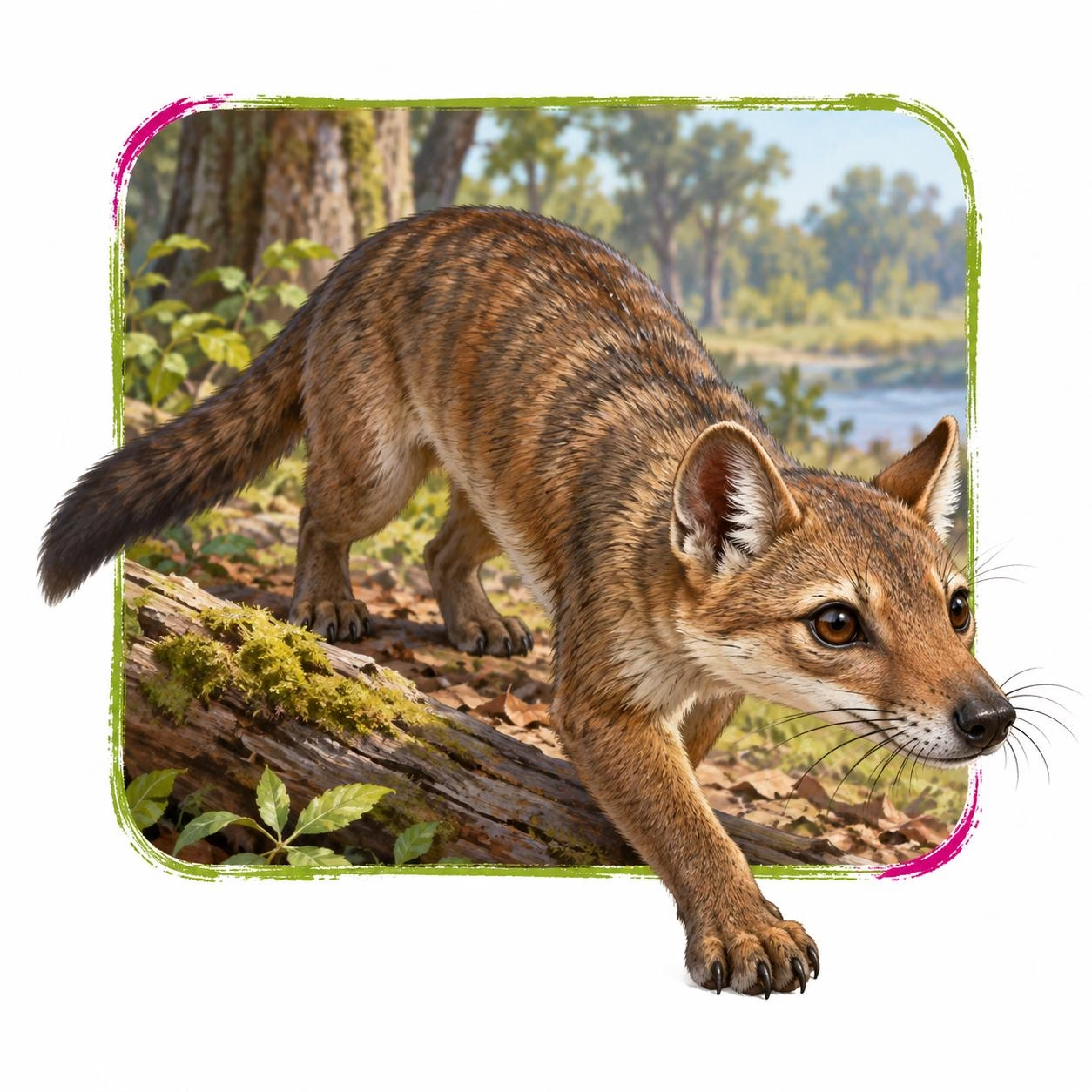
Hesperocyon in its natural Late Eocene and Oligocene forests, open woodlands, river floodplains, shrublands, and increasingly seasonal plains of North America habitat