
Hyracodon Facts for Kids
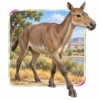
Hyracodon was a lightly built rhinocerotoid that lived in North America from the Late Eocene into the Oligocene. It was not a horse or a modern rhinoceros. Unlike today’s heavy rhinos, it had no horn, carried a relatively small skull on a longer neck, and walked on long slender legs. Its horse-like proportions earned members of its family the nickname running rhinos, although fossils cannot tell us exactly how fast Hyracodon could run.
Quick Hyracodon Facts
- Animal Type: Extinct odd-toed hoofed mammal
- Group: Hyracodont rhinocerotoid
- Known For: Hornless head, pony-sized body, long slender legs, three-toed feet, and running-rhino nickname
- Lived During: Late Eocene to Oligocene, roughly 37–26 million years ago
- Diet: Leaves, shoots, and other soft vegetation
What You’ll Learn
Explore 10 speedy hyracodon facts for kids about long legs, running, plant diets, hornless rhino relatives, and prehistoric grasslands, plus a quiz, glossary, and activity
Easy explanations make them great for children, families, teachers, and young nature fans.
10 Fun Hyracodon Facts for Kids
1. Hyracodon Was a Rhinocerotoid
Hyracodon belonged to the broader rhinoceros branch of odd-toed hoofed mammals, though it was outside the family containing living rhinos.
Kid Decode: It was a rhino relative built before the family settled on the heavy modern design.
2. It Had No Horn
No bony support or roughened nasal area shows that Hyracodon carried a rhinoceros-style horn.
Kid Decode: The running rhino completed its look without adding a horn to the nose.
3. It Was Roughly Pony-Sized
Hyracodon was much smaller and lighter than a modern rhinoceros, with a body often compared with that of a small pony.
Kid Decode: It brought rhino ancestry in a package closer to stable size than safari-tank size.
4. Its Legs Were Long and Slender
Elongated limb bones gave Hyracodon a light, cursorial appearance unlike the thick weight-bearing legs of living rhinos.
Kid Decode: Its legs looked designed for covering ground rather than carrying two tonnes.
5. It Had Three Toes on Every Foot
Hyracodonts retained three functional toes on both the front and hind feet.
Kid Decode: Every foot arrived with a neat trio of hoofed toes.
6. Its Neck Was Relatively Long
A longer neck and small head helped produce the horse-like silhouette seen in skeletal reconstructions.
Kid Decode: The outline could fool a distant observer until the teeth revealed the rhino relationship.
7. It Was Nicknamed a Running Rhino
Its slender limbs suggest greater speed and agility than in modern rhinos, although its actual top speed is unknown.
Kid Decode: The nickname supplies the sprint; the fossil record keeps the stopwatch.
8. It Probably Browsed on Leaves
Its teeth were better suited to browsing on leaves and shoots than to cropping abrasive grass as a specialised grazer.
Kid Decode: Its long neck likely searched the shrub buffet rather than mowing a lawn.
9. Its Name Means Hyrax Tooth
The name Hyracodon refers to similarities once noticed between its teeth and those of a hyrax.
Kid Decode: A pony-shaped rhino relative ended up named after the tooth of a much smaller mammal.
10. Its Fossils Are Famous From the White River Badlands
Numerous remains come from the White River Formation of the western United States, especially Nebraska, South Dakota, Wyoming, and nearby regions.
Kid Decode: The badlands preserved enough running-rhino pieces to build an excellent fossil scrapbook.
The Weirdest Hyracodon Fact
Hyracodon was a hornless rhino relative with a pony-like body, long slender legs, and three toes on every foot.
Try This Hyracodon Activity
Hyracodon Drawing Activity
Draw Hyracodon trotting across an Oligocene North American plain. Add a pony-sized body, hornless head, small skull, relatively long neck, slender legs, three toes on every foot, leafy shrubs, dry grass, and a White River badlands cliff. Include a “running speed unknown” sign beside its tracks.
Quick Hyracodon Quiz
- Was Hyracodon a horse? Answer: No, it was a rhinocerotoid.
- Did it have a horn? Answer: No.
- How large was it? Answer: Roughly pony-sized.
- How many functional toes occurred on each foot? Answer: Three.
- Why is it called a running rhino? Answer: Its long slender limbs suggest a lighter and more agile build than modern rhinos.
Mini Glossary
- Rhinocerotoid: A mammal from the broader evolutionary group containing rhinoceroses and their extinct relatives.
- Hyracodont: A member of an extinct family of often hornless rhino relatives.
- Cursorial: Adapted for efficient running or travelling on land.
- Browser: An herbivore that eats leaves, twigs, and shoots.
- White River Formation: Fossil-rich rocks of the North American Great Plains dating mainly from the Eocene and Oligocene.
 Bull Shark Facts for Kids
 Anglerfish Facts for Kids
 Scallop Facts for Kids
 Cymbospondylus Facts for Kids
More Animal Facts for Kids
Visit the full animal facts library or explore a focused animal group.
More Extinct Animal Facts for Kids
Discover dinosaurs, Ice Age giants, prehistoric sea creatures, recently extinct species, and other animals from the past.
Fact check note: Fact checked with Troxell’s 1921 Hyracodon descriptions, Prothero and Schoch’s rhinocerotoid revision, American Museum of Natural History Hyracodontidae resources, and White River Formation fossil records.

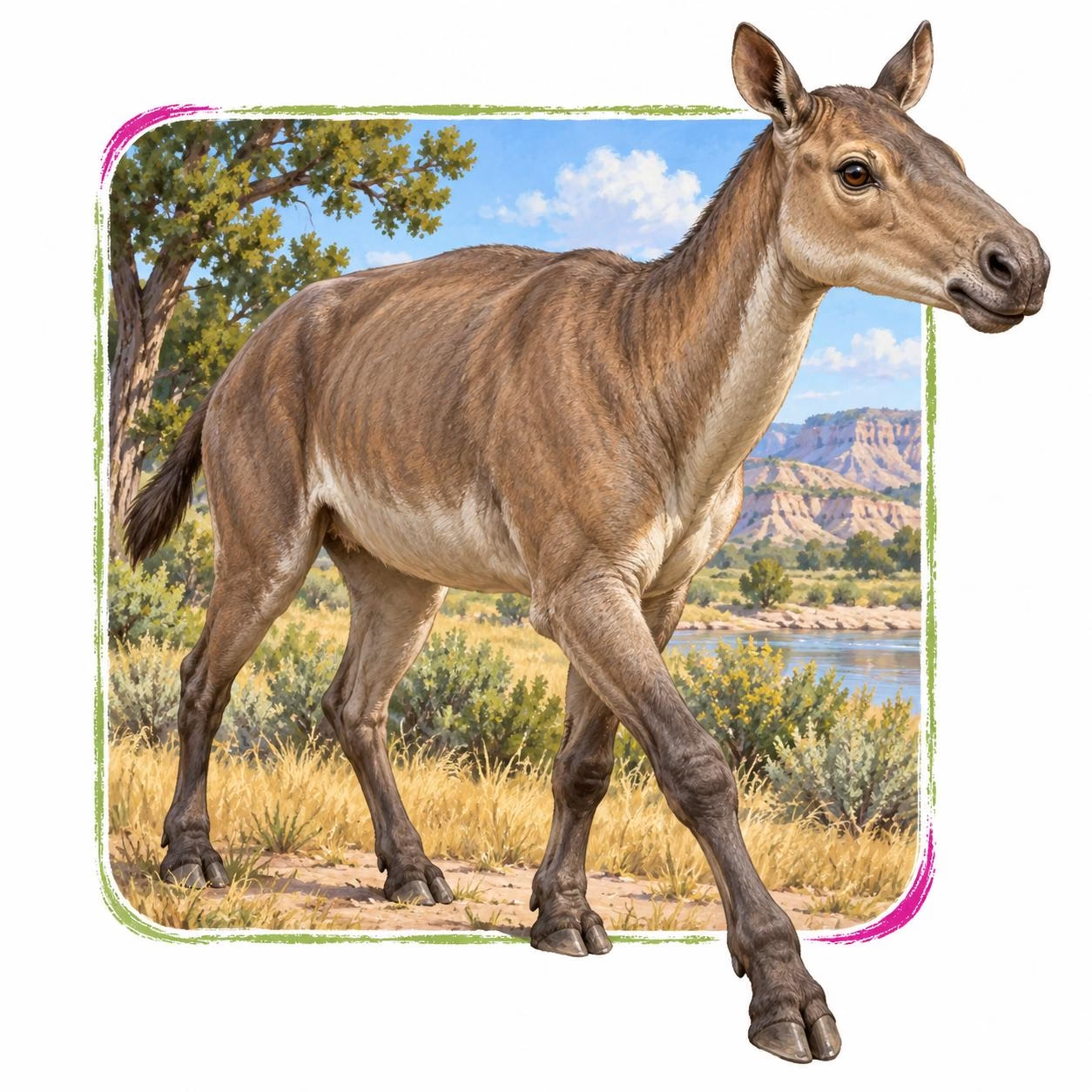
Hyracodon in its natural Late Eocene and Oligocene open woodlands, shrublands, river floodplains, dry plains, wooded grasslands, and badland-forming environments of western North America habitat