
Kelenken Facts for Kids
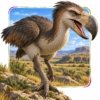
Kelenken was a giant extinct terror bird from Miocene Patagonia in Argentina. It was not a dinosaur and not a modern ostrich. Kelenken guillermoi is famous for having the largest known skull of any bird, with a huge hooked beak built for a powerful predatory lifestyle.
Quick Kelenken Facts
- Animal Type: Prehistoric flightless bird
- Group: Phorusrhacid terror bird
- Known For: Largest known bird skull, giant hooked beak, Patagonia fossils, high school student discovery, long running legs, chicks, top predator role, and Miocene life
- Lived During: Middle Miocene, about 15 million years ago
- Diet: Small to medium mammals, reptiles, birds, carrion, and other animals
What You’ll Learn
Explore 10 giant kelenken facts for kids about its enormous skull, powerful beak, long legs, running, and prehistoric grasslands, plus a quiz, glossary, and activity
Easy explanations make them great for children, families, teachers, and young prehistoric explorers.
10 Fun Kelenken Facts for Kids
1. Kelenken Was a Bird
Kelenken was a real bird, but it belonged to a vanished group of giant flightless predators.
Kid Decode: Bird body, predator job, skull with main-character energy.
2. It Was a Terror Bird
Kelenken was a phorusrhacid, one of the famous South American terror birds.
Kid Decode: The family name sounds scholarly. The nickname sounds like it has teeth.
3. It Had the Largest Known Bird Skull
Kelenken’s skull was about 71.6 centimetres long, making it the largest skull known for any bird.
Kid Decode: That is a bird head with horse-skull bragging rights.
4. It Had a Huge Hooked Beak
More than half of the skull length was beak, and the beak was tall, narrow, and strongly hooked.
Kid Decode: This beak was not for polite pecking. It was predator equipment.
5. It Lived in Patagonia
Kelenken fossils were found near Comallo in Río Negro Province, Argentina.
Kid Decode: Patagonia handed science a giant bird skull like a fossil drumroll.
6. A Student Found It
The fossil was discovered by high school student Guillermo Aguirre-Zabala, and the species name honors him.
Kid Decode: Best homework excuse ever: sorry, I found a giant terror bird.
7. It Could Not Fly
Kelenken had small wings and a heavy body, so it was flightless.
Kid Decode: Too much predator, not enough airplane.
8. It Had Long Running Legs
A preserved lower leg bone shows Kelenken had long legs, useful for running across open habitats.
Kid Decode: Those legs were the delivery system for one enormous beak.
9. Baby Kelenkens Were Chicks
Baby Kelenkens can be called chicks because Kelenken was a bird that hatched from eggs.
Kid Decode: A chick with a future giant skull is fossil comedy in slow motion.
10. It Helps Explain Big Terror Birds
The Kelenken skull helped scientists understand large terror birds better because other big phorusrhacid skulls were often incomplete.
Kid Decode: One skull untangled a whole bird-family headache.
The Weirdest Kelenken Fact
Kelenken had the largest known bird skull, yet the fossil was found by a high school student near a Patagonian village.
Try This Kelenken Activity
Kelenken Drawing Activity
Draw Kelenken in Miocene Patagonia. Add a huge hooked beak, giant skull, long running legs, small wings, chick egg clue, grassland shrubs, student fossil discovery clue, leg bone fossil, and a “largest bird skull” label.
Quick Kelenken Quiz
- Was Kelenken a dinosaur? Answer: No, it was a prehistoric bird.
- What kind of bird was Kelenken? Answer: A phorusrhacid terror bird.
- Where was Kelenken found? Answer: Patagonia in Argentina.
- What record is Kelenken famous for? Answer: The largest known skull of any bird.
- What are baby birds called? Answer: Chicks.
Mini Glossary
- Phorusrhacid: A member of the extinct terror bird family.
- Terror Bird: A nickname for large flightless predatory birds.
- Holotype: The main specimen used to describe and name a species.
- Chick: A baby bird.
- Miocene: A time period after the dinosaurs when many modern-looking mammals and birds lived.
 Boa Facts for Kids
 Mako Shark Facts for Kids
 Echidna Facts for Kids
 Synthetoceras Facts for Kids
More Animal Facts for Kids
Visit the full animal facts library or explore a focused animal group.
More Extinct Animal Facts for Kids
Discover dinosaurs, Ice Age giants, prehistoric sea creatures, recently extinct species, and other animals from the past.
Fact check note: Fact checked with Kelenken original-description summaries, Patagonia terror bird fossil notes, phorusrhacid skull anatomy research, and trusted prehistoric bird education sources.

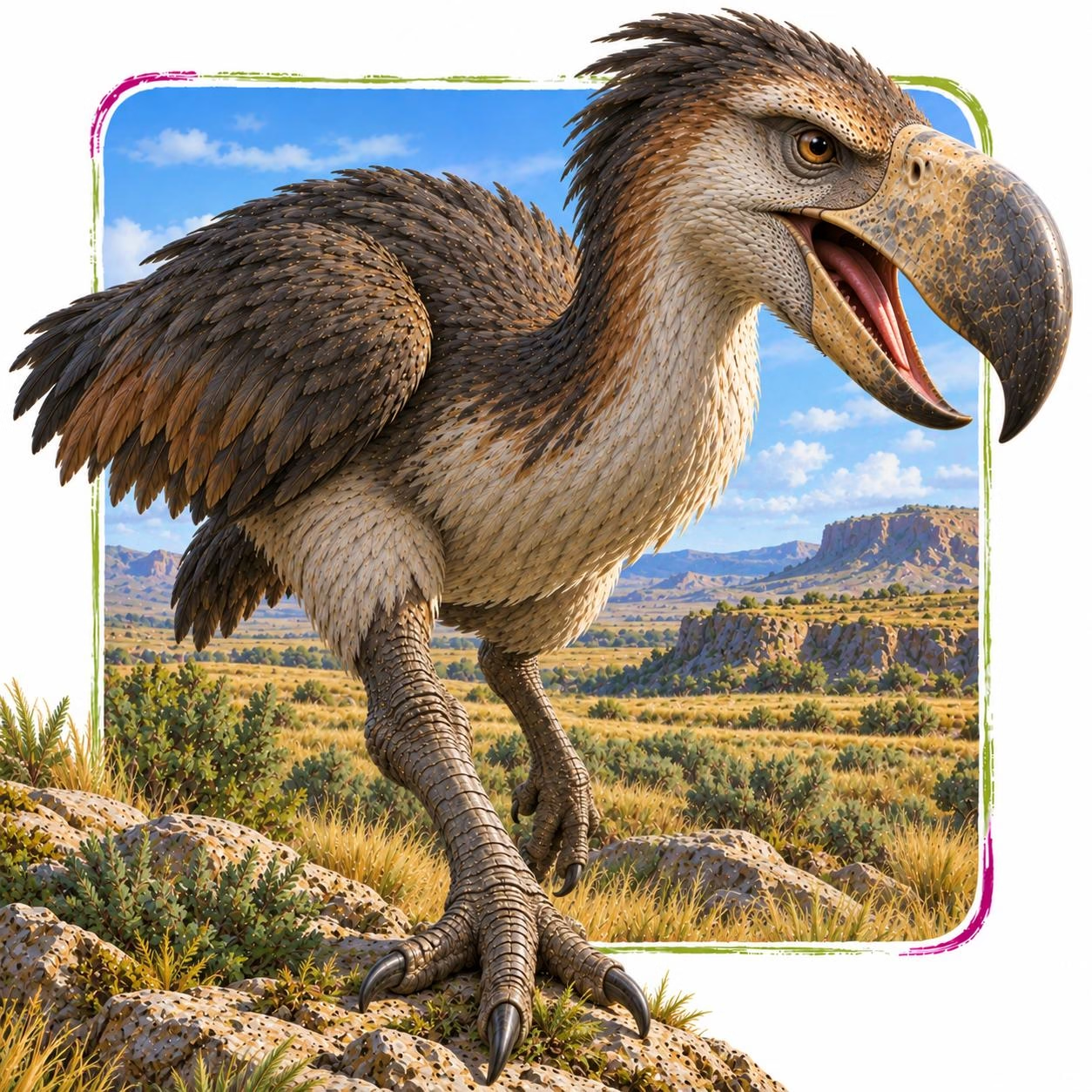
Kelenken in its natural Middle Miocene Patagonian grasslands, open woodlands, shrublands, dry plains, Comallo fossil sites, Collón Curá Formation habitats, and South American predator ecosystems habitat