
Lake Mackay Hare-Wallaby Facts for Kids
The Lake Mackay Hare-Wallaby, also called the Central Hare-Wallaby or kuluwarri, was a recently extinct Australian marsupial. It was not a rabbit or a true kangaroo, but a small hare-wallaby known from one preserved skull and Aboriginal knowledge. It lived in central desert country around Lake Mackay, spinifex, sand plains, and dunes.
Quick Lake Mackay Hare-Wallaby Facts
- Animal Type: Recently extinct marsupial
- Group: Hare-wallaby and macropod
- Known For: Kuluwarri name, Lake Mackay area, single preserved skull, soft grey fur, joeys, spinifex shelter, grass-seed diet, and extinction during the 1900s
- Lived During: Holocene, with scientific evidence from the 1930s and Aboriginal reports into the mid-1900s
- Diet: Grass leaves, seeds, desert quandong fruit, and other desert plants
What You’ll Learn
Discover 10 unusual lake mackay hare-wallaby facts for kids about hopping, desert habitats, nighttime life, feeding, and its uncertain history, with a quiz, glossary, and activity
These easy facts are made for kids, parents, teachers, and curious little learners.
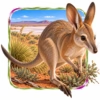
10 Fun Lake Mackay Hare-Wallaby Facts for Kids
1. Lake Mackay Hare-Wallabies Were Marsupials
Lake Mackay Hare-Wallabies were marsupials, so mothers carried tiny young in a pouch.
Kid Decode: Pouch nursery plus desert hopping legs made this animal properly Australian.
2. They Were Hare-Wallabies
Hare-wallabies are small macropods with rabbit-like shapes and quick hopping movements.
Kid Decode: Rabbit-ish look, wallaby reality, desert mystery dust.
3. They Were Also Called Kuluwarri
Aboriginal people knew this animal as kuluwarri, and local knowledge is very important because scientists preserved only one skull.
Kid Decode: One skull is tiny evidence. A living name is a much bigger echo.
4. They Lived Near Lake Mackay
The preserved skull came from an animal collected between Lake Mackay and Mount Farewell near the Western Australia and Northern Territory border.
Kid Decode: That is a very precise place for such a poorly known animal.
5. They Used Spinifex Shelter
Reports say they sheltered under spinifex clumps, in shallow depressions, grass-lined nests, and perhaps short burrows.
Kid Decode: Spinifex was the desert version of a spiky safety blanket.
6. They Had Soft Grey Fur
Aboriginal descriptions say the animal had soft long grey fur, furry feet, and a short thick tail.
Kid Decode: Soft fur and furry feet are excellent details from a vanished desert jumper.
7. They Ate Desert Plants
Lake Mackay Hare-Wallabies were herbivores that ate grass leaves, seeds, and desert fruits such as quandong.
Kid Decode: Small mouth, dry-country salad, maybe one fruity bonus.
8. Baby Hare-Wallabies Were Joeys
Baby Lake Mackay Hare-Wallabies can be called joeys, like baby wallabies and kangaroos today.
Kid Decode: A joey would have started life hidden in its mother’s pouch.
9. It May Have Survived Longer Than Scientists Saw
Scientific proof comes from the 1930s, but Aboriginal reports suggest the species may have survived into the 1940s, 1950s, or even 1960s in some deserts.
Kid Decode: The science trail ended early, but desert memories kept walking farther.
10. Foxes and Cats Hurt Them
Introduced foxes and feral cats, rabbits, drought, fire, grazing, and loss of shelter likely helped drive the Lake Mackay Hare-Wallaby extinct.
Kid Decode: Too many desert problems arrived at once, and the kuluwarri ran out of hiding places.
The Weirdest Lake Mackay Hare-Wallaby Fact
Scientists know the Lake Mackay Hare-Wallaby from one preserved skull, which means a whole species is balanced on one tiny museum clue.
Try This Lake Mackay Hare-Wallaby Activity
Lake Mackay Hare-Wallaby Drawing Activity
Draw a Lake Mackay Hare-Wallaby in central Australian desert country. Add soft grey fur, furry feet, short thick tail, joey in pouch, spinifex clumps, shallow nest, grass seeds, quandong fruit, fox tracks, and a “lost kuluwarri” label.
Quick Lake Mackay Hare-Wallaby Quiz
- Was the Lake Mackay Hare-Wallaby a rabbit? Answer: No, it was a marsupial wallaby relative.
- What was another name for it? Answer: Kuluwarri.
- Where was the preserved skull collected? Answer: Between Lake Mackay and Mount Farewell.
- What plants helped shelter it? Answer: Spinifex grasses.
- What are baby wallabies called? Answer: Joeys.
Mini Glossary
- Hare-Wallaby: A small wallaby with a hare-like shape and hopping style.
- Macropod: A member of the kangaroo and wallaby family.
- Spinifex: Tough spiky grass common in Australian deserts.
- Joey: A baby marsupial.
- Holotype: The main specimen used to describe and name a species.
 Butterflyfish Facts for Kids
 Saiga Antelope Facts for Kids
 Green Sea Turtle Facts for Kids
 Hawaiian Rail Facts for Kids
More Animal Facts for Kids
Visit the full animal facts library or explore a focused animal group.
More Extinct Animal Facts for Kids
Discover dinosaurs, Ice Age giants, prehistoric sea creatures, recently extinct species, and other animals from the past.
Fact check note: Fact checked with Lake Mackay Hare-Wallaby species summaries, Invasive Species Council central hare-wallaby notes, Aboriginal knowledge summaries, and trusted Australian marsupial extinction education sources.

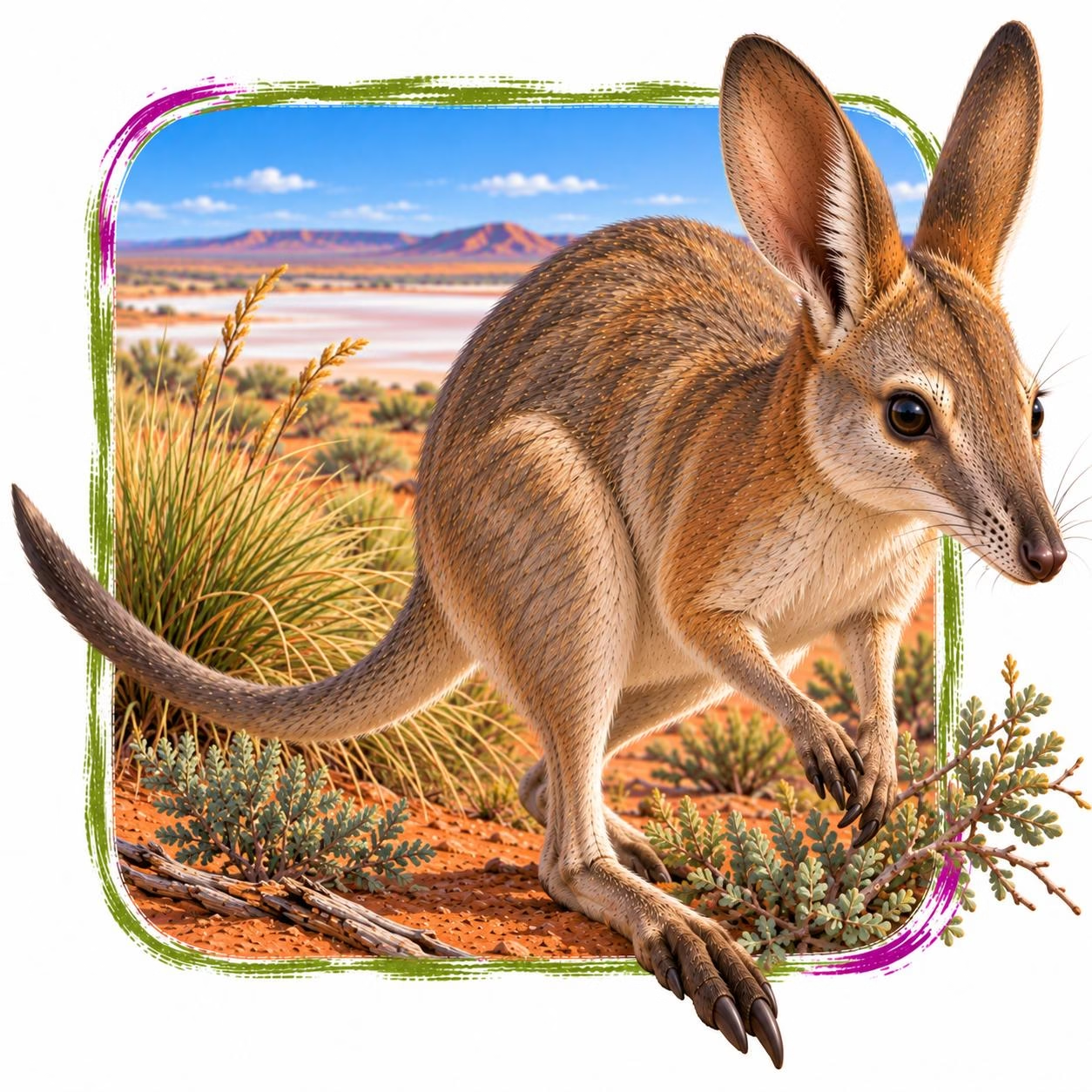
Lake Mackay Hare-Wallaby in its natural Central Australian deserts, Lake Mackay sand plains, spinifex dunes, sandy clay soils, mulga shrublands, shallow nest sites, desert grasslands, and arid shelter habitats habitat