
Lord Howe Swamphen Facts for Kids
The Lord Howe Swamphen, also called the White Swamphen or Lord Howe Gallinule, was an extinct rail from Lord Howe Island east of Australia. It was not a dinosaur and not a chicken, though it walked on strong legs. It was known from early sailor accounts, paintings, skins, and bones, and it vanished very quickly after people began visiting the island.
Quick Lord Howe Swamphen Facts
- Animal Type: Recently extinct bird
- Group: Rail and swamphen
- Known For: White adult feathers, red bill and shield, black chicks, Lord Howe Island home, poor flight, tameness, early paintings, and extinction before island settlement
- Lived During: Holocene, probably extinct by the 1830s
- Diet: Poorly known, likely plants, seeds, insects, small animals, and other island foods
What You’ll Learn
Explore 10 unusual lord howe swamphen facts for kids about this extinct island bird, long legs, strong feet, habitat, and history, plus a quiz, glossary, and activity
Clear explanations make these facts great for children, families, teachers, and young explorers.
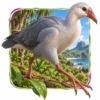
10 Fun Lord Howe Swamphen Facts for Kids
1. Lord Howe Swamphens Were Birds
Lord Howe Swamphens were rails, a bird group that includes crakes, gallinules, coots, and swamphens.
Kid Decode: Rail family, island style, with very bold legs.
2. They Lived Only on Lord Howe Island
This bird was endemic to Lord Howe Island, a small island east of Australia.
Kid Decode: One small island was the entire swamphen stage.
3. They Were Also Called White Swamphens
The bird is often called the White Swamphen because adult specimens are mostly white.
Kid Decode: Not snow, not paint, just a very unusual island rail.
4. They Had Red Bills and Shields
Lord Howe Swamphens had red bills, red legs, and a red shield on the front of the head.
Kid Decode: White feathers plus red face gear made this bird easy to remember.
5. The Chicks Were Dark
Historical and specimen evidence suggests chicks were black, juveniles became bluish, and adults could become white.
Kid Decode: This bird may have changed outfits as it grew up.
6. They Were Probably Poor Flyers
The Lord Howe Swamphen may not have been fully flightless, but it was probably a weak flier and easy to catch.
Kid Decode: Bad flying is risky when hungry sailors arrive.
7. They Were Tame Around People
Early accounts suggest the birds were tame and could be caught easily.
Kid Decode: Island confidence worked fine until humans brought trouble.
8. People Hunted Them
Visiting sailors likely killed Lord Howe Swamphens for food soon after Europeans found the island.
Kid Decode: The bird vanished in the era of ship supplies and no conservation rules.
9. Only a Few Specimens Remain
Today the species is known from old descriptions, paintings, subfossil bones, and two preserved skins.
Kid Decode: Two skins and old art now carry a whole bird’s memory.
10. It Vanished Quickly
The Lord Howe Swamphen was not definitely recorded after the early European visits and was extinct by the time Lord Howe Island was settled.
Kid Decode: It went from island common to gone with alarming speed.
The Weirdest Lord Howe Swamphen Fact
The Lord Howe Swamphen may have changed from dark chick to blue juvenile to mostly white adult, a dramatic costume change for a rail.
Try This Lord Howe Swamphen Activity
Lord Howe Swamphen Drawing Activity
Draw a Lord Howe Swamphen on Lord Howe Island. Add white feathers, red bill, red legs, red forehead shield, black chick, blue juvenile clue, island trees, rocky shore, old sailor sketch, and a “lost white rail” label.
Quick Lord Howe Swamphen Quiz
- Was the Lord Howe Swamphen a dinosaur? Answer: No, it was a bird.
- Where did it live? Answer: Lord Howe Island east of Australia.
- What color were adults famous for? Answer: Mostly white feathers.
- What bird group did it belong to? Answer: Rails and swamphens.
- What likely helped cause extinction? Answer: Hunting by visiting people.
Mini Glossary
- Rail: A bird group that includes crakes, gallinules, coots, and swamphens.
- Swamphen: A rail-like wetland bird with strong legs and a heavy bill.
- Endemic: Found naturally in only one place.
- Specimen: A preserved animal or plant used for scientific study.
- Poor Flier: A bird that can fly weakly or not very far.
 Hammerhead Shark Facts for Kids
 Worm Facts for Kids
 Lacewing Facts for Kids
 Allosaurus Facts for Kids
More Animal Facts for Kids
Visit the full animal facts library or explore a focused animal group.
More Extinct Animal Facts for Kids
Discover dinosaurs, Ice Age giants, prehistoric sea creatures, recently extinct species, and other animals from the past.
Fact check note: Fact checked with BirdLife White Swamphen factsheet, Lord Howe Island Museum extinct bird notes, Lord Howe swamphen historical review summaries, and trusted rail extinction education sources.

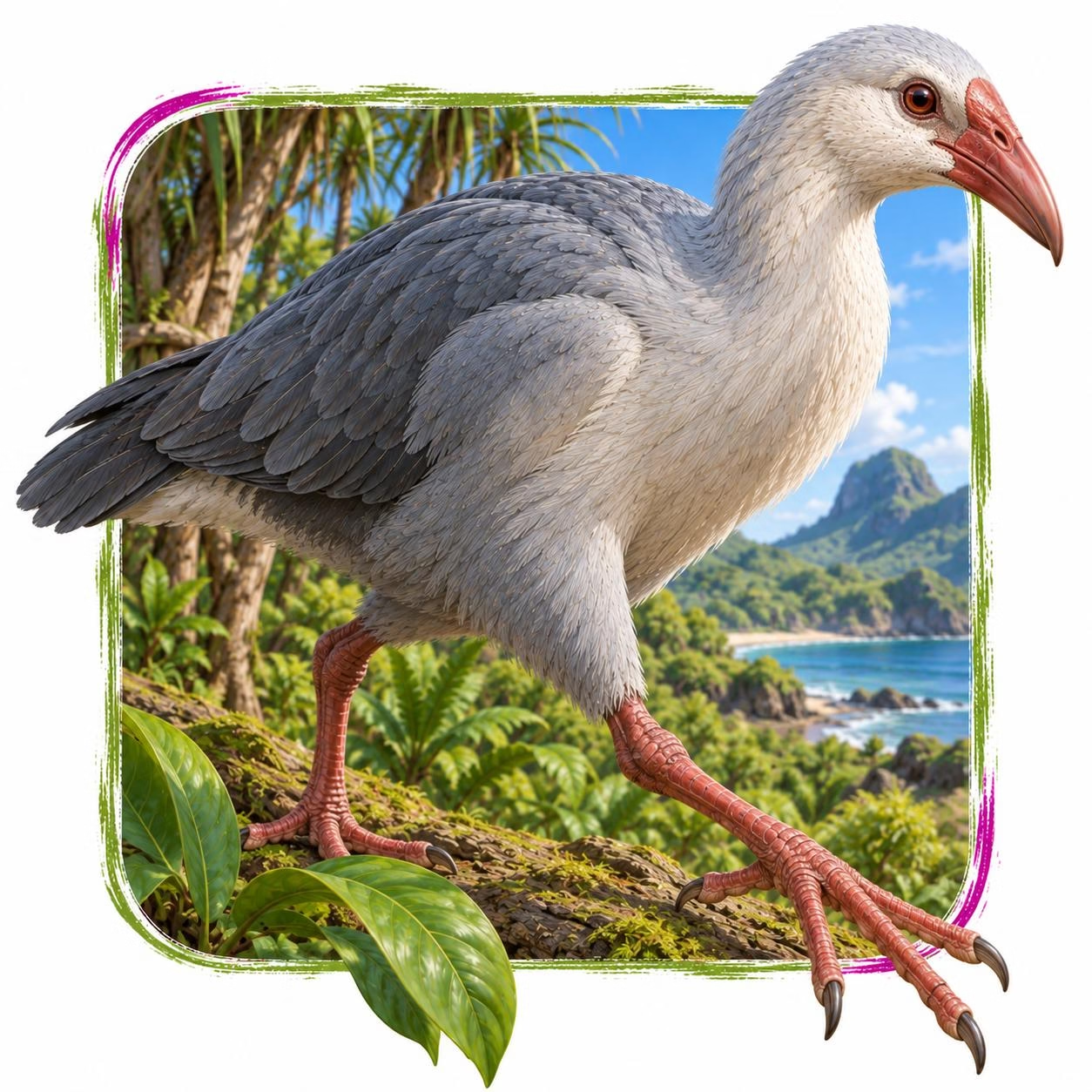
Lord Howe Swamphen in its natural Lord Howe Island lowland forests, wooded wetlands, coastal thickets, forest floors, island clearings, rocky shore edges, and nesting areas habitat