
Machimosaurus Facts for Kids
Machimosaurus was a large marine and coastal crocodyliform that lived near the end of the Jurassic and survived into the Early Cretaceous. It was not a dinosaur or a modern crocodile, but a teleosauroid thalattosuchian. Its short, broad snout and stout, blunt teeth were built for powerful bites, allowing it to tackle armored prey such as marine turtles as well as other large animals.
Quick Machimosaurus Facts
- Animal Type: Extinct marine crocodyliform
- Group: Machimosaurid teleosauroid
- Known For: Blunt ridged teeth, powerful jaws, turtle-eating adaptations, large body, and armored skin
- Lived During: Late Jurassic to Early Cretaceous, roughly 157–130 million years ago
- Diet: Turtles, fish, large marine animals, and carrion
What You’ll Learn
Discover 10 giant machimosaurus facts for kids about massive jaws, crushing teeth, marine life, and ancient crocodile relatives, with a quiz, glossary, and activity
These facts are explained simply for kids, parents, teachers, and curious little fact-finders.
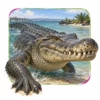
10 Fun Machimosaurus Facts for Kids
1. Machimosaurus Was a Thalattosuchian
Machimosaurus belonged to Thalattosuchia, a group of crocodyliforms that adapted to life in Jurassic and Early Cretaceous waters.
Kid Decode: It was crocodile kin sailing through seas that vanished millions of years ago.
2. It Was Not a Modern Crocodile
Machimosaurus lived on a separate extinct branch and combined marine habits with body armor and limbs that were less flipper-like than those of fully ocean-going metriorhynchids.
Kid Decode: It carried a crocodile-like toolkit without belonging to the modern crocodile crew.
3. Its Snout Was Short and Broad
Compared with many long-snouted teleosauroids, Machimosaurus had a relatively shortened and widened rostrum that could withstand strong feeding forces.
Kid Decode: Its face swapped fishing tweezers for a heavyweight jaw clamp.
4. Its Teeth Were Blunt and Strong
The teeth were stout, rounded near their tips, covered with lengthwise ridges, and equipped with tiny true and false serrations.
Kid Decode: Each tooth looked less like a needle and more like a ridged stone peg.
5. It Could Crush Hard Prey
Tooth shape, jaw anatomy, embedded teeth, and bite marks support durophagy, meaning Machimosaurus could feed on hard or armored animals.
Kid Decode: A shell was not a dinner shield when Machimosaurus arrived.
6. Marine Turtles Were on the Menu
Fossil turtle shells with compatible bite damage provide some of the strongest clues that machimosaurids attacked or scavenged marine turtles.
Kid Decode: The ancient sea turtle came in its own bowl, and this predator had the opener.
7. Some Species Were Giants
The largest named species, Machimosaurus rex, was probably around 7 metres long in cautious modern estimates, although earlier calculations suggested greater lengths.
Kid Decode: Even the careful estimate stretches longer than a large family car.
8. It Wore Bony Armor
Rows of osteoderms covered parts of the back and underside, giving Machimosaurus a more crocodile-like armored surface than smooth-skinned metriorhynchids.
Kid Decode: Its travel outfit included a built-in jacket made from bone.
9. It Lived in Coastal Waters
Fossils occur in shallow marine, lagoonal, and brackish deposits, suggesting that Machimosaurus moved through coastal seas and waterways.
Kid Decode: Its neighborhood mixed salt water, lagoons, beaches, and turtle traffic.
10. It Crossed a Major Time Boundary
Machimosaurus rex shows that large teleosauroids survived across the Jurassic–Cretaceous boundary, later than scientists once thought.
Kid Decode: Its lineage stepped across one of geology’s biggest chapter breaks.
The Weirdest Machimosaurus Fact
Machimosaurus had blunt teeth with several kinds of microscopic serration, combining a shell-crushing shape with tiny cutting edges almost invisible without magnification.
Try This Machimosaurus Activity
Machimosaurus Drawing Activity
Draw Machimosaurus swimming through a Late Jurassic coastal lagoon. Add a broad shortened snout, stout ridged teeth, rows of back osteoderms, webbed feet, a powerful tail, marine turtles, fish, and a magnified tooth panel showing tiny serrations.
Quick Machimosaurus Quiz
- Was Machimosaurus a dinosaur? Answer: No, it was a marine crocodyliform.
- What kind of prey could its teeth process? Answer: Hard and armored prey such as turtles.
- What covered parts of its body? Answer: Bony osteoderms.
- How long was Machimosaurus rex in a cautious estimate? Answer: About 7 metres.
- Which major boundary did the genus survive across? Answer: The Jurassic–Cretaceous boundary.
Mini Glossary
- Thalattosuchian: A crocodyliform from a group adapted to marine and coastal environments.
- Teleosauroid: An armored thalattosuchian generally less specialised for open-ocean life than metriorhynchids.
- Durophagy: Feeding on hard prey such as shells or bones.
- Osteoderm: A bony plate formed within the skin.
- Rostrum: The snout portion of a skull.
 Gelada Facts for Kids
 River Otter Facts for Kids
 Chipmunk Facts for Kids
 Amphicyon Facts for Kids
More Animal Facts for Kids
Visit the full animal facts library or explore a focused animal group.
More Extinct Animal Facts for Kids
Discover dinosaurs, Ice Age giants, prehistoric sea creatures, recently extinct species, and other animals from the past.
Fact check note: Fact checked with Young and colleagues’ 2014 revision of Machimosaurus, Young and colleagues’ 2015 tooth-serration study, Fanti and colleagues’ 2016 description of Machimosaurus rex, Young and colleagues’ 2016 body-size caution paper, and Johnson and colleagues’ 2022 teleosauroid ecology study.

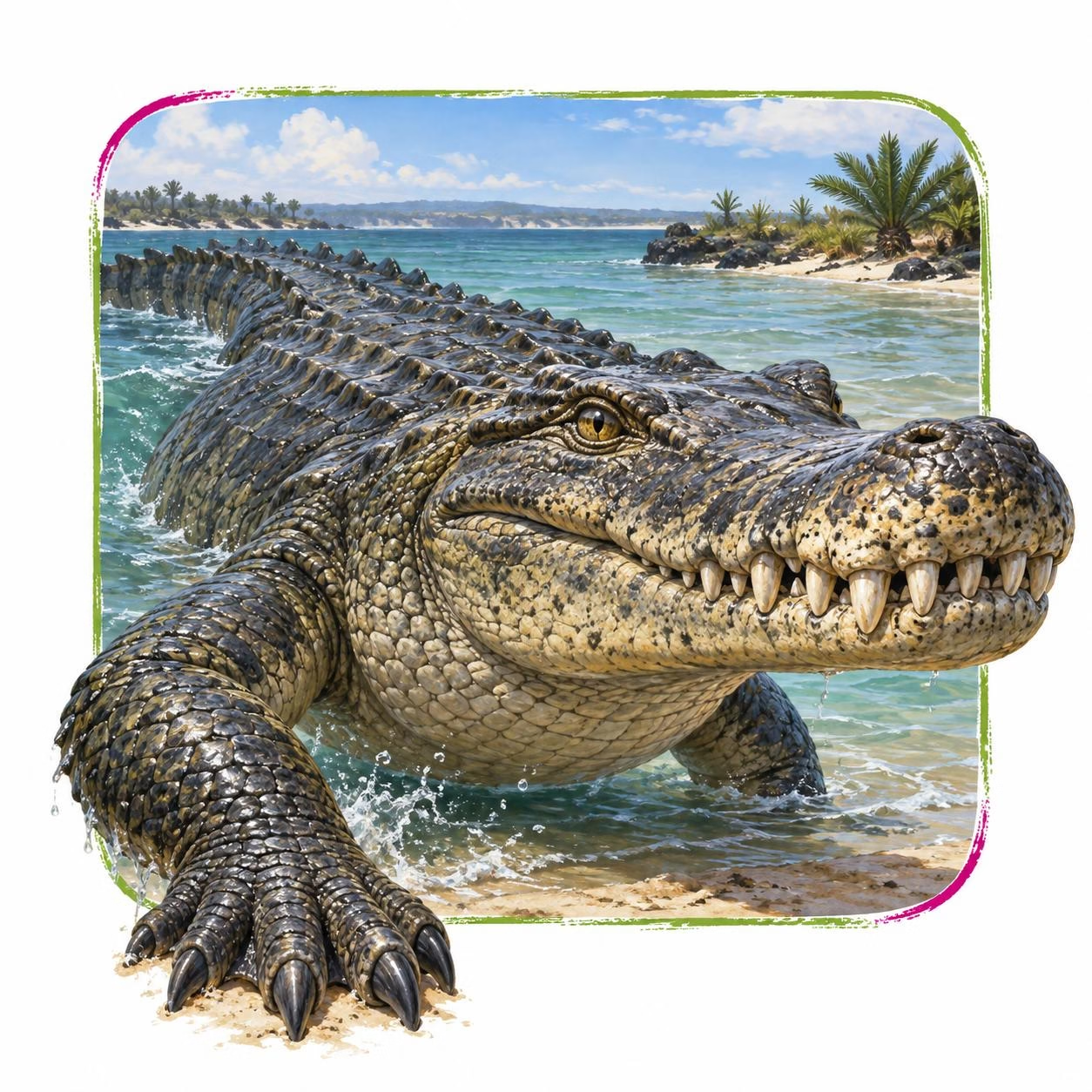
Machimosaurus in its natural Late Jurassic and Early Cretaceous shallow seas, coastal lagoons, estuaries, brackish channels, carbonate platforms, and nearshore marine habitats habitat