
Mastodon Facts for Kids
Mastodons were extinct elephant relatives that lived in North America during the Ice Age. They were not dinosaurs, and they were not the same as mammoths. Mastodons had tusks, trunks, heavy bodies, and bumpy cone-shaped molars suited for browsing leaves, twigs, and forest plants.
Quick Mastodon Facts
- Animal Type: Extinct mammal
- Group: Proboscidean and elephant relative
- Known For: Cone-shaped molars, tusks, trunk, forest browsing, North American fossils, calves, and Ice Age life
- Lived During: Miocene to late Pleistocene, with American mastodons surviving until about 11,000 years ago
- Diet: Leaves, twigs, shrubs, conifer branches, fruits, and other forest plants
What You’ll Learn
Explore 10 fascinating mastodon facts for kids about tusks, forest habitats, plant diets, giant bodies, and Ice Age North America, plus a quiz, glossary, and activity
Easy explanations make them great for children, families, teachers, and young prehistoric-animal fans.
10 Fun Mastodon Facts for Kids
1. Mastodons Were Not Dinosaurs
Mastodons were mammals related to elephants, not dinosaurs.
Kid Decode: They arrived in the Ice Age cast, not the dinosaur movie.
2. They Were Different From Mammoths
Mastodons and mammoths were both elephant relatives, but mastodons had different skull shapes, teeth, bodies, and habitats.
Kid Decode: Same elephant-ish neighborhood, different prehistoric addresses.
3. Their Teeth Had Cone-Shaped Bumps
Mastodon molars had raised cone-like cusps for crushing twigs, leaves, and woody plants.
Kid Decode: The teeth looked ready for forest salad with extra branches.
4. They Were Browsers
Mastodons mostly browsed on trees, shrubs, and wet woodland plants instead of grazing mainly on grass.
Kid Decode: Think forest muncher, not open-grass vacuum.
5. They Had Tusks
Mastodons had long upper tusks, and some had smaller lower tusks too.
Kid Decode: The tusks gave them serious Ice Age shovel-and-show energy.
6. They Had Trunks
Like elephants and mammoths, mastodons had trunks for smelling, touching, drinking, and grabbing food.
Kid Decode: That trunk was a nose-hand with ancient forest duties.
7. Baby Mastodons Were Calves
Baby mastodons are called calves, just like baby elephants and mammoths.
Kid Decode: A mastodon calf was a small forest browser with huge-family potential.
8. They Lived in North America
The American mastodon is especially famous from North American Ice Age fossils.
Kid Decode: North America had forests, wetlands, and plenty of mastodon footprints in the story.
9. They Liked Woodland Habitats
Mastodons are often linked with forests, wetlands, and places with shrubs and trees.
Kid Decode: They were the branch-crunchers of the Ice Age woods.
10. They Went Extinct
American mastodons disappeared near the end of the Ice Age, around the time many large Ice Age mammals vanished.
Kid Decode: The forest giants left bones, teeth, and a big fossil mystery behind.
The Weirdest Mastodon Fact
The name mastodon refers to its bumpy teeth, which looked different from the flatter grinding teeth of mammoths.
Try This Mastodon Activity
Mastodon Drawing Activity
Draw a mastodon walking through an Ice Age forest. Add long tusks, trunk, sturdy body, cone-shaped molar close-up, calf, twigs, shrubs, pine trees, wetland plants, fossil bones, and a “forest browser” label.
Quick Mastodon Quiz
- Were mastodons dinosaurs? Answer: No, they were mammals.
- Were mastodons the same as mammoths? Answer: No, they were different elephant relatives.
- What were mastodon teeth good for crushing? Answer: Leaves, twigs, shrubs, and forest plants.
- What are baby mastodons called? Answer: Calves.
- Where are American mastodon fossils especially famous? Answer: North America.
Mini Glossary
- Mastodon: An extinct elephant relative with tusks and cone-shaped molars.
- Proboscidean: The mammal group that includes elephants and their extinct relatives.
- Browser: An animal that eats leaves, twigs, shrubs, and tree parts.
- Molar: A back tooth used for grinding or crushing food.
- Calf: A baby elephant, mammoth, or mastodon.
 Crested Gecko Facts for Kids
 Mute Swan Facts for Kids
 Sable Antelope Facts for Kids
 Spinosaurus Facts for Kids
More Animal Facts for Kids
Visit the full animal facts library or explore a focused animal group.
More Extinct Animal Facts for Kids
Discover dinosaurs, Ice Age giants, prehistoric sea creatures, recently extinct species, and other animals from the past.
Fact check note: Fact checked with American Museum of Natural History mammoth and mastodon comparison notes, Natural History Museum mastodon resources, mastodon diet references, and trusted paleontology education sources.

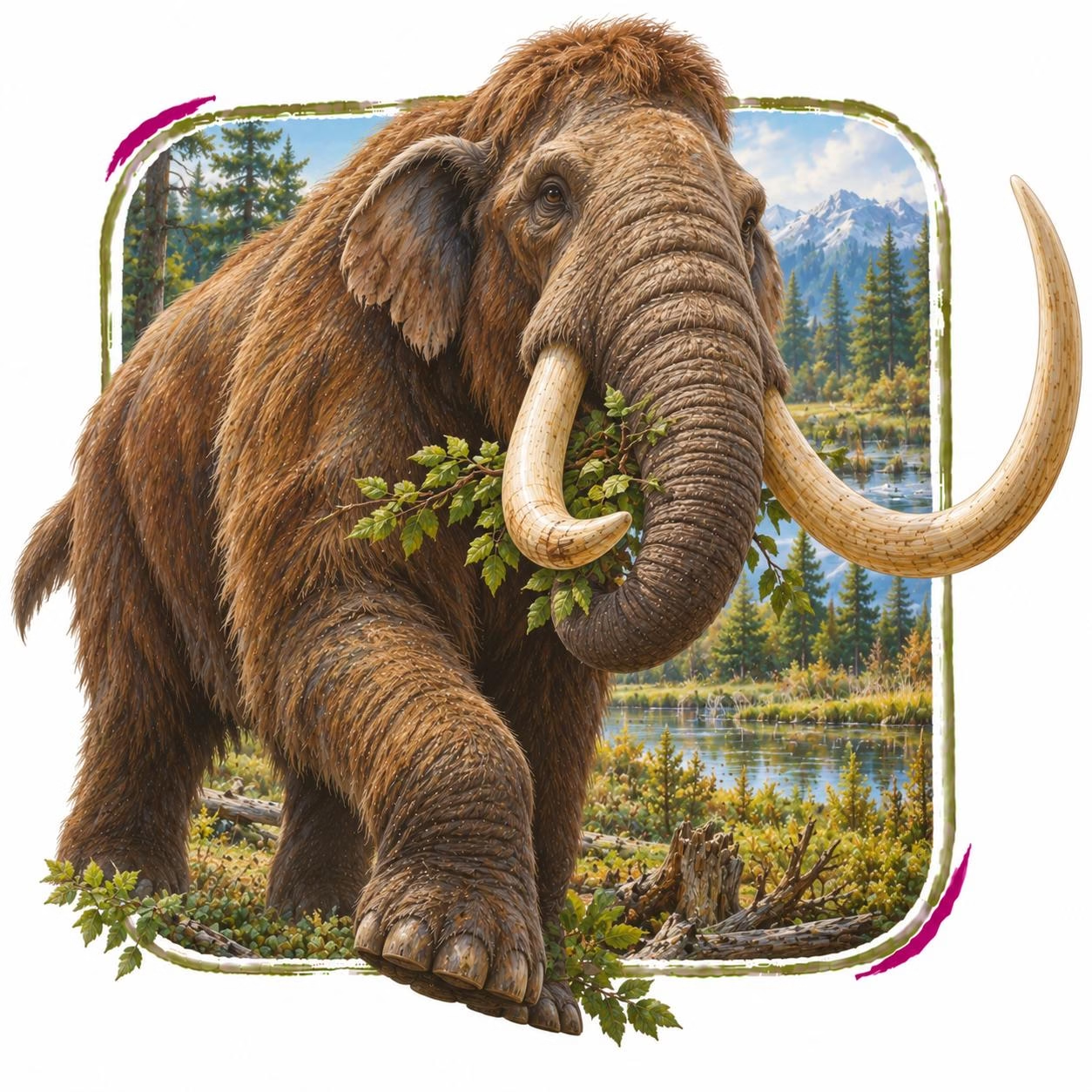
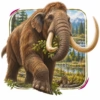
Mastodon in its natural Ice Age forests, wetlands, woodlands, swamps, shrublands, and river valleys habitat