
Megalania Facts for Kids
Megalania, also called Varanus priscus, was a giant extinct monitor lizard from Pleistocene Australia. It was not a dinosaur and not a crocodile. It was a huge reptile related to modern monitor lizards, and many scientists consider it the largest land-dwelling lizard known from fossils.
Quick Megalania Facts
- Animal Type: Prehistoric reptile
- Group: Giant monitor lizard and varanid
- Known For: Enormous size, Komodo dragon relatives, sharp teeth, powerful jaws, top predator role, Australian megafauna prey, uncertain length estimates, and Ice Age extinction
- Lived During: Pleistocene
- Diet: Large mammals, reptiles, birds, carrion, and other animals
What You’ll Learn
Explore 10 enormous megalania facts for kids about giant size, powerful jaws, sharp teeth, hunting, and prehistoric Australia, plus a quiz, glossary, and activity
Easy explanations make them great for children, families, teachers, and young reptile fans.
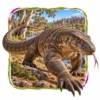
10 Fun Megalania Facts for Kids
1. Megalania Was a Lizard
Megalania was a monitor lizard, not a dinosaur, crocodile, or dragon from a fantasy map.
Kid Decode: Real lizard, fossil giant, no fire breath needed.
2. Its Scientific Name Is Varanus Priscus
Many scientists use the name Varanus priscus for Megalania, placing it in the same genus as modern monitor lizards.
Kid Decode: That makes it a cousin of monitor lizards, but with prehistoric monster settings turned up.
3. It Lived in Australia
Megalania lived in Pleistocene Australia alongside giant marsupials, giant birds, huge snakes, and other megafauna.
Kid Decode: Ancient Australia’s creature roster was not playing politely.
4. It Was Huge
Size estimates vary because fossils are incomplete, but Megalania was one of the largest lizards ever and may have reached several metres long.
Kid Decode: Fragmentary bones mean scientists argue about the ruler, not the fact that it was enormous.
5. It Was a Top Predator
Megalania was probably a top predator that hunted large vertebrates and scavenged when possible.
Kid Decode: If you were Ice Age prey, this was the lizard you hoped was full.
6. It Had Sharp Teeth
Fossils show curved, serrated teeth built for slicing flesh.
Kid Decode: Those teeth were steak knives attached to a reptile face.
7. It Was Related to Monitor Lizards
Megalania was part of the varanid family, the same family as goannas and Komodo dragons.
Kid Decode: Komodo dragon cousin, Australia edition, fossil-sized.
8. It May Have Had a Venom-Like Bite
Because some living monitor lizards have venom systems, scientists discuss whether Megalania may have had a toxic or venom-assisted bite, but direct proof is difficult.
Kid Decode: Fossils keep the venom question locked in a very old drawer.
9. It Lived With Humans
Megalania may have survived late enough to overlap with early people in Australia, though exact dates and interactions are debated.
Kid Decode: Humans and giant lizards may have shared the same continent. That is a bedtime story with teeth.
10. It Went Extinct in the Pleistocene
Megalania disappeared during the Late Pleistocene, around the same broad time many Australian megafauna vanished.
Kid Decode: The giant lizard left behind teeth, bones, and a serious warning about lost ecosystems.
The Weirdest Megalania Fact
Megalania was not a dinosaur, but it may have been larger than any lizard alive today, turning ordinary monitor-lizard body plans into megafauna scale.
Try This Megalania Activity
Megalania Drawing Activity
Draw Megalania in Ice Age Australia. Add a huge monitor-lizard body, long tail, sharp teeth, strong claws, rocky ground, Diprotodon tracks, giant bird feathers nearby, Komodo dragon cousin clue, and a “giant monitor lizard” label.
Quick Megalania Quiz
- Was Megalania a dinosaur? Answer: No, it was a giant monitor lizard.
- What is another scientific name for Megalania? Answer: Varanus priscus.
- Where did Megalania live? Answer: Australia.
- What did Megalania eat? Answer: Meat from large animals, smaller animals, and carrion.
- What living reptiles was it related to? Answer: Monitor lizards such as goannas and Komodo dragons.
Mini Glossary
- Monitor Lizard: A lizard group that includes goannas and Komodo dragons.
- Varanid: A member of the monitor lizard family.
- Top Predator: A predator near the top of its food chain.
- Carrion: Dead animals eaten by scavengers.
- Pleistocene: An Ice Age time period when many giant animals lived.
 Buzzard Facts for Kids
 Mole Crab Facts for Kids
 Grasshopper Facts for Kids
 Bambiraptor Facts for Kids
More Animal Facts for Kids
Visit the full animal facts library or explore a focused animal group.
More Extinct Animal Facts for Kids
Discover dinosaurs, Ice Age giants, prehistoric sea creatures, recently extinct species, and other animals from the past.
Fact check note: Fact checked with Australian Museum Megalania notes, Queensland Museum Varanus priscus page, giant monitor lizard fossil summaries, and trusted Australian reptile megafauna education sources.

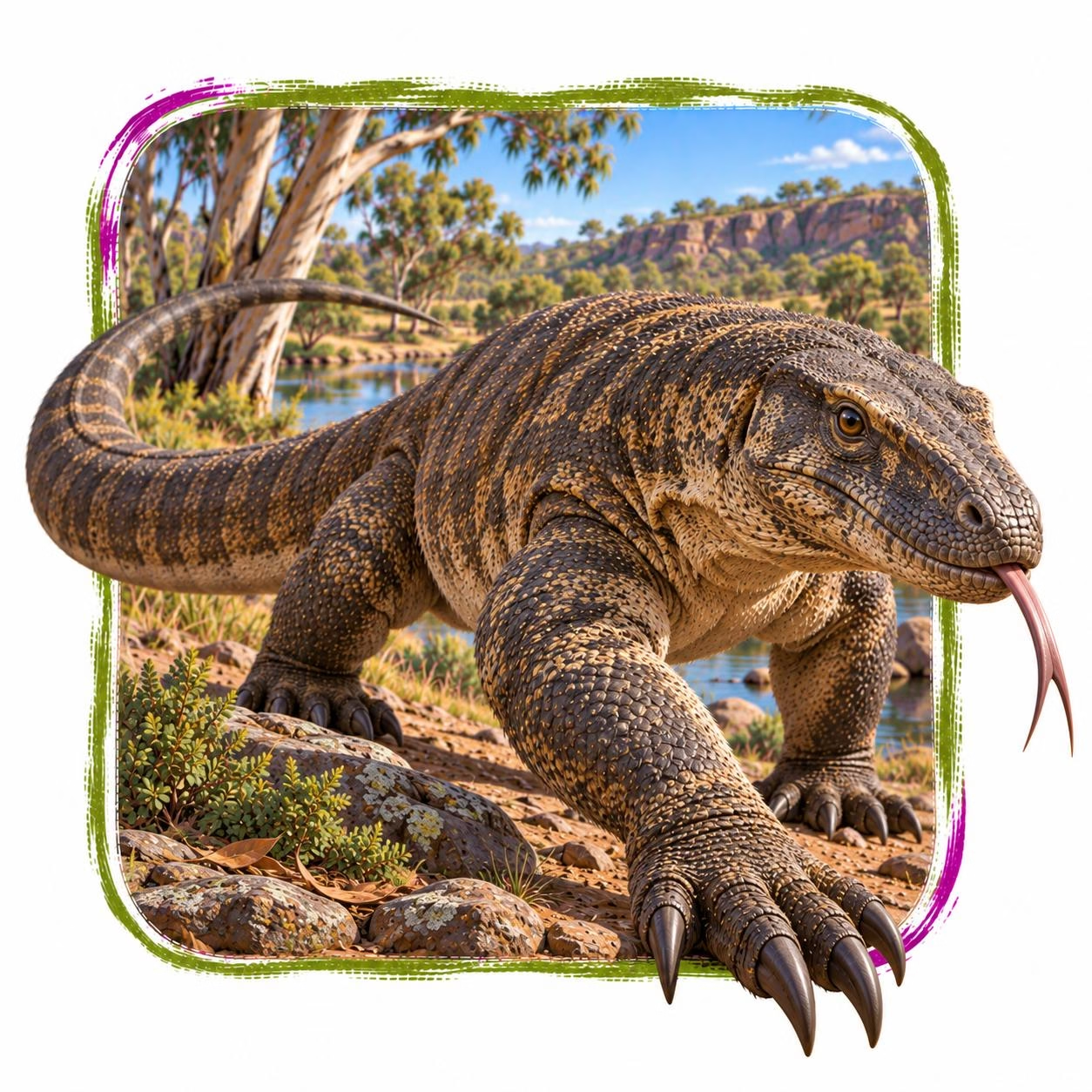
Megalania in its natural Pleistocene Australian woodlands, scrublands, open forests, rocky areas, river valleys, dry plains, waterhole edges, and megafauna habitats habitat