
Mesohippus Facts for Kids
Mesohippus was an extinct early horse from Oligocene North America. It was not a dinosaur and not a modern horse. Its name means middle horse because it lived after tiny early horses and before later, more grassland-adapted horses. Mesohippus had three toes on each foot, longer legs than earlier horses, and teeth suited for browsing leaves.
Quick Mesohippus Facts
- Animal Type: Prehistoric hoofed mammal
- Group: Equid, or horse family member
- Known For: Middle horse name, three toes, small body, leaf-shearing teeth, foals, Oligocene North America, forest browsing, and horse evolution
- Lived During: Oligocene, about 37 to 32 million years ago
- Diet: Leaves, shoots, soft plants, fruits, and forest vegetation
What You’ll Learn
Learn 10 amazing mesohippus facts for kids about its small body, three-toed feet, teeth, forest habitats, and horse evolution, plus a quiz, glossary, and activity
Everything is explained simply for kids, parents, teachers, and young prehistoric-animal explorers.
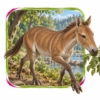
10 Fun Mesohippus Facts for Kids
1. Mesohippus Was a Mammal
Mesohippus was a prehistoric mammal, not a dinosaur, reptile, or tiny dragon.
Kid Decode: Early horse facts come with hooves, not scales.
2. Its Name Means Middle Horse
Mesohippus means middle horse because it was a middle stage between earlier tiny horses and later more modern-looking horses.
Kid Decode: A fossil name that basically says, we are halfway there.
3. It Was an Equid
Mesohippus belonged to Equidae, the horse family.
Kid Decode: Small forest browser, still horse-family business.
4. It Had Three Toes
Mesohippus had three toes on its front and hind feet, with the middle toe becoming more important.
Kid Decode: The foot plan was slowly moving toward one main hoof.
5. It Was Small
Mesohippus was much smaller than modern horses, often compared with a sheep-sized or medium dog-sized animal depending on species.
Kid Decode: Not pony-sized glamour yet, more forest sprinter with modest height.
6. It Ate Leaves
AMNH notes that Mesohippus had teeth better adapted for shearing leaves.
Kid Decode: Before horses became grass experts, many were leaf nibblers.
7. It Lived in North America
Mesohippus fossils are known from Oligocene localities in Colorado, the Great Plains, Nebraska, the Dakotas, and Canada.
Kid Decode: North America was the horse family’s old training ground.
8. It Had Longer Legs Than Earlier Horses
Compared with earlier horses, Mesohippus had longer legs that helped it move more efficiently.
Kid Decode: The horse body plan was stretching out like a fossil accordion.
9. Baby Mesohippus Were Foals
Baby Mesohippus can be called foals because it was a horse-family mammal.
Kid Decode: A three-toed foal would have been a tiny hoofed time traveler.
10. It Helped Show Horse Evolution
Mesohippus is a classic fossil in horse evolution because it shows changes in toes, teeth, and body shape.
Kid Decode: This middle horse is a chapter marker in the horse storybook.
The Weirdest Mesohippus Fact
Mesohippus had three toes and ate leaves, showing that early horses were not always the grass-running animals we picture today.
Try This Mesohippus Activity
Mesohippus Drawing Activity
Draw Mesohippus in an Oligocene forest. Add three-toed feet, small horse body, leaf-shearing tooth icon, foal, leafy branches, forest path, North America map clue, fossil skull tag, and a “middle horse” label.
Quick Mesohippus Quiz
- Was Mesohippus a dinosaur? Answer: No, it was a prehistoric mammal.
- What does Mesohippus mean? Answer: Middle horse.
- How many toes did it have on each foot? Answer: Three.
- What did Mesohippus mostly eat? Answer: Leaves, shoots, and soft plants.
- Where did Mesohippus live? Answer: North America.
Mini Glossary
- Equid: A member of the horse family.
- Browser: An animal that eats leaves, shoots, twigs, and shrubs.
- Oligocene: A time period after the dinosaurs when many mammal groups changed.
- Foal: A baby horse or horse relative.
- Toe Reduction: The evolutionary trend where side toes become smaller while one middle toe becomes more important.
 House Sparrow Facts for Kids
 Mallard Facts for Kids
 Mantis Facts for Kids
 Gigantophis Facts for Kids
More Animal Facts for Kids
Visit the full animal facts library or explore a focused animal group.
More Extinct Animal Facts for Kids
Discover dinosaurs, Ice Age giants, prehistoric sea creatures, recently extinct species, and other animals from the past.
Fact check note: Fact checked with Florida Museum Mesohippus fossil horse page, AMNH equid evolution notes, North American Oligocene fossil summaries, and trusted prehistoric mammal education sources.

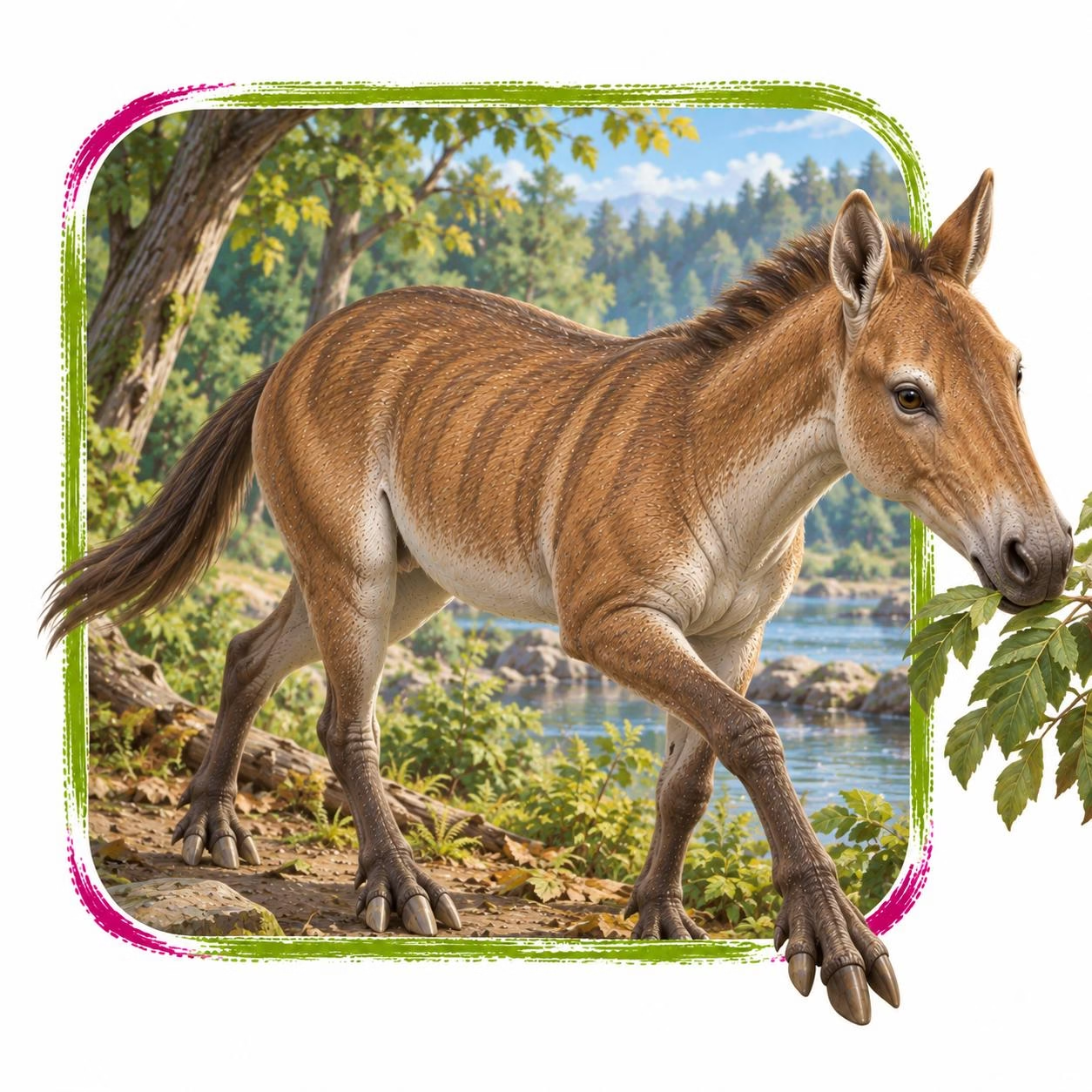
Mesohippus in its natural Oligocene North American forests, open woodlands, leafy browsing habitats, river valleys, floodplains, Great Plains fossil areas, Colorado fossil sites, and Canadian fossil localities habitat