
Metriorhynchus Facts for Kids
Metriorhynchus was a fully marine crocodyliform that lived in Jurassic seas. It was related to crocodilians but looked very different from a modern crocodile. Paddle-shaped limbs, a fish-like tail fluke, smooth skin without bony armor, and enlarged salt-processing organs made metriorhynchids superb ocean swimmers. Modern taxonomic work restricts the name Metriorhynchus more narrowly than many older books did.
Quick Metriorhynchus Facts
- Animal Type: Extinct fully marine crocodyliform
- Group: Metriorhynchid thalattosuchian
- Known For: Paddle limbs, tail fluke, smooth armor-free skin, salt glands, and open-water life
- Lived During: Jurassic, with strict Metriorhynchus known mainly from the Late Jurassic
- Diet: Fish, squid-like animals, small marine prey, and occasional carrion
What You’ll Learn
Explore 10 fascinating metriorhynchus facts for kids about flippers, a tail fin, streamlined bodies, ocean hunting, and marine crocodile relatives, plus a quiz, glossary, and activity
Easy explanations make them fun for children, families, teachers, and young prehistoric explorers.
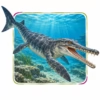
10 Fun Metriorhynchus Facts for Kids
1. Metriorhynchus Was a Marine Crocodyliform
Metriorhynchus belonged to an extinct branch of crocodyliforms that became more completely adapted to ocean life than any living crocodilian.
Kid Decode: It took the crocodile blueprint and sent nearly every part of it to swimming school.
2. Its Limbs Became Paddles
The legs were shortened and broadened into flipper-like paddles used mainly for steering and stability in the water.
Kid Decode: Walking feet were remodeled into underwater control fins.
3. Its Tail Carried a Fluke
A downward bend near the tail tip supported an asymmetrical vertical fluke that provided strong swimming power.
Kid Decode: The tail finished with a fish-like engine instead of an ordinary crocodile taper.
4. It Lost Its Bony Armor
Unlike teleosauroids and living crocodilians, metriorhynchids lacked rows of heavy osteoderms, reducing drag and body weight.
Kid Decode: It traded the armored jacket for a faster ocean swimsuit.
5. Its Skin Was Smooth
Exceptionally preserved metriorhynchid fossils show flexible skin without visible scales or scutes, plus fibrous structures running across the surface.
Kid Decode: Its skin was closer to sleek marine-reptile wrapping than crocodile luggage.
6. It Had Salt-Removing Glands
Spaces and ducts in metriorhynchid skulls show enlarged salt glands that helped remove excess salt swallowed or absorbed at sea.
Kid Decode: Its head contained a built-in desalination station.
7. It Probably Could Not Walk Ashore
The transformed limbs, tail, pelvis, and reduced land-supporting muscles indicate that advanced metriorhynchids were poorly suited or unable to move normally on land.
Kid Decode: The ocean was home, while a beach would have been an awkward parking place.
8. It May Have Given Birth at Sea
Because fully marine metriorhynchids were badly adapted for crawling onto land, scientists infer that females probably gave birth to live young in water, although no Metriorhynchus embryo is known.
Kid Decode: Its babies may have entered the world already surrounded by waves.
9. It Was an Opportunistic Carnivore
Long jaws and conical teeth suited catching fish and other marine animals, while stomach contents from a historically named Metriorhynchus-like form show scavenging on the giant fish Leedsichthys.
Kid Decode: It could chase a fresh meal or inspect a giant floating leftover.
10. Its Name Has Been Narrowed
Older scientists placed many species in Metriorhynchus, but a 2020 revision restricted the genus and moved famous species such as M. superciliosus into other genera.
Kid Decode: The museum name tag once covered a crowd and now fits a much smaller guest list.
The Weirdest Metriorhynchus Fact
This crocodile relative lost its armor, reshaped its feet into paddles, grew a tail fluke, and probably gave birth at sea, becoming one of the most completely marine archosaurs ever known.
Try This Metriorhynchus Activity
Metriorhynchus Drawing Activity
Draw Metriorhynchus cruising through a Jurassic sea. Add a streamlined body, smooth armor-free skin, short paddle limbs, a bent tail supporting a vertical fluke, a moderate-length snout, fish and squid-like prey, and a skull cutaway showing salt glands.
Quick Metriorhynchus Quiz
- Was Metriorhynchus a dinosaur? Answer: No, it was a marine crocodyliform.
- What powered its swimming? Answer: A tail ending in a vertical fluke.
- Did it carry heavy crocodile-like osteoderms? Answer: No.
- What helped it remove excess salt? Answer: Enlarged salt glands.
- Why do scientists think it may have given birth at sea? Answer: Its body was poorly suited for moving onto land.
Mini Glossary
- Metriorhynchid: A member of a family of fully marine Jurassic crocodyliforms.
- Pelagic: Living in open water away from the shore or seafloor.
- Tail Fluke: A fin-like structure at the end of a swimming animal’s tail.
- Salt Gland: An organ that removes excess salt from the body.
- Osteoderm: A bony plate formed within the skin.
 Aardwolf Facts for Kids
 Trout Facts for Kids
 Monkey Facts for Kids
 Aysheaia Facts for Kids
More Animal Facts for Kids
Visit the full animal facts library or explore a focused animal group.
More Extinct Animal Facts for Kids
Discover dinosaurs, Ice Age giants, prehistoric sea creatures, recently extinct species, and other animals from the past.
Fact check note: Fact checked with Young and colleagues’ 2020 taxonomic revision of Metriorhynchus, Spindler and colleagues’ 2021 metriorhynchid-skin study, Gandola and colleagues’ 2006 salt-gland research, Cowgill and colleagues’ 2023 salt-gland evolution analysis, and Hua, Liston and Tabouelle’s 2024 stomach-content study.

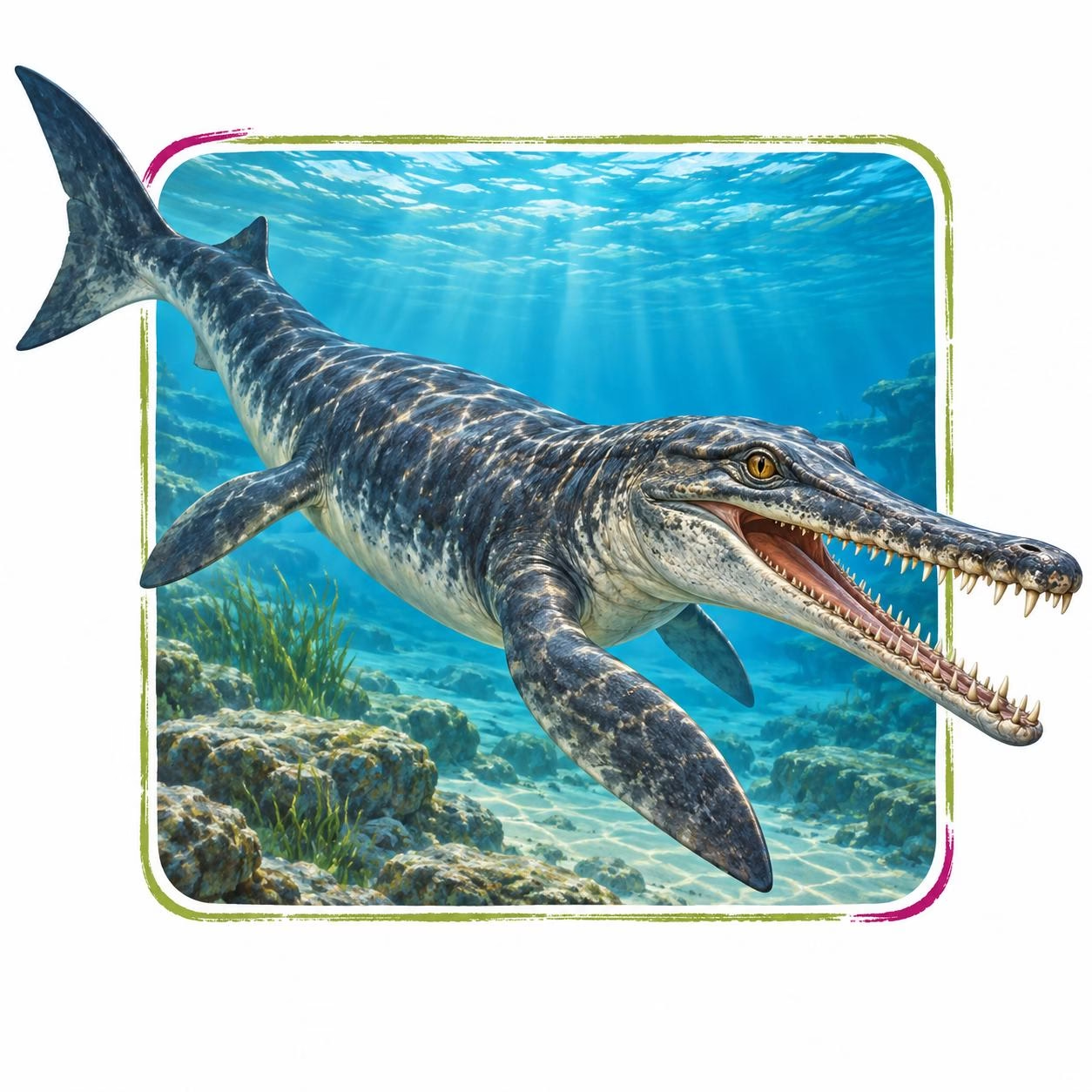
Metriorhynchus in its natural Jurassic open seas, coastal marine waters, offshore lagoons, continental shelves, and warm European ocean environments habitat