
Neochoerus Facts for Kids
Neochoerus was an extinct genus of giant capybaras that lived across parts of North, Central, and South America during the Pliocene and Pleistocene. It was a true rodent closely related to living capybaras, not a pig or hippopotamus. Its barrel-shaped body, short legs, high-crowned teeth, and frequent association with lakes and rivers suggest a plant-eating, water-loving lifestyle.
Quick Neochoerus Facts
- Animal Type: Extinct giant capybara
- Group: Hydrochoerine caviid rodent
- Known For: Large body, wetland lifestyle, ever-growing cheek teeth, northward migration, and widespread American fossils
- Lived During: Late Pliocene to Late Pleistocene, roughly 3.6 million to 12,000 years ago
- Diet: Grasses, aquatic plants, sedges, and other vegetation
What You’ll Learn
Discover 10 fascinating neochoerus facts for kids about giant capybara-like bodies, large teeth, wetland habitats, plant diets, and Ice Age life, plus a quiz, glossary, and activity
Easy explanations make them great for children, families, teachers, and little fact-hunters.
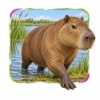
10 Fun Neochoerus Facts for Kids
1. Neochoerus Was a True Rodent
Neochoerus belonged to Rodentia and was a close extinct relative of modern capybaras.
Kid Decode: It was an oversized member of the rodent club, not a miniature hippo.
2. Some Species Were Larger Than Living Capybaras
Large Neochoerus individuals have been estimated at roughly 90 to 113 kilograms, although size differed among species and specimens.
Kid Decode: The giant capybara could outweigh several children while still keeping the classic barrel shape.
3. It Had a Barrel-Shaped Body
Like living capybaras, Neochoerus probably had a deep rounded trunk, short sturdy legs, and a large blunt head.
Kid Decode: Its body looked designed around one broad middle rather than speed or sharp corners.
4. It Probably Lived Near Water
Fossils commonly occur in deposits formed around lakes, rivers, ponds, and wetlands, supporting a semi-aquatic lifestyle.
Kid Decode: Where the fossil map gets wet, giant capybaras often appear.
5. It Was Probably a Strong Swimmer
Its close relationship to living capybaras suggests that Neochoerus could move comfortably through water, although webbing and other soft tissues are not preserved.
Kid Decode: The swimming skill is a strong family clue, but the fossil feet keep the details secret.
6. Its Teeth Grew Throughout Life
Capybara cheek teeth are high-crowned and continuously growing, helping replace material worn away by abrasive plants.
Kid Decode: Its grassy meals kept sanding the teeth down while the teeth kept growing back.
7. Its Last Upper Molar Was Complex
The third upper molar contained many enamel prisms or plates, and their number and arrangement help scientists identify fossil capybaras.
Kid Decode: One back tooth worked like a striped barcode for palaeontologists.
8. It Moved North From South America
Capybaras originated in South America, and Neochoerus reached Central and North America after the continents became connected.
Kid Decode: A new land bridge turned the capybara family into northbound travellers.
9. Its Species Names Are Debated
Researchers disagree over whether some named forms, including Neochoerus pinckneyi and Neochoerus aesopi, represent separate species, growth stages, or synonyms.
Kid Decode: The giant rodent’s family tree contains several labels written in erasable pencil.
10. Its Name Means New Pig
Neochoerus combines words meaning new and pig, although the animal was a rodent rather than a pig.
Kid Decode: The name says pig while the teeth and family tree shout capybara.
The Weirdest Neochoerus Fact
Neochoerus carried one of the most complicated back teeth in the rodent world, with many repeated enamel plates that help identify its species.
Try This Neochoerus Activity
Neochoerus Drawing Activity
Draw Neochoerus beside an Ice Age lake. Add a giant barrel-shaped capybara body, short legs, blunt head, swimming ripples, reeds, grasses, a complex striped back-tooth inset, and a map arrow showing capybaras moving from South America into Central and North America.
Quick Neochoerus Quiz
- Was Neochoerus a pig? Answer: No, it was a giant capybara and true rodent.
- Where did it live? Answer: Parts of North, Central, and South America.
- What did it eat? Answer: Grasses, aquatic plants, and other vegetation.
- Why did its teeth keep growing? Answer: Abrasive food continually wore them down.
- Why are some species names debated? Answer: Fossils may represent different ages, sizes, or the same species under several names.
Mini Glossary
- Hydrochoerine: A member of the capybara branch of caviid rodents.
- Semi-Aquatic: Spending substantial time both in water and on land.
- Hypsodont: Having tall-crowned teeth adapted to heavy wear.
- Enamel Prism: A repeated structural unit within a tooth’s hard enamel.
- Great American Biotic Interchange: The movement of animals between North and South America after the continents became connected.
 Echidna Facts for Kids
 Dolphin Facts for Kids
 Western Diamondback Rattlesnake Facts for Kids
 Bambiraptor Facts for Kids
More Animal Facts for Kids
Visit the full animal facts library or explore a focused animal group.
More Extinct Animal Facts for Kids
Discover dinosaurs, Ice Age giants, prehistoric sea creatures, recently extinct species, and other animals from the past.
Fact check note: Fact checked with Carbot-Chanona and colleagues’ 2020 revision of Mexican Neochoerus, Baskin and colleagues’ 2020 review of late Pleistocene North American capybaras, and hydrochoerine dental and biogeographic research.

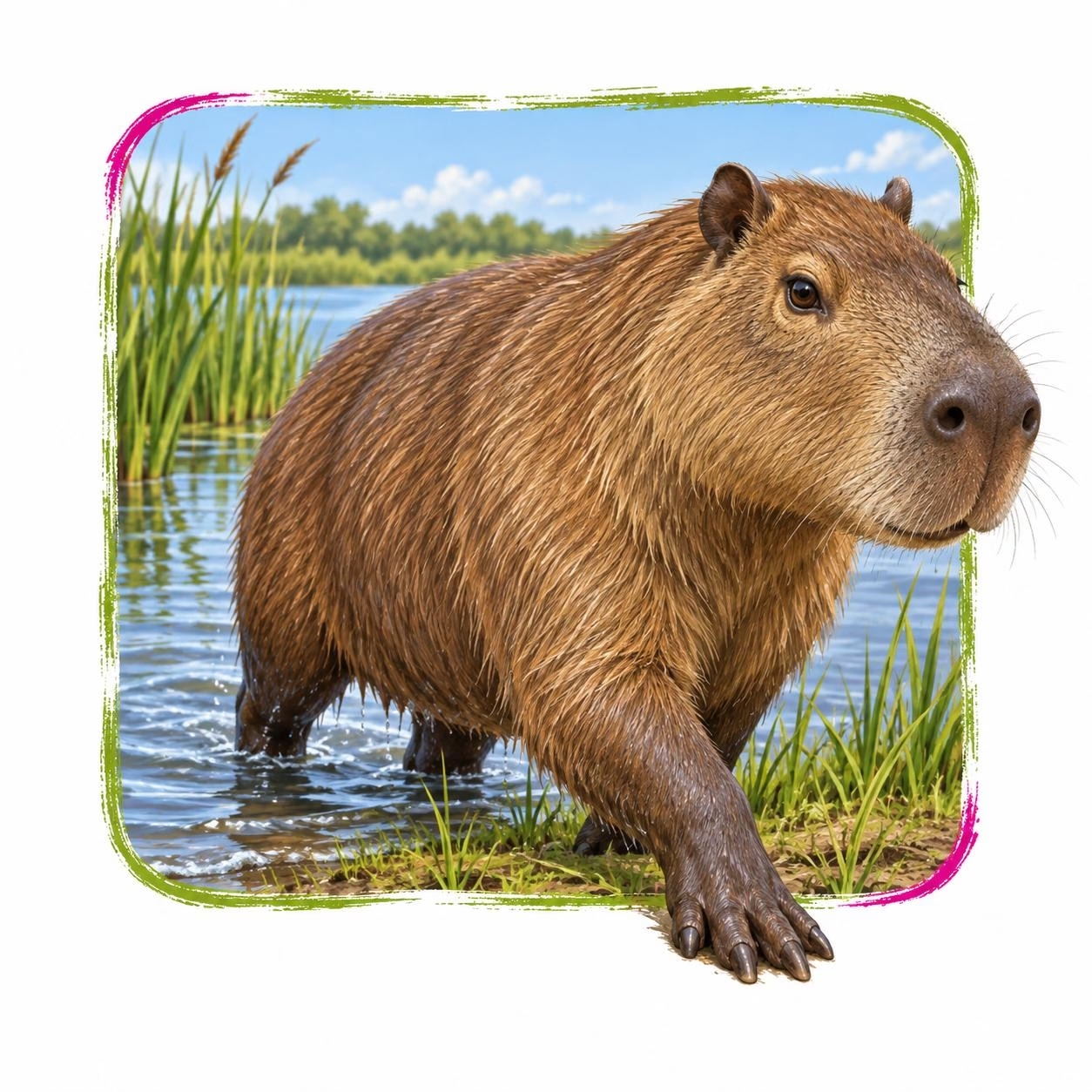
Neochoerus in its natural Late Pliocene and Pleistocene lakeshores, river margins, marshes, ponds, wetlands, floodplains, and nearby grasslands across the Americas habitat