
Neoepiblema Facts for Kids
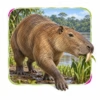
Neoepiblema was a giant South American rodent that lived during the Late Miocene. It belonged to an extinct chinchilloid family called Neoepiblemidae and was not a giant rat. Fossils from western Amazonia show a heavy-bodied herbivore with powerful limbs, a long skull, ever-growing teeth, and the ability to walk on land while possibly digging or swimming near rivers and wetlands.
Quick Neoepiblema Facts
- Animal Type: Extinct giant rodent
- Group: Neoepiblemid chinchilloid
- Known For: Large body, powerful limbs, grasping ability, complex cheek teeth, and a surprisingly small brain
- Lived During: Late Miocene, roughly 10–7 million years ago
- Diet: Plants, probably including leaves, fruit, stems, and waterside vegetation
What You’ll Learn
Discover 10 giant neoepiblema facts for kids about huge rodent bodies, powerful teeth, plant diets, and prehistoric South American habitats, plus a quiz, glossary, and activity
Clear explanations make them fun for children, families, teachers, and little fact-hunters.
10 Fun Neoepiblema Facts for Kids
1. Neoepiblema Was a True Rodent
Neoepiblema belonged to Rodentia, but it was more closely related to chinchilloid rodents than to rats and mice.
Kid Decode: The giant rodent family tree points toward chinchillas and pacaranas, not a city sewer.
2. It Was About the Size of a Large Sheep
Neoepiblema acreensis has often been estimated near 80 kilograms, far heavier than any living chinchilla.
Kid Decode: A chinchilla-sized idea grew until it could compete with a farm animal.
3. Its Skull Was Long and Strong
The skull had an elongated snout, deep areas for jaw muscles, large sinuses, and several prominent crests.
Kid Decode: Its head came with extra ridges for anchoring a serious chewing engine.
4. Its Front Teeth Never Stopped Growing
Like other rodents, Neoepiblema carried large incisors that grew continuously and were worn down by gnawing.
Kid Decode: The front teeth followed a lifetime subscription plan with no cancel button.
5. Its Cheek Teeth Were Complex
High-crowned cheek teeth had repeated enamel folds that changed in shape as the animal grew and the teeth wore down.
Kid Decode: Each back tooth was a layered plant grinder with a changing pattern on top.
6. Its Forelimbs Were Powerful
The shoulder, upper-arm, and forearm bones indicate strong chest and triceps muscles and a forelimb that stayed somewhat crouched.
Kid Decode: Its front half was built less like a dainty chinchilla and more like compact machinery.
7. Its Hands May Have Grasped
Forearm joints allowed pronation and supination, suggesting that the front paws could rotate and possibly hold food or objects.
Kid Decode: It may have turned its paws palm-up for a prehistoric snack inspection.
8. It Walked but Could Also Dig or Swim
Limb anatomy fits an ambulatory land animal with additional ability to dig or move through water.
Kid Decode: Its résumé may have listed walking first, with digging and swimming under extra skills.
9. It Lived Beside Ancient Amazonian Waters
Many fossils come from the Solimões Formation, deposited in river, lake, swamp, and floodplain environments.
Kid Decode: This giant rodent lived where the prehistoric Amazon landscape was wet, tangled, and busy.
10. Its Brain Was Small for Its Body
A digital endocast suggested a brain mass near 47 grams, far below the roughly 114 grams predicted from a living-rodent scaling equation.
Kid Decode: The body became giant while the brain kept a surprisingly modest floor plan.
The Weirdest Neoepiblema Fact
A CT-based endocast produced an estimated brain mass of about 47 grams, while scaling from living relatives predicted roughly 114 grams for an animal near 80 kilograms.
Try This Neoepiblema Activity
Neoepiblema Drawing Activity
Draw Neoepiblema walking beside a Late Miocene Amazonian wetland. Add a heavy rodent body, powerful chest and forelimbs, grasping front paws, a long head, giant incisors, complex cheek teeth, reeds, shallow water, and a CT-style brain inset labelled “small compared with body size.”
Quick Neoepiblema Quiz
- Was Neoepiblema a giant rat? Answer: No, it was a giant chinchilloid rodent from its own extinct family.
- Where did it live? Answer: South America, especially western Amazonia.
- How much did N. acreensis weigh in one widely used estimate? Answer: About 80 kilograms.
- What could its forelimbs possibly do? Answer: Grasp, dig, and help with swimming.
- What did CT scans reveal about its brain? Answer: It was very small relative to its body.
Mini Glossary
- Rodent: A mammal with continuously growing front incisors.
- Chinchilloid: A rodent from the broader group containing chinchillas, viscachas, pacaranas, and extinct relatives.
- Neoepiblemid: A member of the extinct giant-rodent family Neoepiblemidae.
- Endocast: A model of the space once occupied by the brain inside a skull.
- Pronation and Supination: Rotating the forearm so the palm turns downward or upward.
 Harp Seal Facts for Kids
 Olive Baboon Facts for Kids
 Piranha Facts for Kids
 Gigantoraptor Facts for Kids
More Animal Facts for Kids
Visit the full animal facts library or explore a focused animal group.
More Extinct Animal Facts for Kids
Discover dinosaurs, Ice Age giants, prehistoric sea creatures, recently extinct species, and other animals from the past.
Fact check note: Fact checked with Kerber and colleagues’ 2019 cranial reassessment of Neoepiblema acreensis, Ferreira and colleagues’ 2020 brain and endocast study, Kerber and colleagues’ 2022 postcranial analysis, and Kerber, Negri and Sanfelice’s 2019 cheek-tooth revision.

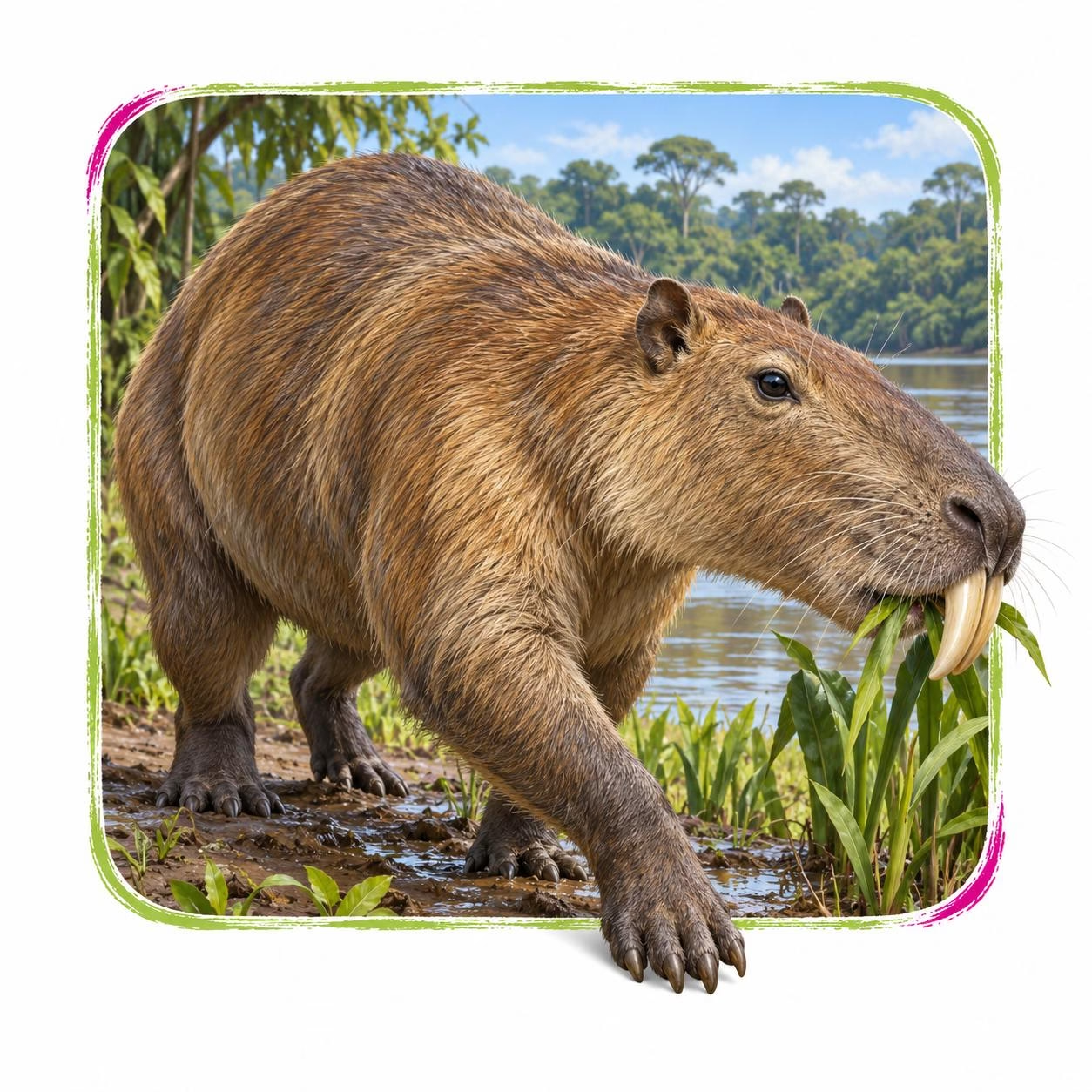
Neoepiblema in its natural Late Miocene rivers, lakes, swamps, floodplains, wet forests, and water-rich lowlands of western Amazonia and nearby South American regions habitat