
Norfolk Kaka Facts for Kids
The Norfolk Kaka was a recently extinct parrot from Norfolk Island and nearby Phillip Island. It was not a dinosaur and not the same as New Zealand’s living kākā, though it was a close relative. This large island parrot used its strong beak to feed on flowers, blossoms, fruits, and seeds before it disappeared in the 1800s.
Quick Norfolk Kaka Facts
- Animal Type: Recently extinct bird
- Group: Kaka parrot and Nestor parrot
- Known For: Norfolk Island home, Phillip Island records, strong curved beak, chicks, flower feeding, forest habitat, pet trapping, and extinction by 1851
- Lived During: Holocene, until the 1800s
- Diet: Flowers, blossoms, fruits, seeds, nectar, and other plant foods
What You’ll Learn
Learn 10 fascinating norfolk kaka facts for kids about this extinct island parrot, its curved beak, feathers, forest habitat, and history, with a quiz, glossary, and activity
These facts are kept simple for kids, parents, teachers, and curious young minds.
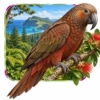
10 Fun Norfolk Kaka Facts for Kids
1. Norfolk Kakas Were Birds
Norfolk Kakas were parrots, not dinosaurs, mammals, or crows.
Kid Decode: Island parrot, curved beak, forest snack specialist.
2. They Lived on Norfolk Island
The Norfolk Kaka lived on Norfolk Island and nearby Phillip Island in the South Pacific.
Kid Decode: Two small islands carried a whole parrot story.
3. They Were Kaka Relatives
The Norfolk Kaka was closely related to the New Zealand kākā, but it was a separate extinct species.
Kid Decode: Same parrot neighborhood, different island address.
4. They Had Strong Beaks
Norfolk Kakas had strong curved beaks that helped them handle tough plant foods.
Kid Decode: That beak was a forest multitool with feathers attached.
5. They Ate Flowers and Fruit
The Norfolk Kaka likely fed on flowers, blossoms, fruits, seeds, nectar, and other plant foods.
Kid Decode: Part blossom nibbler, part seed cracker, full-time island parrot.
6. They Lived in Forests
Norfolk Kakas depended on native island forests and trees for food, shelter, and nesting places.
Kid Decode: When the forest shrank, the parrot’s pantry shrank too.
7. Baby Norfolk Kakas Were Chicks
Baby Norfolk Kakas can be called chicks, like baby parrots and other birds today.
Kid Decode: A chick would have begun life tucked away in a protected nest.
8. People Hunted and Trapped Them
People hunted Norfolk Kakas for food and also trapped them as pets after European settlement.
Kid Decode: Being curious and colorful was dangerous around collectors.
9. They Vanished in the 1800s
The Norfolk Kaka likely disappeared from the wild in the early 1800s, and the last known captive bird died in London in 1851.
Kid Decode: The wild voice went quiet first, then the final cage went quiet too.
10. They Teach Island Conservation
The Norfolk Kaka shows how fast island birds can disappear when hunting, trapping, and habitat change arrive together.
Kid Decode: Small island plus big pressure equals a very fragile bird story.
The Weirdest Norfolk Kaka Fact
The Norfolk Kaka was a large island parrot whose last known individual died far from home in London.
Try This Norfolk Kaka Activity
Norfolk Kaka Drawing Activity
Draw a Norfolk Kaka in a Norfolk Island forest. Add strong curved beak, brown and green feathers, chick, flowers, blossoms, fruit, seeds, tall island trees, Phillip Island map clue, old cage warning sign, and a “lost island parrot” label.
Quick Norfolk Kaka Quiz
- Was the Norfolk Kaka a dinosaur? Answer: No, it was a bird and parrot.
- Where did Norfolk Kakas live? Answer: Norfolk Island and nearby Phillip Island.
- What living parrot was it related to? Answer: The New Zealand kākā.
- What did Norfolk Kakas eat? Answer: Flowers, blossoms, fruits, seeds, nectar, and other plant foods.
- When did the last known captive bird die? Answer: 1851.
Mini Glossary
- Kaka: A type of parrot in the genus Nestor.
- Endemic: Found naturally in only one place.
- Nectar: Sweet liquid made by flowers.
- Chick: A baby bird.
- Captive: Kept by people instead of living freely in the wild.
 Chickadee Facts for Kids
 Scorpion Facts for Kids
 Bobcat Facts for Kids
 Anhanguera Facts for Kids
More Animal Facts for Kids
Visit the full animal facts library or explore a focused animal group.
More Extinct Animal Facts for Kids
Discover dinosaurs, Ice Age giants, prehistoric sea creatures, recently extinct species, and other animals from the past.
Fact check note: Fact checked with Australian Museum Norfolk Island Kaka resources, BirdLife factsheet, Norfolk Island extinction summaries, and trusted parrot education sources.

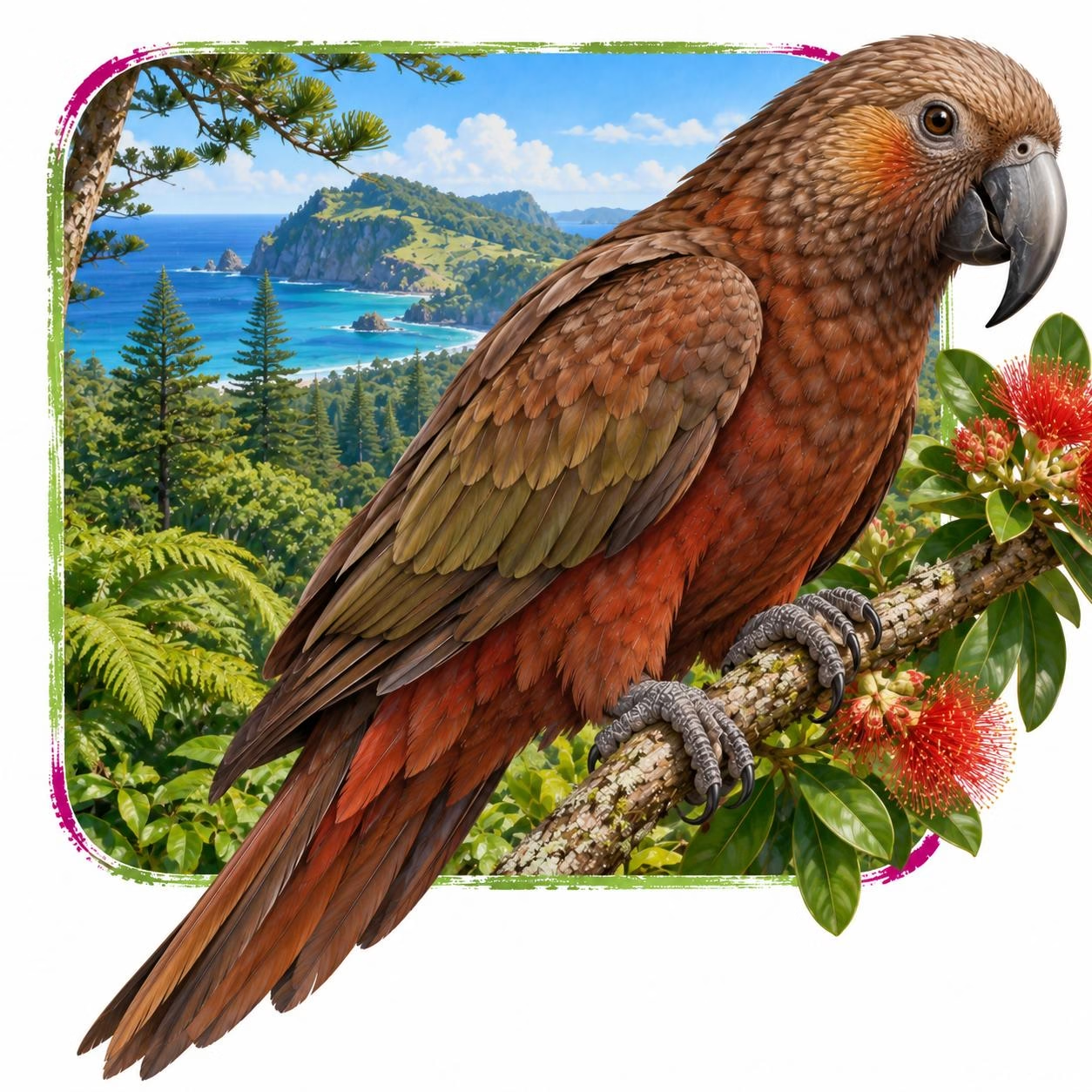
Norfolk Kaka in its natural Norfolk Island forests, Phillip Island habitats, native woodlands, flowering trees, coastal forests, tree hollows, and South Pacific island habitats habitat