
Notoungulate Facts for Kids
Notoungulates were an extinct order of native South American hoofed mammals. They were not dinosaurs and not the same as modern horses, cows, rhinos, or deer. The group was amazingly diverse, with tiny rabbit-like forms, sheep-like grazers, and huge rhino-like plant eaters such as Toxodon.
Quick Notoungulate Facts
- Animal Type: Extinct hoofed mammal group
- Group: Notoungulata, South American native ungulates
- Known For: Huge diversity, rabbit-like typotheres, rhino-like toxodonts, South American isolation, calves or young, plant diets, Toxodon, and Pleistocene extinction
- Lived During: Early Paleocene to end of the Pleistocene, about 61 million to 11,000 years ago
- Diet: Mostly plants, including grasses, leaves, shrubs, roots, and tough vegetation
What You’ll Learn
Explore 10 amazing notoungulate facts for kids about this diverse group of extinct mammals, their teeth, diets, body shapes, and South American habitats, plus a quiz, glossary, and activity
Easy explanations make them fun for children, families, teachers, and young learners.
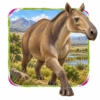
10 Fun Notoungulate Facts for Kids
1. Notoungulates Were Mammals
Notoungulates were prehistoric mammals, not dinosaurs, reptiles, or birds.
Kid Decode: South America’s mammal branch had its own secret workshop.
2. They Were Native South American Ungulates
Notoungulates evolved in South America during a long time when the continent was isolated from many northern mammal groups.
Kid Decode: Isolation turned South America into a hoofed-mammal creativity lab.
3. They Were Very Diverse
Scientists have described more than 150 notoungulate genera in many families.
Kid Decode: This was not one animal. It was a whole mammal parade.
4. Some Were Rabbit-Like
Small notoungulates in groups such as typotheres could look a bit like rabbits, rodents, or hyraxes.
Kid Decode: Notoungulates came in pocket-sized editions too.
5. Some Were Rhino-Like
Large toxodont notoungulates such as Toxodon looked heavy and rhino-like, even though they were not true rhinos.
Kid Decode: Same chunky silhouette, very different family tree.
6. They Ate Plants
Most notoungulates were herbivores that ate leaves, grasses, shrubs, roots, or other plant foods.
Kid Decode: The group was basically South America’s long-running plant-munching cast.
7. Their Teeth Tell Diet Stories
Many notoungulates had specialized teeth, including high-crowned teeth for gritty grasses and tough plants.
Kid Decode: Teeth are tiny fossil food diaries.
8. They Had No Living Members
Notoungulates are completely extinct today, with no living species left.
Kid Decode: Every notoungulate now lives in bones, papers, and museum drawers.
9. Toxodon Was One of the Last
Large toxodonts such as Toxodon survived until the end of the Pleistocene, making them among the last notoungulates.
Kid Decode: The group’s final chapters were written by giant bow-toothed browsers.
10. They Help Explain South America’s Past
Notoungulates show how strange mammal evolution became on South America before and after the Great American Biotic Interchange.
Kid Decode: They are a whole lost continent-story wearing hooves.
The Weirdest Notoungulate Fact
Notoungulates ranged from rabbit-like animals to rhino-like giants, yet all belonged to the same vanished South American mammal order.
Try This Notoungulate Activity
Notoungulate Drawing Activity
Draw a notoungulate parade from small to giant. Add a rabbit-like typothere, a rhino-like Toxodon, high-crowned teeth icons, calf or young animal clue, South America map, grasslands, forest edge, and a “native South American ungulates” label.
Quick Notoungulate Quiz
- Were notoungulates dinosaurs? Answer: No, they were mammals.
- Where did most notoungulates live? Answer: South America.
- What famous giant notoungulate survived into the Ice Age? Answer: Toxodon.
- What did most notoungulates eat? Answer: Plants.
- Are any notoungulates alive today? Answer: No, they are extinct.
Mini Glossary
- Notoungulate: A member of an extinct order of native South American hoofed mammals.
- Ungulate: A hoofed mammal or hoofed-mammal relative.
- Typothere: A smaller notoungulate group with many rabbit-like or rodent-like forms.
- Toxodont: A large notoungulate group that included Toxodon.
- Great American Biotic Interchange: The movement of animals between North and South America after the Isthmus of Panama formed.
 Bengal Tiger Facts for Kids
 Serow Facts for Kids
 Ocelot Facts for Kids
 Carnotaurus Facts for Kids
More Animal Facts for Kids
Visit the full animal facts library or explore a focused animal group.
More Extinct Animal Facts for Kids
Discover dinosaurs, Ice Age giants, prehistoric sea creatures, recently extinct species, and other animals from the past.
Fact check note: Fact checked with Annual Review of Earth and Planetary Sciences South American native ungulate review, GBIF Notoungulata summary, ancient collagen studies, and trusted prehistoric mammal education sources.

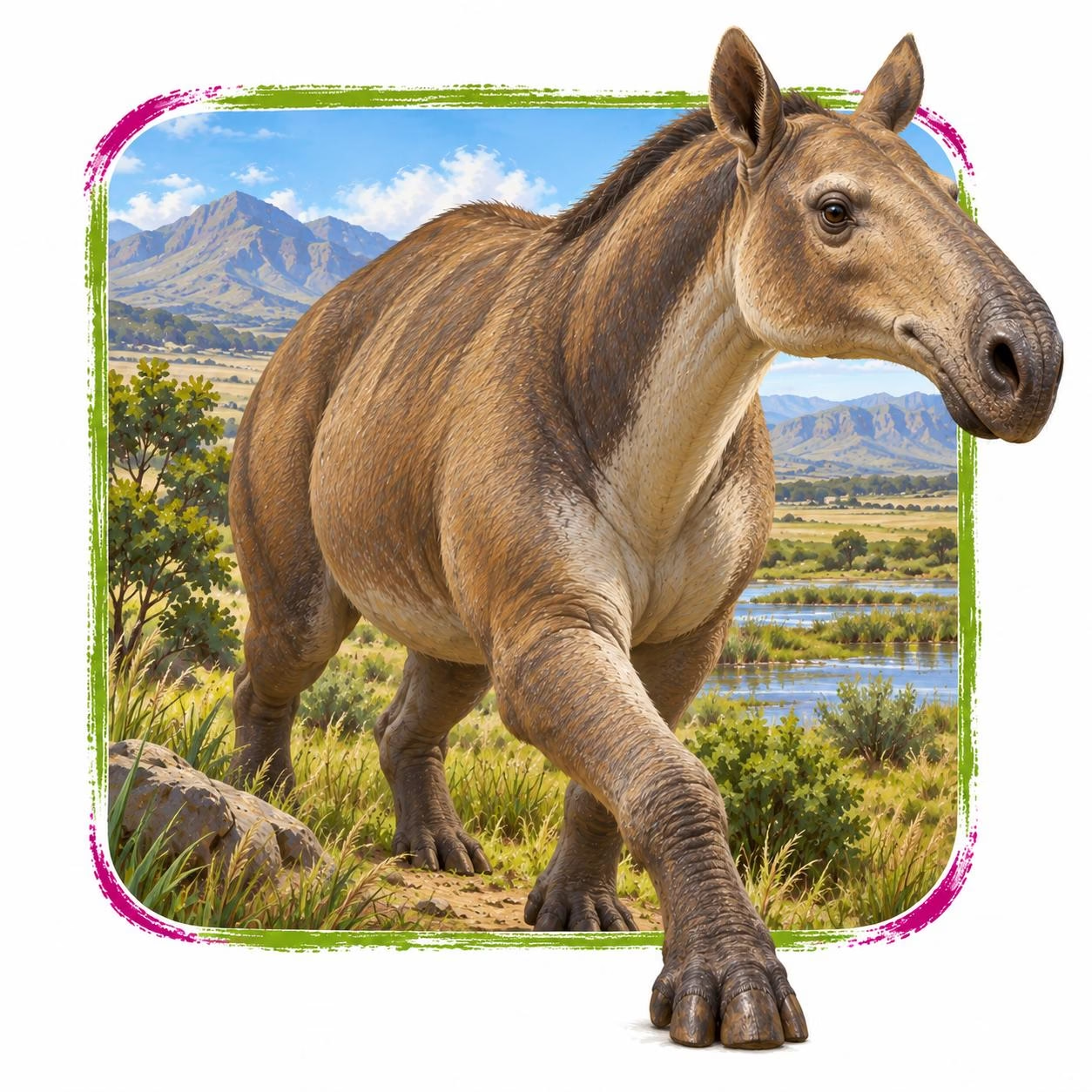
Notoungulate in its natural South American forests, grasslands, floodplains, savannas, shrublands, rocky uplands, pampas, wetlands, and diverse native ungulate habitats across many time periods habitat