
Nuralagus Facts for Kids
Nuralagus was a giant extinct rabbit relative from Menorca in the Mediterranean Sea. It was not a dinosaur and not a monster bunny, but it was the largest known lagomorph. Living on an island with few large predators, Nuralagus grew bulky, had shorter ears and eyes than many rabbits, and probably moved slowly instead of leaping like modern rabbits.
Quick Nuralagus Facts
- Animal Type: Prehistoric mammal
- Group: Giant leporid and lagomorph
- Known For: Largest known rabbit relative, Menorca island life, bulky body, reduced leaping, short ears, kits, plant diet, island evolution, and Pliocene extinction
- Lived During: Pliocene, about 5 to 3 million years ago
- Diet: Leaves, stems, roots, grasses, herbs, and other island plants
What You’ll Learn
Explore 10 giant nuralagus facts for kids about its huge rabbit body, island life, short legs, plant diet, and prehistoric Mallorca, with a quiz, glossary, and activity
These simple facts are made for kids, parents, teachers, and curious young learners.
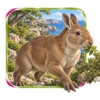
10 Fun Nuralagus Facts for Kids
1. Nuralagus Was a Mammal
Nuralagus was a prehistoric mammal, not a dinosaur, reptile, or cartoon rabbit.
Kid Decode: Real rabbit relative, giant island edition.
2. It Was a Giant Rabbit Relative
Nuralagus belonged to the leporid family, the group that includes rabbits and hares.
Kid Decode: Rabbit family, but with the size knob turned way up.
3. It Lived on Menorca
All known Nuralagus fossils come from Menorca, one of Spain’s Balearic Islands in the western Mediterranean.
Kid Decode: One small island hosted one very oversized bunny cousin.
4. It Was the Largest Known Lagomorph
Scientists estimate Nuralagus weighed about 8 to 12 kilograms, making it the largest known member of the rabbit and hare order.
Kid Decode: That is a rabbit relative with backpack-weight ambitions.
5. It Probably Could Not Hop Well
Its short stiff back and limb shape suggest Nuralagus had reduced leaping ability compared with modern rabbits.
Kid Decode: Less boing, more sturdy island shuffle.
6. It Had Shorter Ears and Smaller Eyes
Island life with few major predators may have reduced the need for huge ears and sharp lookout eyes.
Kid Decode: When fewer predators are chasing you, alarm-system ears can shrink.
7. It Ate Plants
Nuralagus was a herbivore that likely fed on island vegetation such as leaves, grasses, stems, and roots.
Kid Decode: The giant rabbit menu was green and crunchy.
8. Baby Nuralagus Were Kits
Baby rabbit relatives can be called kits or kittens, so baby Nuralagus can be called kits.
Kid Decode: A kit that could grow into a giant island rabbit is adorable fossil math.
9. It Shows Island Evolution
Nuralagus is a classic example of island evolution, where animals can grow larger or smaller in isolation.
Kid Decode: Menorca made a rabbit relative into a chunky island experiment.
10. It Went Extinct When Island Life Changed
Nuralagus likely disappeared around the Pliocene-Pleistocene transition, when environmental changes and new animals altered Menorca’s ecosystem.
Kid Decode: The giant rabbit’s island bubble finally popped.
The Weirdest Nuralagus Fact
Nuralagus was a rabbit relative so big and bulky that it probably could not hop like the rabbits kids see today.
Try This Nuralagus Activity
Nuralagus Drawing Activity
Draw Nuralagus on ancient Menorca. Add a bulky rabbit body, short ears, small eyes, sturdy feet, kit clue, island plants, Mediterranean coast, cave fissure fossil tag, and a “giant island rabbit” label.
Quick Nuralagus Quiz
- Was Nuralagus a dinosaur? Answer: No, it was a prehistoric mammal.
- Where did Nuralagus live? Answer: On Menorca in the Balearic Islands.
- What animal family was it part of? Answer: The leporid family, related to rabbits and hares.
- Could Nuralagus probably hop like modern rabbits? Answer: No, it likely had reduced leaping ability.
- What did Nuralagus eat? Answer: Plants such as leaves, stems, roots, and grasses.
Mini Glossary
- Lagomorph: A mammal order that includes rabbits, hares, and pikas.
- Leporid: A member of the rabbit and hare family.
- Island Evolution: Evolution that happens when animals live isolated on islands.
- Kit: A baby rabbit or rabbit relative.
- Pliocene: A time period before the Ice Age when many modern-looking mammals lived.
 Starling Facts for Kids
 Pelican Facts for Kids
 Goliath Beetle Facts for Kids
 Leaellynasaura Facts for Kids
More Animal Facts for Kids
Visit the full animal facts library or explore a focused animal group.
More Extinct Animal Facts for Kids
Discover dinosaurs, Ice Age giants, prehistoric sea creatures, recently extinct species, and other animals from the past.
Fact check note: Fact checked with Nuralagus rex description summaries, Menorca fossil notes, island evolution explanations, and trusted prehistoric mammal education sources.

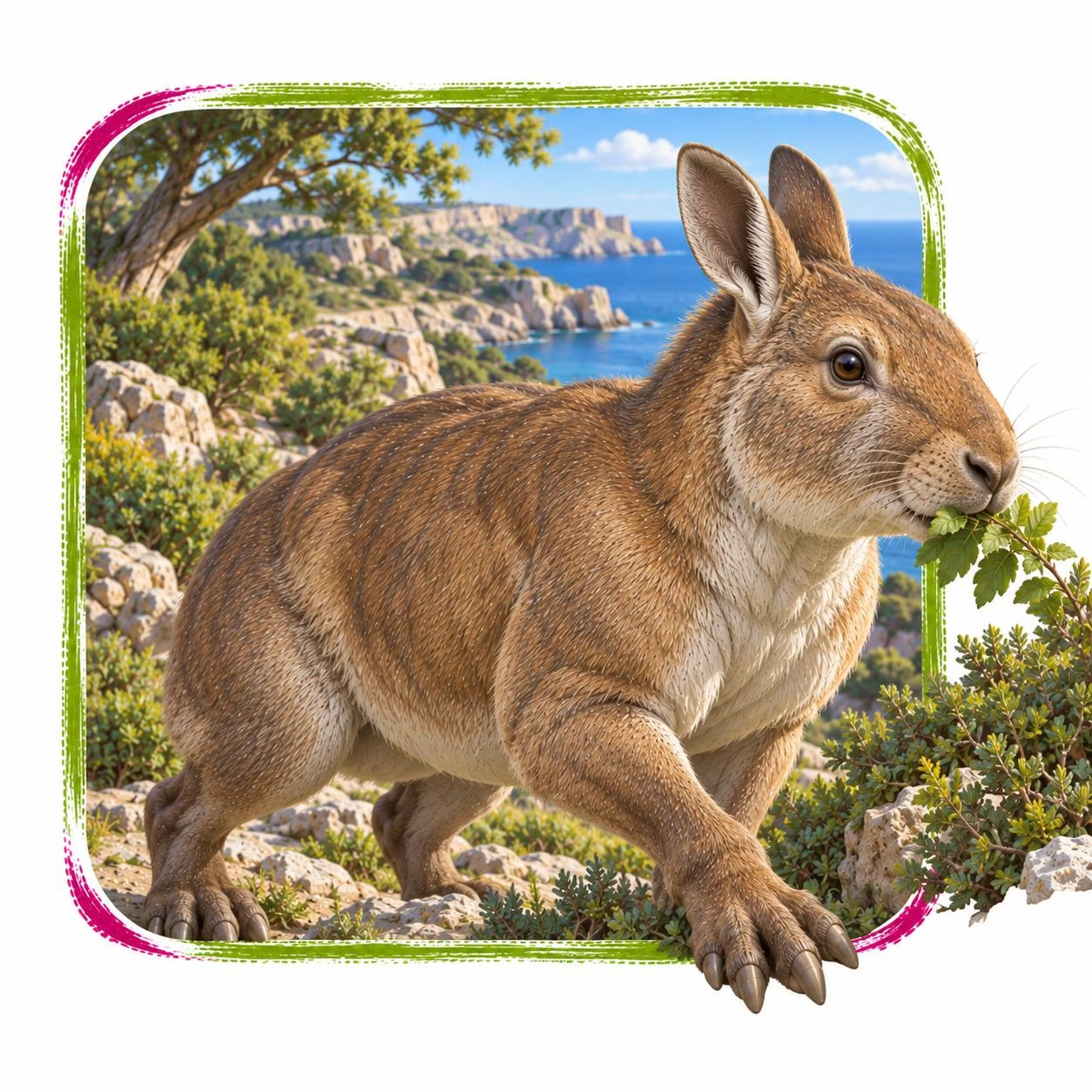
Nuralagus in its natural Pliocene Menorca island habitats, Mediterranean shrublands, coastal woodlands, rocky limestone areas, cave fissure deposits, herb-rich ground cover, predator-light island ecosystems, and Balearic Island landscapes habitat