
Opabinia Facts for Kids
Opabinia was a strange Cambrian sea animal from the Burgess Shale of Canada. It was not a dinosaur, fish, or reptile, but an extinct arthropod relative with five eyes, a flexible front proboscis, side swimming flaps, gills, and a tail fan. Its odd body helped make it one of the most famous animals of the Cambrian Period.
Quick Opabinia Facts
- Animal Type: Extinct marine arthropod relative
- Group: Stem arthropod and opabiniid
- Known For: Five eyes, flexible proboscis, side flaps, gills, tail fan, Burgess Shale fossils, and Cambrian weirdness
- Lived During: Cambrian Period
- Diet: Small soft-bodied sea animals and seafloor food
What You’ll Learn
Learn 10 strange opabinia facts for kids about five eyes, a flexible proboscis, swimming flaps, tiny size, and Cambrian seas, with a quiz, glossary, and activity
These simple facts are written for kids, parents, teachers, and curious young minds.
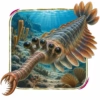
10 Fun Opabinia Facts for Kids
1. Opabinia Was Not a Dinosaur
Opabinia lived during the Cambrian Period, more than 250 million years before dinosaurs appeared.
Kid Decode: It was ancient ocean weirdness from a much older chapter.
2. It Had Five Eyes
Opabinia had five eyes on its head, making it one of the most eye-catching fossils in the Burgess Shale.
Kid Decode: Five eyes feels excessive, but Opabinia clearly liked extra lookout windows.
3. It Had a Front Proboscis
Opabinia had a long flexible proboscis at the front of its body, ending in a small grasping tip.
Kid Decode: Its face came with a bendy food-grabber.
4. It Had Swimming Flaps
Opabinia had repeated side flaps along its body that helped it move through the water.
Kid Decode: Instead of fins, it wore a row of little swim paddles.
5. It Had Gills
Opabinia had gill structures linked with its side flaps, which helped it live in the sea.
Kid Decode: This animal was built for water, not beach walking.
6. It Had a Tail Fan
Opabinia had a fan-like tail that may have helped with swimming and steering.
Kid Decode: The tail looked ready to swish through Cambrian traffic.
7. It Lived in the Burgess Shale Sea
Opabinia fossils are famous from the Burgess Shale, a Canadian fossil site that preserved soft-bodied Cambrian animals.
Kid Decode: Canada’s rocks saved one of the strangest faces in fossil history.
8. Its Diet Is Still Studied
Scientists think Opabinia may have used its proboscis to pick up small prey or seafloor food, but the exact menu is still debated.
Kid Decode: Its dinner plan is still tucked inside the fossil puzzle.
9. It Helped Change Fossil Thinking
Opabinia showed scientists that Cambrian animals could have body plans very different from animals alive today.
Kid Decode: It made paleontology blink all five eyes at once.
10. Young Opabinia Are Not Well Known
Scientists do not know many details about baby Opabinia, but young animals would have started smaller and grown over time.
Kid Decode: The baby story is still hiding in Cambrian mud.
The Weirdest Opabinia Fact
Opabinia had five eyes and a nozzle-like proboscis, giving it one of the strangest heads in the fossil record.
Try This Opabinia Activity
Opabinia Drawing Activity
Draw Opabinia swimming through a Cambrian sea. Add five eyes, a flexible proboscis, grasping tip, side swimming flaps, gills, tail fan, soft-bodied prey, seafloor mud, fossil slab, bubbles, and a “five-eyed wonder” label.
Quick Opabinia Quiz
- Was Opabinia a dinosaur? Answer: No, it lived long before dinosaurs.
- How many eyes did Opabinia have? Answer: Five.
- What was the long front body part called? Answer: A proboscis.
- Where are famous Opabinia fossils found? Answer: The Burgess Shale of Canada.
- During what period did Opabinia live? Answer: Cambrian Period.
Mini Glossary
- Proboscis: A long flexible body part used for reaching or grabbing.
- Stem Arthropod: An extinct relative near the early arthropod family tree.
- Gill: A body part that helps an aquatic animal get oxygen from water.
- Burgess Shale: A Canadian fossil site famous for Cambrian soft-bodied animals.
- Cambrian: A period when many unusual early animals lived in the oceans.
 Hamster Facts for Kids
 Oscar Fish Facts for Kids
 Tick Facts for Kids
 Confuciusornis Facts for Kids
More Animal Facts for Kids
Visit the full animal facts library or explore a focused animal group.
More Extinct Animal Facts for Kids
Discover dinosaurs, Ice Age giants, prehistoric sea creatures, recently extinct species, and other animals from the past.
Fact check note: Fact checked with Royal Ontario Museum Burgess Shale Opabinia resources, Cambrian fossil references, stem arthropod summaries, and trusted paleontology education sources.

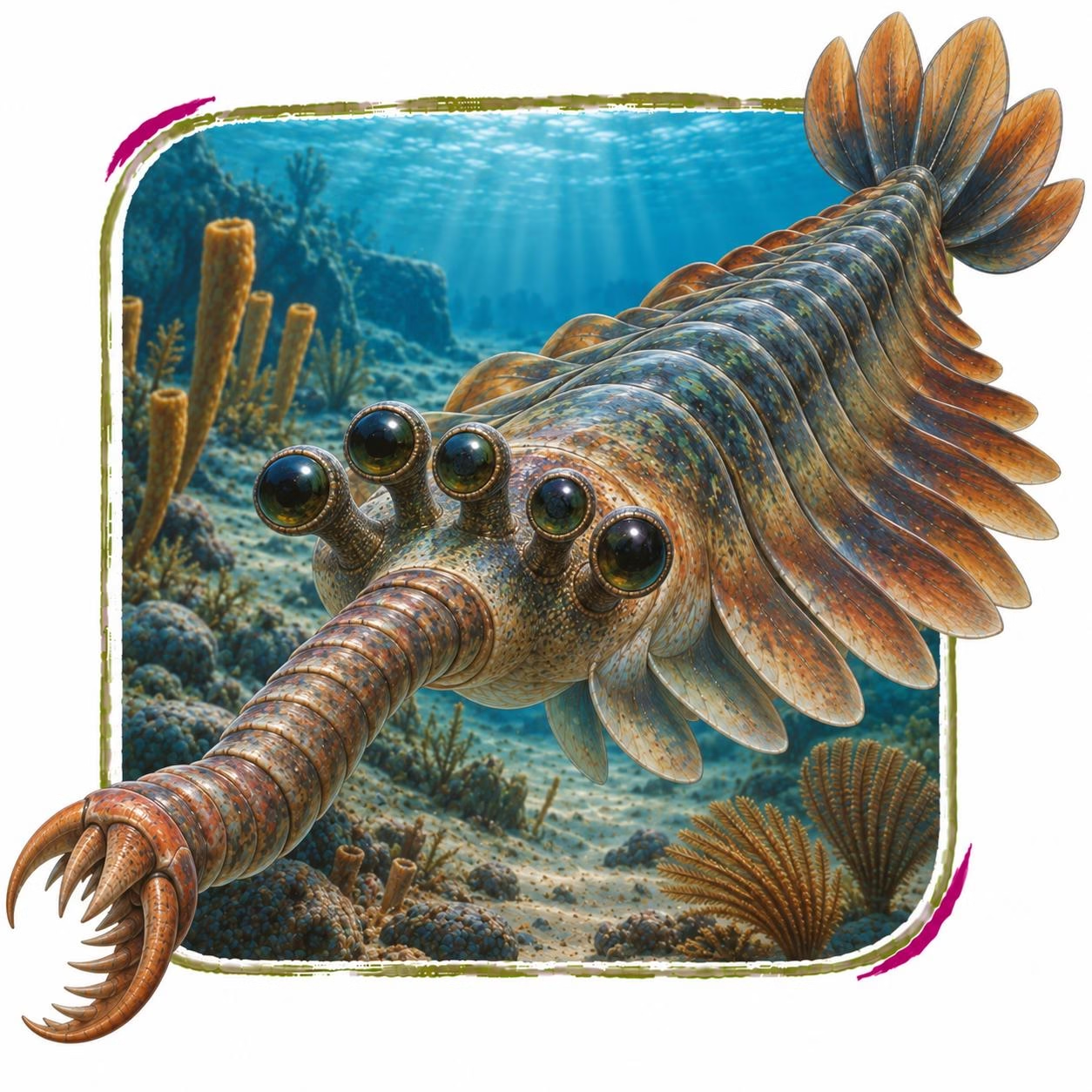
Opabinia in its natural Cambrian oceans, shallow seas, muddy seafloors, and open marine waters habitat