
Orthoceras Facts for Kids
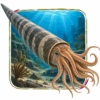
Orthoceras was a straight-shelled cephalopod from ancient seas. The name is often used for fossils of long, straight nautiloid shells. These animals were related to modern nautiluses, squids, and octopuses, but they lived in hard cone-shaped shells instead of soft bodies alone.
Quick Orthoceras Facts
- Animal Type: Extinct marine invertebrate
- Group: Straight-shelled nautiloid cephalopod
- Known For: Long straight shell, chambered shell, tentacles, jet movement, marine fossils, and Paleozoic ocean life
- Lived During: Mainly Paleozoic seas, especially Ordovician to Devonian fossil records
- Diet: Small sea animals, worms, tiny fish, and other marine prey
What You’ll Learn
Discover 10 fascinating orthoceras facts for kids about long straight shells, tentacles, jet propulsion, ocean hunting, and ancient seas, with a quiz, glossary, and activity
These facts are explained simply for kids, parents, teachers, and curious little fact-finders.
10 Fun Orthoceras Facts for Kids
1. Orthoceras Was Not a Dinosaur
Orthoceras was a marine invertebrate, not a dinosaur, fish, or reptile.
Kid Decode: It belonged to the ancient shell-and-tentacle crowd.
2. It Was a Cephalopod
Orthoceras was a cephalopod, related to modern nautiluses, squids, octopuses, and cuttlefish.
Kid Decode: It was part of the ocean’s tentacle-powered family tree.
3. Its Name Means Straight Horn
The name Orthoceras means straight horn because of its long straight cone-shaped shell.
Kid Decode: That name is fossil-simple: straight shell, horn shape, done.
4. It Had a Chambered Shell
Orthoceras shells had chambers inside, which likely helped with buoyancy.
Kid Decode: The shell was not just armor. It was floaty engineering.
5. It Had Tentacles
Orthoceras likely had tentacles near the opening of its shell to catch prey.
Kid Decode: Imagine a cone shell with grabby arms peeking out.
6. It Moved by Jet Propulsion
Like many cephalopods, Orthoceras may have moved by squirting water from its body.
Kid Decode: Ancient ocean jetpack, but make it mollusk.
7. It Lived in Ancient Seas
Orthoceras and similar straight-shelled nautiloids lived in Paleozoic oceans long before dinosaurs.
Kid Decode: These shell animals were old before dinosaurs even got invited.
8. It Ate Small Sea Animals
Orthoceras was a carnivore that likely caught small prey with its tentacles.
Kid Decode: Tiny sea snacks had to beware the straight-shell hunter.
9. Many Fossils Come From Marine Rocks
Straight-shelled nautiloid fossils are common in some ancient marine rock deposits.
Kid Decode: The shells preserved so well they became stone pencils from the sea.
10. The Name Can Be Used Loosely
Many fossils sold or labeled as Orthoceras may actually be related straight-shelled nautiloids, not always the exact genus Orthoceras.
Kid Decode: Fossil labels can be a little splashy and messy.
The Weirdest Orthoceras Fact
Orthoceras had a long straight shell with chambers inside, making it look like a cone-shaped submarine with tentacles.
Try This Orthoceras Activity
Orthoceras Drawing Activity
Draw Orthoceras swimming through a Paleozoic sea. Add a long straight shell, shell chambers, tentacles, jet water stream, tiny prey, seafloor plants, fossil slab, bubbles, and a “straight horn” label.
Quick Orthoceras Quiz
- Was Orthoceras a dinosaur? Answer: No, it was a marine invertebrate.
- What does Orthoceras mean? Answer: Straight horn.
- What animal group did Orthoceras belong to? Answer: Cephalopods.
- What shape was its shell? Answer: Long and straight.
- How may Orthoceras have moved? Answer: By jet propulsion, squirting water.
Mini Glossary
- Cephalopod: A mollusk group that includes nautiluses, squids, octopuses, and extinct shelled relatives.
- Nautiloid: A cephalopod group with chambered shells, including ancient straight-shelled forms.
- Chambered Shell: A shell divided into separate inner spaces.
- Jet Propulsion: Moving by pushing water out quickly.
- Paleozoic: A long era of ancient life before the age of dinosaurs.
 Japanese Spider Crab Facts for Kids
 Auk Facts for Kids
 Leopard Facts for Kids
 Andrewsarchus Facts for Kids
More Animal Facts for Kids
Visit the full animal facts library or explore a focused animal group.
More Extinct Animal Facts for Kids
Discover dinosaurs, Ice Age giants, prehistoric sea creatures, recently extinct species, and other animals from the past.
Fact check note: Fact checked with nautiloid cephalopod fossil references, Orthoceras fossil education resources, Paleozoic marine fossil summaries, and trusted paleontology education sources.

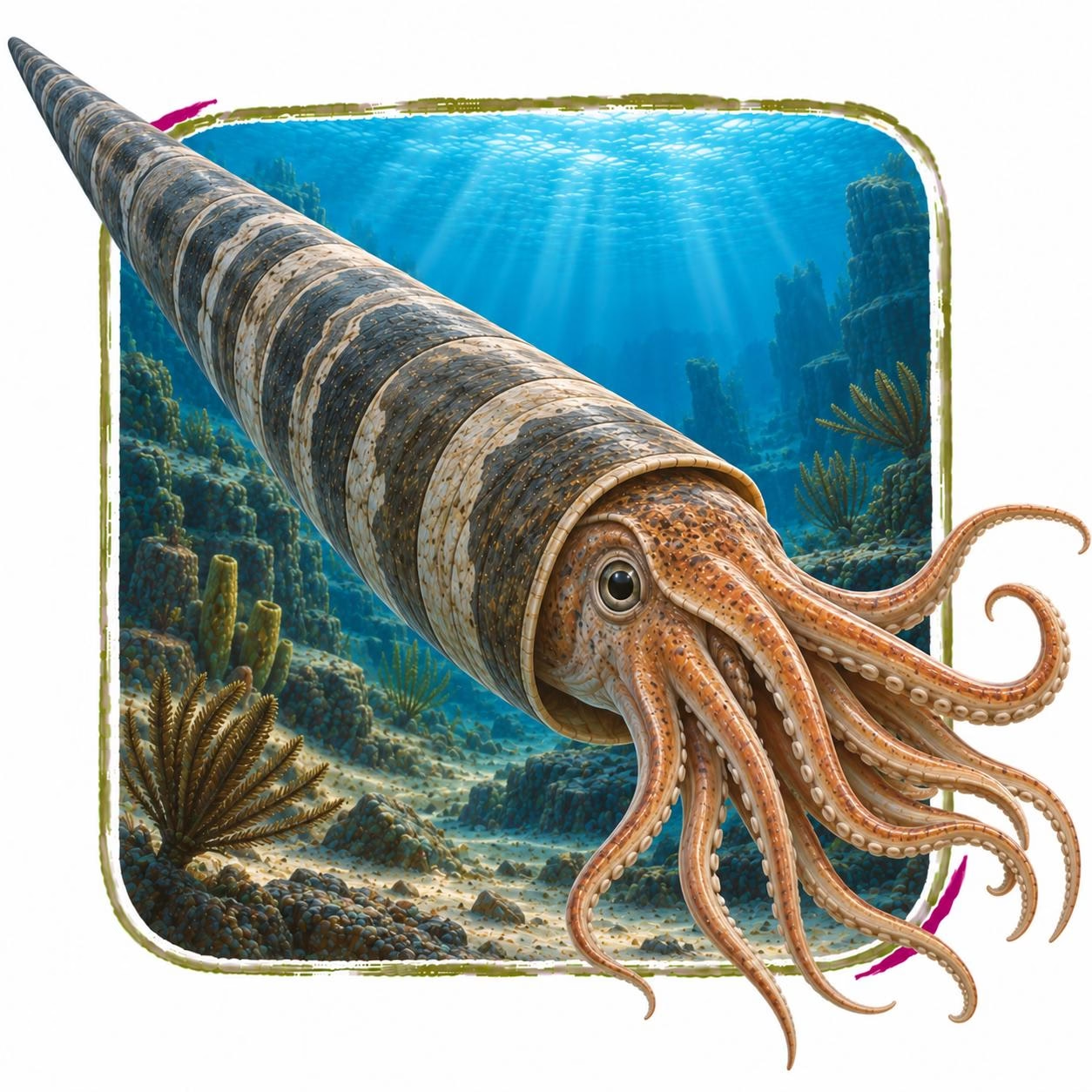
Orthoceras in its natural Paleozoic oceans, shallow seas, reefs, seafloors, and open marine waters habitat