
Palaeoloxodon Facts for Kids
Palaeoloxodon was an extinct genus of elephants that included the famous straight-tusked elephants. It was not a dinosaur and not a woolly mammoth, though it lived during the Ice Age alongside many other giant mammals. Some Palaeoloxodon species were enormous forest elephants, while island species became tiny dwarf elephants.
Quick Palaeoloxodon Facts
- Animal Type: Prehistoric elephant
- Group: Palaeoloxodont elephant and proboscidean
- Known For: Straight tusks, huge skull crest, giant forest elephants, dwarf island elephants, calves, African origins, Eurasian spread, interglacial forests, and Ice Age extinction
- Lived During: Pleistocene, about 2.6 million to tens of thousands of years ago depending on species
- Diet: Leaves, bark, twigs, shrubs, grasses, fruits, and other plant foods
What You’ll Learn
Learn 10 enormous palaeoloxodon facts for kids about giant size, tusks, plant diets, elephant relatives, and prehistoric habitats, plus a quiz, glossary, and activity
Easy explanations make them fun for children, families, teachers, and budding animal experts.
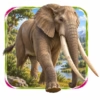
10 Fun Palaeoloxodon Facts for Kids
1. Palaeoloxodon Was an Elephant
Palaeoloxodon was a real elephant relative, not a dinosaur, mammoth, or rhino.
Kid Decode: Elephant family, Ice Age chapter.
2. Its Name Means Ancient Slanting Tooth
Palaeoloxodon means ancient slanting tooth, a name linked to features of its molars.
Kid Decode: Paleontology can make even tooth ridges sound royal.
3. It Included Straight-Tusked Elephants
The European straight-tusked elephant, Palaeoloxodon antiquus, is one of the best-known species in the genus.
Kid Decode: Straight tusks were the headline feature, not curly mammoth tusks.
4. It Could Be Enormous
Large Palaeoloxodon species had bulls over 4 metres tall at the shoulder and weighed over 13 tonnes.
Kid Decode: That is elephant size pushed into building-with-legs territory.
5. It Had a Tall Skull Crest
Many Palaeoloxodon skulls show a high crest on the top and back of the head, giving the skull a very distinctive shape.
Kid Decode: Its skull wore a bony mountain range.
6. It Began in Africa
Natural History Museum notes explain that Palaeoloxodon originated in Africa and later spread across Europe and Asia.
Kid Decode: The straight-tusked elephant story began in Africa, then wandered widely.
7. It Spread Across Eurasia
Palaeoloxodon lived as far west as Europe and as far east as Japan, with fossils even found beneath London’s Trafalgar Square.
Kid Decode: Imagine finding Ice Age elephant history under a busy city square.
8. Some Species Became Dwarfs
On Mediterranean islands, some Palaeoloxodon species evolved into dwarf elephants, with adults less than a metre tall in extreme cases.
Kid Decode: The same elephant genus could make giants and mini-elephants. Island magic, fossil edition.
9. Baby Palaeoloxodons Were Calves
Baby Palaeoloxodons can be called calves, just like baby living elephants.
Kid Decode: A calf might grow into a giant forest browser or, on an island, stay surprisingly small.
10. They Went Extinct
Palaeoloxodon species vanished as climates changed, habitats shifted, and human pressures may have affected some late populations.
Kid Decode: The straight-tusked giants walked out of history, but their tusks stayed loud in museums.
The Weirdest Palaeoloxodon Fact
Palaeoloxodon included some of the largest elephants ever, yet also produced tiny dwarf elephants on islands.
Try This Palaeoloxodon Activity
Palaeoloxodon Drawing Activity
Draw Palaeoloxodon in an Ice Age forest. Add straight tusks, huge skull crest, big ears, calf, leafy branches, dwarf island elephant comparison, fossil skull tag, and a “straight-tusked elephant” label.
Quick Palaeoloxodon Quiz
- Was Palaeoloxodon a dinosaur? Answer: No, it was an extinct elephant.
- What famous group did it include? Answer: Straight-tusked elephants.
- Where did Palaeoloxodon originate? Answer: Africa.
- What are baby elephants called? Answer: Calves.
- Did all Palaeoloxodon species stay gigantic? Answer: No, some island species became dwarf elephants.
Mini Glossary
- Proboscidean: A mammal group that includes elephants and their extinct relatives.
- Straight Tusk: A long tusk that is straighter than the curved tusks of many mammoths.
- Dwarf Elephant: A small elephant species that evolved on an island.
- Calf: A baby elephant or other large mammal.
- Pleistocene: An Ice Age time period when many large mammals lived.
 Lungfish Facts for Kids
 Plover Facts for Kids
 Centipede Facts for Kids
 Dimetrodon Facts for Kids
More Animal Facts for Kids
Visit the full animal facts library or explore a focused animal group.
More Extinct Animal Facts for Kids
Discover dinosaurs, Ice Age giants, prehistoric sea creatures, recently extinct species, and other animals from the past.
Fact check note: Fact checked with Natural History Museum straight-tusked elephant article, Palaeoloxodon genus summaries, straight-tusked elephant size references, and trusted proboscidean education sources.

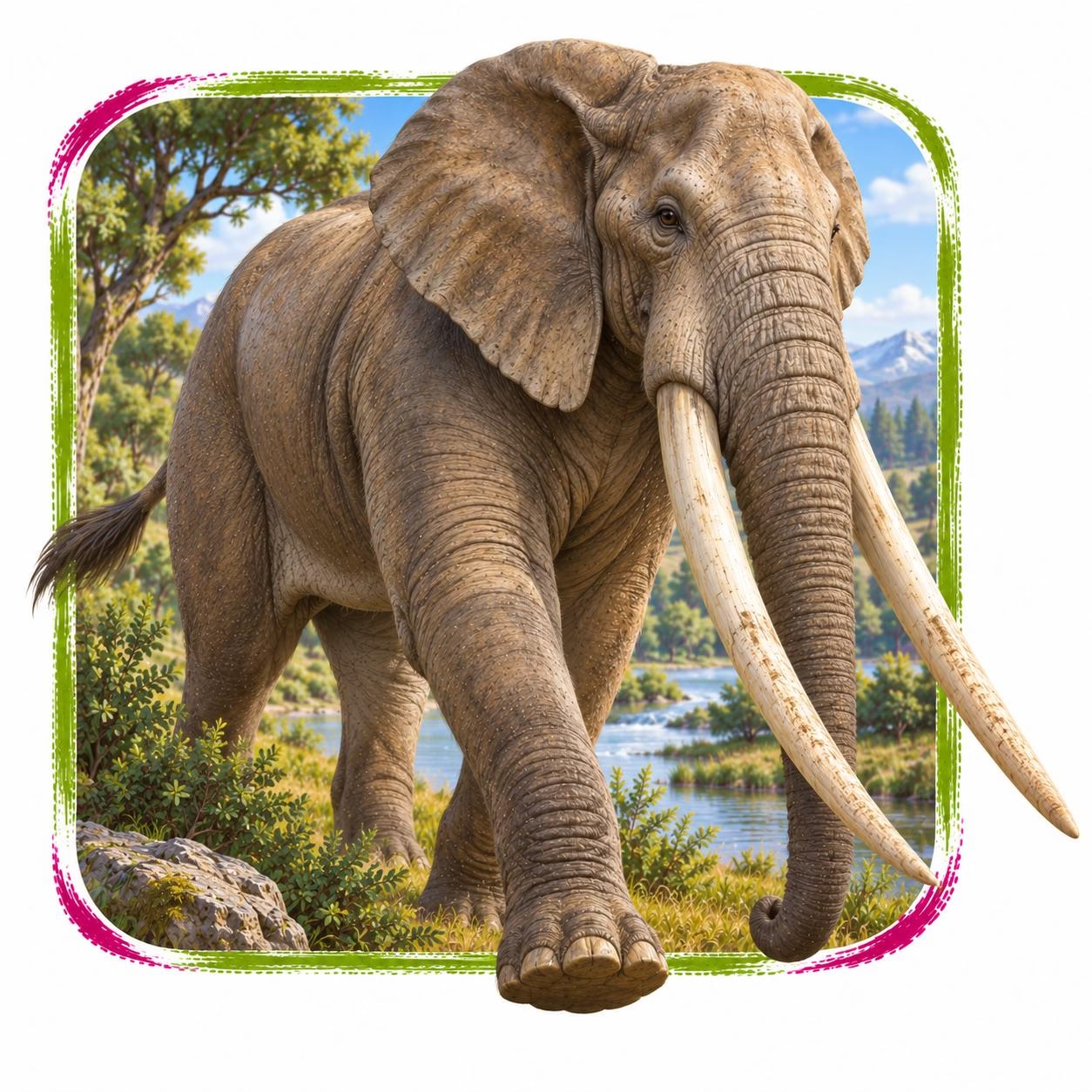
Palaeoloxodon in its natural Pleistocene African woodlands, European temperate forests, Mediterranean woodlands, Asian forest edges, interglacial river valleys, island habitats for dwarf species, grassland margins, and elephant browsing landscapes habitat