
Panochthus Facts for Kids
Panochthus was a giant armored glyptodont that lived across much of South America during the Pleistocene. It was a mammal and a relative of armadillos, not a dinosaur or turtle. Hundreds of interlocking osteoderms formed a domed carapace over its body, while the end of its tail was enclosed in a rigid bony tube that could function as a formidable defensive or fighting weapon.
Quick Panochthus Facts
- Animal Type: Extinct armored mammal
- Group: Glyptodont cingulate
- Known For: Domed osteoderm shell, patterned armor, rigid tail tube, possible tail spikes, and giant body
- Lived During: Pleistocene, roughly 2.5 million to 12,000 years ago
- Diet: Grasses, herbs, and other low-growing vegetation
What You’ll Learn
Learn 10 armored panochthus facts for kids about heavy body plates, a powerful tail club, plant diets, and Ice Age South America, with a quiz, glossary, and activity
These simple facts are written for kids, parents, teachers, and curious young minds.
10 Fun Panochthus Facts for Kids
1. Panochthus Was a Giant Armadillo Relative
Ancient DNA places glyptodonts within the same broad family as living armadillos, although their shells were far more rigid.
Kid Decode: It was an armadillo relative transformed into a walking fortress.
2. It Was Not a Dinosaur or Turtle
Panochthus was a placental mammal whose shell evolved independently from the armor of ankylosaurs and turtles.
Kid Decode: Three groups built tanks, but each used a completely different evolutionary workshop.
3. It Grew About Three Metres Long
Large species reached roughly 3 metres in total length and may have weighed around one to two tonnes.
Kid Decode: It packed small-car bulk beneath a dome assembled from hundreds of bones.
4. Its Carapace Formed a Solid Dome
Closely fitted osteoderms created a stiff shell over the back and sides, leaving the limbs and underside more mobile.
Kid Decode: Its armor was less flexible jacket and more permanent bony roof.
5. The Armor Had a Mosaic Pattern
Most shell plates carried many small polygonal figures rather than one large central rosette.
Kid Decode: Every plate looked as though it had been paved with miniature stone tiles.
6. Its Head Had a Bony Shield
Separate osteoderms formed a protective cap over the skull while still leaving space for the eyes, nostrils, and jaws.
Kid Decode: It wore armor on top of its head before the body shell even began.
7. Its Tail Ended in a Rigid Tube
Fused osteoderms surrounded the rear half of the tail, turning it into a stiff club-like structure.
Kid Decode: The flexible tail gradually became a biological hammer handle wrapped in bone.
8. Some Species May Have Carried Tail Spikes
Large depressions on certain tail tubes probably supported conical keratin-covered projections, although the soft covering is not preserved.
Kid Decode: The club may have grown a row of spikes whose outer material vanished after death.
9. The Tail Probably Worked as a Weapon
Biomechanical studies place the effective striking point near the enlarged distal structures, supporting use in defense or contests with other glyptodonts.
Kid Decode: Its tail was not decorative luggage; it was engineered around a powerful swing.
10. It Had a Flexible and Muscular Tongue
A rare preserved hyoid apparatus suggests a relatively mobile tongue with well-developed muscles, probably useful while gathering and moving plant food.
Kid Decode: Inside the armored fortress lived a surprisingly nimble plant-handling tongue.
The Weirdest Panochthus Fact
Panochthus combined a tonne-scale domed shell with a rigid bony tail tube whose sweet spot was positioned like the striking region of a biological hammer.
Try This Panochthus Activity
Panochthus Drawing Activity
Draw Panochthus crossing a Pleistocene South American grassland. Add a giant domed shell made from mosaic-patterned osteoderms, a head shield, short powerful legs, a rigid tail tube with cautious possible spikes, grasses and herbs, and a hammer diagram marking the tail’s likely striking point.
Quick Panochthus Quiz
- Was Panochthus a dinosaur? Answer: No, it was an armored mammal related to armadillos.
- What formed its shell? Answer: Hundreds of interlocking osteoderms.
- How long could it grow? Answer: Roughly 3 metres.
- What covered the end of its tail? Answer: A rigid tube formed from fused osteoderms.
- What was the tail probably used for? Answer: Defense or contests with other glyptodonts.
Mini Glossary
- Glyptodont: An extinct heavily armored relative of armadillos.
- Osteoderm: A bony plate formed within the skin.
- Carapace: A large protective shell covering the body.
- Caudal Tube: A rigid bony covering around the end portion of the tail.
- Hyoid Apparatus: Bones supporting the tongue and throat muscles.
 Red Fox Facts for Kids
 Roadrunner Facts for Kids
 Javan Rhino Facts for Kids
 Basilosaurus Facts for Kids
More Animal Facts for Kids
Visit the full animal facts library or explore a focused animal group.
More Extinct Animal Facts for Kids
Discover dinosaurs, Ice Age giants, prehistoric sea creatures, recently extinct species, and other animals from the past.
Fact check note: Fact checked with Zamorano and colleagues’ redescription of Panochthus tuberculatus, Blanco, Jones and Rinderknecht’s 2009 tail-club biomechanics study, Arbour and Zanno’s 2020 tail-weapon review, Zamorano and colleagues’ 2018 hyoid-apparatus study, and Panochthus osteoderm histology research.

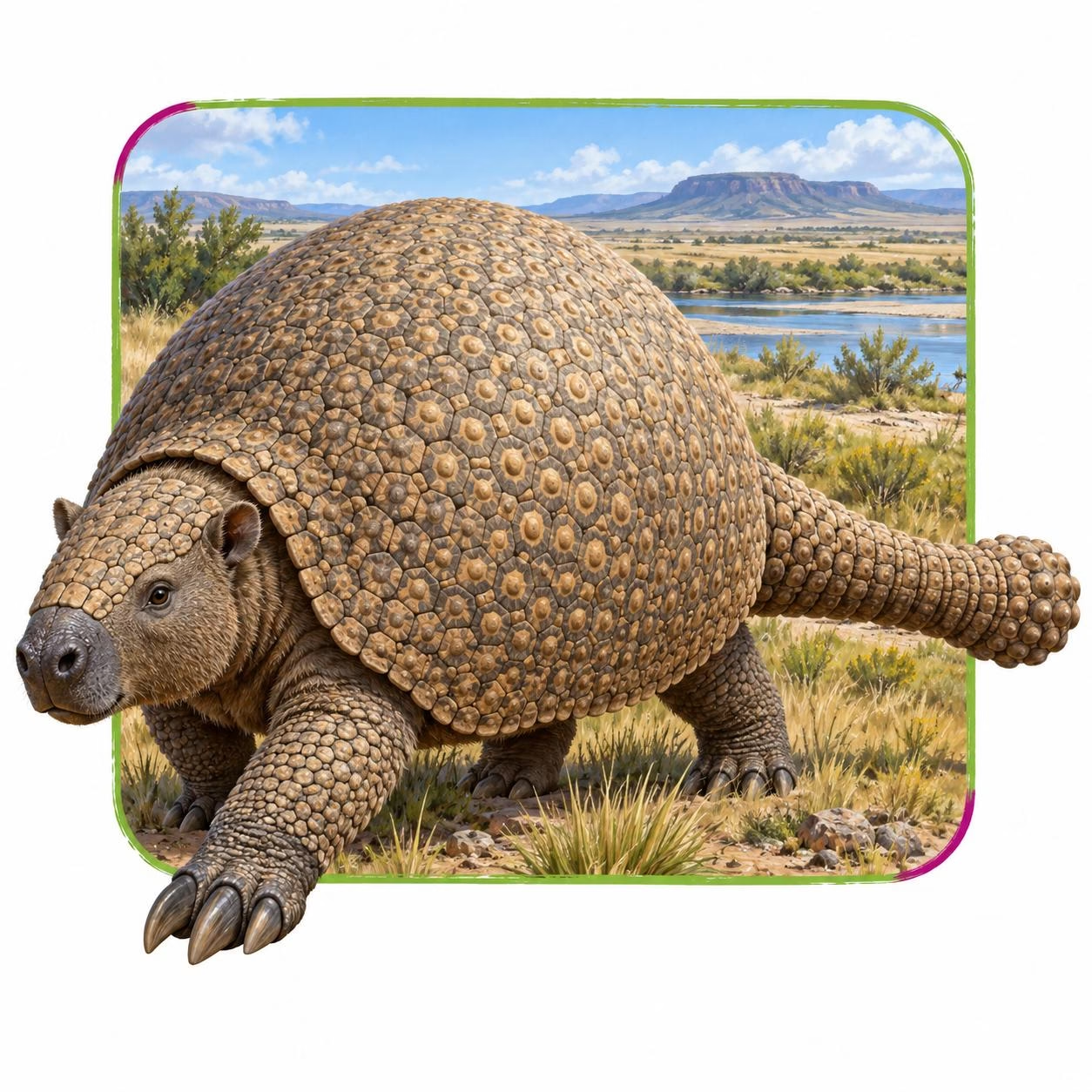
Panochthus in its natural Pleistocene grasslands, open savannas, dry scrub, river floodplains, high Andean basins, and temperate plains across central and southern South America habitat