
Parapropalaehoplophorus Facts for Kids
Parapropalaehoplophorus was a small early glyptodont that lived in northern Chile during the Early Miocene. Glyptodonts were heavily armored relatives of armadillos, but this species was far smaller than later giants such as Glyptodon and Panochthus. Its body was protected by a solid mosaic of rounded osteoderms, and its teeth changed from simple shapes at the front of the jaw to three-lobed grinding teeth farther back.
Quick Parapropalaehoplophorus Facts
- Animal Type: Extinct armored mammal
- Group: Early glyptodont cingulate
- Known For: Extremely long name, small body, tiled osteoderm shell, and northern Chilean fossils
- Lived During: Early Miocene, about 19–17 million years ago
- Diet: Plants, probably low-growing leaves, herbs, and other vegetation
What You’ll Learn
Explore 10 fascinating parapropalaehoplophorus facts for kids about body armor, a low build, plant diets, and ancient South American habitats, plus a quiz, glossary, and activity
Easy explanations make them great for children, families, teachers, and young fossil fans.
10 Fun Parapropalaehoplophorus Facts for Kids
1. It Was an Early Glyptodont
Parapropalaehoplophorus belonged to the armored glyptodont branch of cingulates, making it a distant relative of living armadillos.
Kid Decode: It was an early model of the biological tank that later glyptodonts turned into a heavyweight.
2. It Was Much Smaller Than Glyptodon
Researchers estimated a body mass around 90 kilograms, tiny beside later glyptodonts that could exceed a tonne.
Kid Decode: It was glyptodont armor fitted to an animal closer to a large pig than a small car.
3. Its Armored Shell Was Made of Osteoderms
Hundreds of small bony plates joined into a rigid carapace across the back and sides.
Kid Decode: Its protective roof was assembled from a mosaic of biological floor tiles.
4. The Armor Had Tiny Circular Bumps
Preserved osteoderms carry numerous small rounded figures rather than the larger rosette patterns seen in some later glyptodonts.
Kid Decode: Even one loose armor plate wore a fingerprint-like map of bumps.
5. Its Teeth Changed Along the Jaw
The front teeth were simple and roughly triangular, while the rear teeth developed the three-lobed shape typical of glyptodont grinding teeth.
Kid Decode: Its tooth row gradually transformed from wedges into tiny clover-shaped grinders.
6. It Had Eight Lower Teeth on Each Side
The known lower jaw preserves seven complete teeth and the base of an eighth in a continuous tooth row.
Kid Decode: One side of its jaw carried a full little railway of eight plant-processing teeth.
7. Its Lower Jaw Was Not Fully Fused
The two halves of the mandibular symphysis were probably unfused, an ancestral condition compared with many later glyptodonts.
Kid Decode: Its chin still kept a primitive seam where later armored giants built a firmer join.
8. Its Jaw Muscles Were Strong
Roughened bone surfaces show large attachment areas for the masseter and temporalis muscles used in chewing.
Kid Decode: A small armored herbivore still needed a respectable engine behind its teeth.
9. Its Fossils Came From High in the Andes
The Chucal Formation lies more than 4,000 metres above sea level today, although the animal lived before the Andes reached their modern height.
Kid Decode: Its bones climbed into the clouds because the mountains rose around them long after burial.
10. Its Name Is Exceptionally Long
Parapropalaehoplophorus septentrionalis contains 38 letters and is among the longest scientific names given to any vertebrate.
Kid Decode: The animal was small, but its full name is a linguistic sauropod.
The Weirdest Parapropalaehoplophorus Fact
Its 38-letter scientific name is almost half as long as the armored animal itself appears in many reconstructions.
Try This Parapropalaehoplophorus Activity
Parapropalaehoplophorus Drawing Activity
Draw Parapropalaehoplophorus walking across an Early Miocene Chilean plain. Add a low body, short sturdy legs, a rounded shell made from tiny bumped osteoderms, a small head, simple front teeth, three-lobed rear teeth, distant volcanoes, and a mountain-rise timeline showing how its fossils reached the high Andes.
Quick Parapropalaehoplophorus Quiz
- Was Parapropalaehoplophorus a dinosaur? Answer: No, it was an armored mammal.
- Which living animals are its distant relatives? Answer: Armadillos.
- How much did it probably weigh? Answer: Around 90 kilograms.
- What formed its shell? Answer: Hundreds of joined bony plates called osteoderms.
- Why are its fossils now high in the Andes? Answer: The mountains rose after the animal was buried.
Mini Glossary
- Glyptodont: An extinct heavily armored relative of armadillos.
- Cingulate: A mammal from the armored group containing armadillos and glyptodonts.
- Osteoderm: A bony plate that develops within the skin.
- Carapace: A large protective shell covering the body.
- Mandibular Symphysis: The joined or meeting front region of the lower jaw.
 Grasshopper Facts for Kids
 Blue Jay Facts for Kids
 Fox Facts for Kids
 Parasaurolophus Facts for Kids
More Animal Facts for Kids
Visit the full animal facts library or explore a focused animal group.
More Extinct Animal Facts for Kids
Discover dinosaurs, Ice Age giants, prehistoric sea creatures, recently extinct species, and other animals from the past.
Fact check note: Fact checked with Croft, Flynn and Wyss’s 2007 original description of Parapropalaehoplophorus septentrionalis, Chucal Formation geological research, and comparative studies of early glyptodont limbs, teeth, and armor.

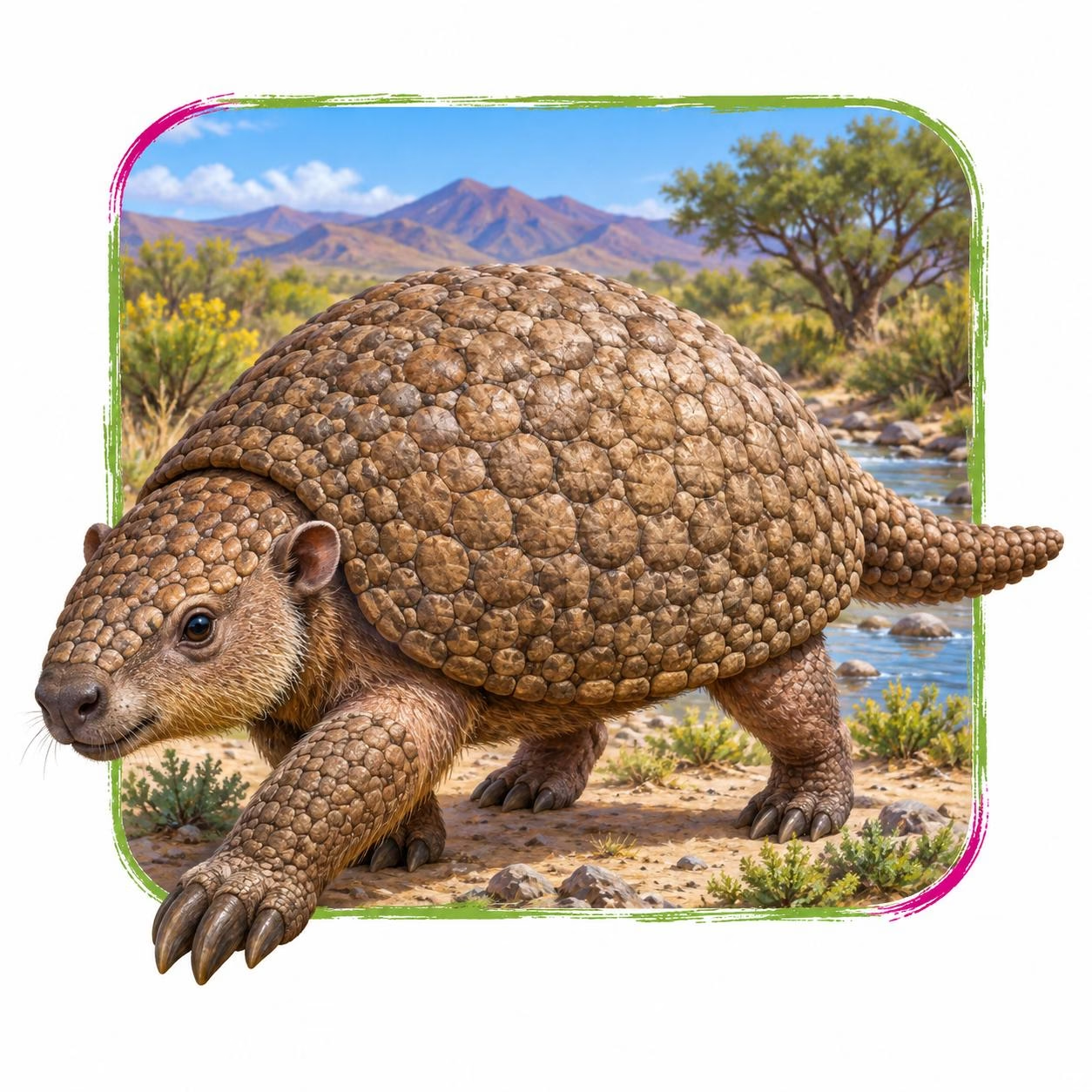
Parapropalaehoplophorus in its natural Early Miocene open woodland, scrubby plains, volcanic floodplains, river margins, and low-elevation habitats that were later lifted into the northern Chilean Andes habitat