
Parasaurolophus Facts for Kids
Parasaurolophus was a duck-billed plant-eating dinosaur with a long hollow crest stretching from the back of its head. It lived during the Late Cretaceous Period in North America and is famous for a crest that may have helped it make sounds.
Quick Parasaurolophus Facts
- Animal Type: Extinct reptile
- Group: Hadrosaurid duck-billed dinosaur
- Known For: Long hollow head crest, duck-billed mouth, plant eating, possible calls, and Late Cretaceous fossils
- Lived During: Late Cretaceous Period
- Diet: Plants such as leaves, twigs, seeds, and other vegetation
What You’ll Learn
Explore 10 powerful allosaurus facts for kids about sharp teeth, three-fingered hands, hunting, strong legs, and Jurassic ecosystems, with a quiz, glossary, and activity
These facts are explained simply for kids, parents, teachers, and curious little fact-finders.
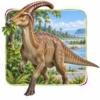
10 Fun Parasaurolophus Facts for Kids
1. Parasaurolophus Was a Dinosaur
Parasaurolophus was a hadrosaurid dinosaur, part of the duck-billed dinosaur group.
Kid Decode: It belongs to the dinosaur group with excellent face architecture.
2. Its Name Means Near Saurolophus
The name Parasaurolophus means near Saurolophus because it was named in comparison with another crested dinosaur.
Kid Decode: Fossil naming sometimes works like “this one is near that one.”
3. It Had a Long Hollow Crest
Parasaurolophus had a long tube-like crest that curved backward from its head.
Kid Decode: That crest was a prehistoric head trumpet waiting for science.
4. The Crest May Have Made Sounds
Scientists think air moving through the hollow crest may have helped Parasaurolophus make deep calls.
Kid Decode: It may have been the brass section of the dinosaur orchestra.
5. It Was a Plant Eater
Parasaurolophus was a herbivore and used its beak and chewing teeth to eat plants.
Kid Decode: This dinosaur brought duck-bill energy to dinner.
6. It Could Walk on Two or Four Legs
Parasaurolophus could likely move on four legs while feeding and on two legs when needed.
Kid Decode: It had both strolling mode and dinosaur hurry mode.
7. It Lived in North America
Parasaurolophus fossils have been found in North America, including parts of Canada and the United States.
Kid Decode: North American rocks kept its long crest in the fossil record.
8. Baby Parasaurolophus Were Hatchlings
Like other dinosaurs, Parasaurolophus hatched from eggs, and young babies can be called hatchlings.
Kid Decode: A hatchling Parasaurolophus had a lot of growing to do before crest fame.
9. It Was a Hadrosaur
Hadrosaurs are often called duck-billed dinosaurs because many had broad beak-like mouths.
Kid Decode: Duck-billed does not mean duck. It means dinosaur with a beakish grin.
10. It Lived During the Late Cretaceous
Parasaurolophus lived during the Late Cretaceous Period, long before humans.
Kid Decode: Its world had plants, predators, and possibly very strange dinosaur calls.
The Weirdest Parasaurolophus Fact
Parasaurolophus may have used its hollow crest like a sound chamber, making it one of the most musical-looking dinosaurs.
Try This Parasaurolophus Activity
Parasaurolophus Drawing Activity
Draw a Parasaurolophus calling near a Cretaceous forest. Add a long hollow crest, duck-billed mouth, strong back legs, front legs, leafy plants, hatchling, eggs in a nest, sound waves, fossil bones, and a “crest dinosaur” label.
Quick Parasaurolophus Quiz
- Was Parasaurolophus a plant eater or meat eater? Answer: Plant eater.
- What long feature grew from its head? Answer: A hollow crest.
- What dinosaur group did Parasaurolophus belong to? Answer: Hadrosaurs.
- What may the crest have helped it make? Answer: Sounds or calls.
- During what period did Parasaurolophus live? Answer: Late Cretaceous Period.
Mini Glossary
- Hadrosaur: A duck-billed plant-eating dinosaur group.
- Crest: A raised structure on an animal’s head.
- Herbivore: An animal that eats plants.
- Hatchling: A newly hatched baby animal.
- Fossil: Preserved remains or traces of ancient life.
 Worm Facts for Kids
 Sunbittern Facts for Kids
 Salmon Facts for Kids
 Bothriolepis Facts for Kids
More Animal Facts for Kids
Visit the full animal facts library or explore a focused animal group.
More Extinct Animal Facts for Kids
Discover dinosaurs, Ice Age giants, prehistoric sea creatures, recently extinct species, and other animals from the past.
Fact check note: Fact checked with Natural History Museum hadrosaur resources, American Museum of Natural History dinosaur references, Britannica Parasaurolophus resources, and trusted paleontology education sources.

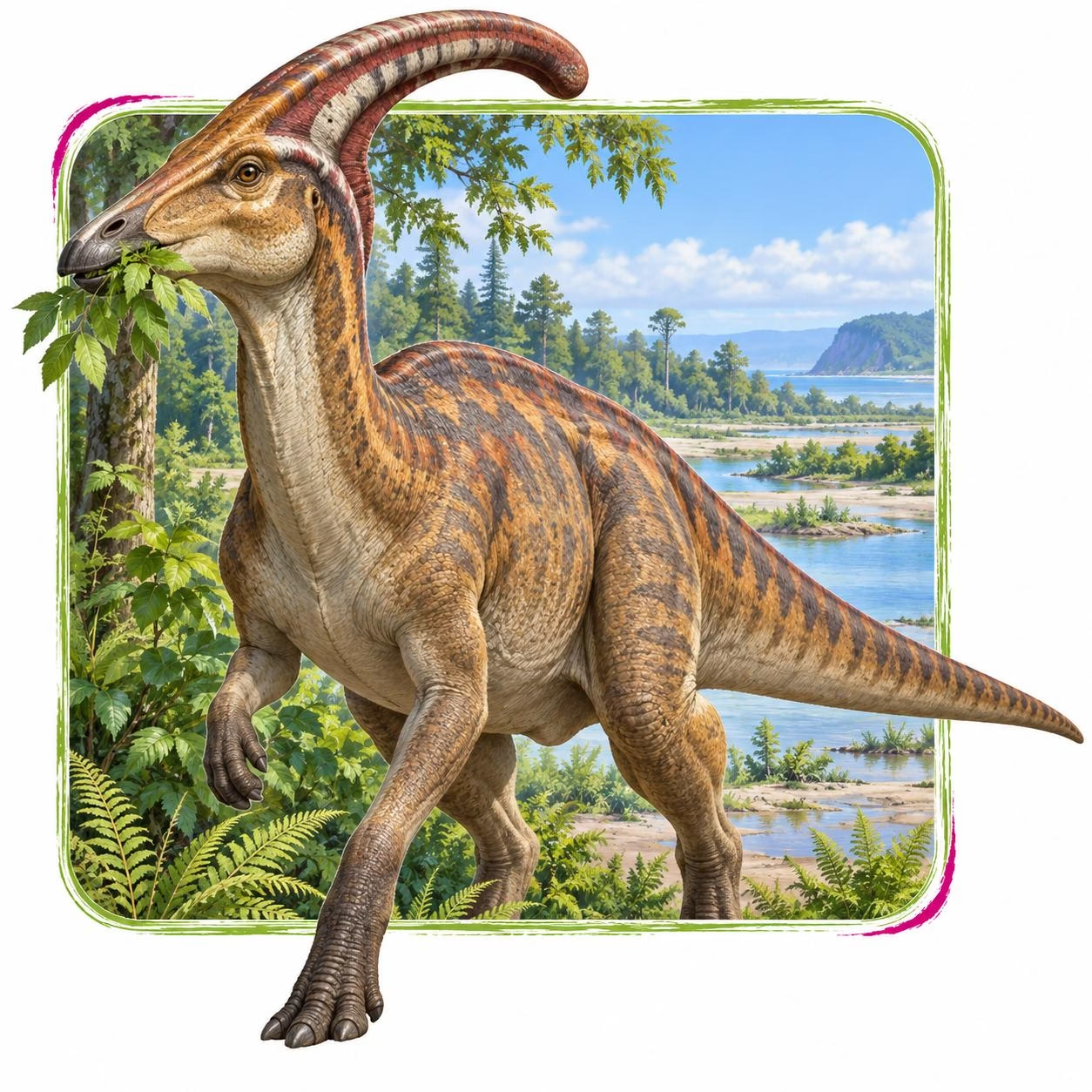
Parasaurolophus in its natural Cretaceous forests, floodplains, and coastal plains habitat