
Pelorovis Facts for Kids
Pelorovis was a genus of large wild cattle that lived in Africa during the Early Pleistocene. The best-known species, Pelorovis oldowayensis, had a long face and massive horn cores curving outward and upward in broad half-moons. It was a grazing bovid related to cattle and buffalo, but its exact family position is debated, and some scientists place the genus close to or inside Bos.
Quick Pelorovis Facts
- Animal Type: Extinct wild cattle
- Group: Bovine bovid
- Known For: Huge half-moon horns, long face, grazing adaptations, Olduvai fossils, and debated relationship to Bos
- Lived During: Mainly Early Pleistocene, roughly 2.5–1 million years ago
- Diet: Mostly grasses with some seasonal browse
What You’ll Learn
Learn 10 giant pelorovis facts for kids about enormous horns, buffalo-like bodies, grazing, African habitats, and prehistoric life, plus a quiz, glossary, and activity
Simple explanations make them fun for children, families, teachers, and young animal explorers.
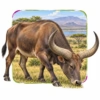
10 Fun Pelorovis Facts for Kids
1. Pelorovis Was a Bovid
Pelorovis belonged to Bovidae, the hoofed-mammal family containing cattle, buffalo, antelopes, sheep, and goats.
Kid Decode: It was genuine wild cattle, not a giant sheep despite its scientific name.
2. Its Name Means Monstrous Sheep
Pelorovis combines words meaning monstrous or prodigious and sheep because its first describer initially compared it with sheep-like bovids.
Kid Decode: The name kept the sheep while later anatomy moved the animal toward cattle.
3. It Had an Elongated Face
Compared with many living buffalo, Pelorovis oldowayensis had a long muzzle and extended facial region.
Kid Decode: Its skull stretched forward before the horns swept dramatically sideways.
4. Its Horns Formed Broad Half-Moons
The horn cores projected outward from the rear of the skull and curved forward or upward in a wide arc.
Kid Decode: Its headgear looked like two enormous crescents opening across the savanna.
5. Some Horn Spans Reached About 1.8 Metres
One adult male Pelorovis oldowayensis skull has an estimated horn span of roughly 1.83 metres, including reconstructed horn cores.
Kid Decode: The horns spread wider than many children are tall.
6. Males and Females Looked Different
Males generally had longer and somewhat straighter horns, while females carried smaller, more strongly curved versions.
Kid Decode: The species offered two variations of the same spectacular crescent design.
7. It Was Mainly a Grazer
A broad muzzle and tooth-wear evidence indicate that P. oldowayensis ate mostly grasses, though it may have browsed at some seasons.
Kid Decode: Its mouth was built for harvesting the Pleistocene lawn in large mouthfuls.
8. It Lived at Olduvai Gorge
Important fossils came from Olduvai Gorge in Tanzania, a site famous for ancient mammals, stone tools, and evidence of early humans.
Kid Decode: This giant grazer shared a fossil landscape with some of humanity’s earliest toolmakers.
9. Its Relationship to Cattle Is Debated
Some anatomical studies place P. oldowayensis close to the origin of Bos and even rename it Bos oldowayensis, while others retain Pelorovis.
Kid Decode: Its horns are easy to recognise; its genus label remains surprisingly slippery.
10. The Famous Long-Horned Buffalo Is Usually Renamed
The later animal once called Pelorovis antiquus is now commonly classified as Syncerus antiquus, a close relative of living African buffalo.
Kid Decode: One famous member packed its horns and moved into another genus.
The Weirdest Pelorovis Fact
Pelorovis oldowayensis carried half-moon horn cores spanning about 1.8 metres, yet scientists still debate whether it should remain Pelorovis or be placed in Bos.
Try This Pelorovis Activity
Pelorovis Drawing Activity
Draw Pelorovis oldowayensis grazing near Early Pleistocene Olduvai Gorge. Add a large cattle-like body, elongated face, enormous half-moon horn cores, cloven hooves, tall grasses, volcanic hills, a 1.83-metre horn-span scale, and two labels showing the competing names Pelorovis and Bos.
Quick Pelorovis Quiz
- Was Pelorovis a sheep? Answer: No, it was large wild cattle from the bovid family.
- What shape were its horns? Answer: Broad outward-curving half-moons.
- How wide was one estimated male horn span? Answer: Roughly 1.83 metres.
- What did it mainly eat? Answer: Grasses, with possible seasonal browse.
- Why may books use different genus names? Answer: Some scientists classify P. oldowayensis within Bos.
Mini Glossary
- Bovid: A hoofed mammal from the family containing cattle, buffalo, antelopes, sheep, and goats.
- Bovine: A member of the cattle-and-buffalo branch of bovids.
- Horn Core: The permanent bony centre covered by a keratin horn sheath in life.
- Grazer: An herbivore that feeds mainly on grasses.
- Taxonomy: The science of naming and classifying organisms.
 Mantis Shrimp Facts for Kids
 Great White Shark Facts for Kids
 Toucan Facts for Kids
 Wonambi Facts for Kids
More Animal Facts for Kids
Visit the full animal facts library or explore a focused animal group.
More Extinct Animal Facts for Kids
Discover dinosaurs, Ice Age giants, prehistoric sea creatures, recently extinct species, and other animals from the past.
Fact check note: Fact checked with Gentry’s 1967 monograph on Pelorovis oldowayensis, Martínez-Navarro and colleagues’ 2007 study linking the Olduvai buffalo with Bos, Gentry’s 2010 African bovid review, Klein’s work separating the long-horned Syncerus antiquus, and recent reviews of African buffalo evolution.

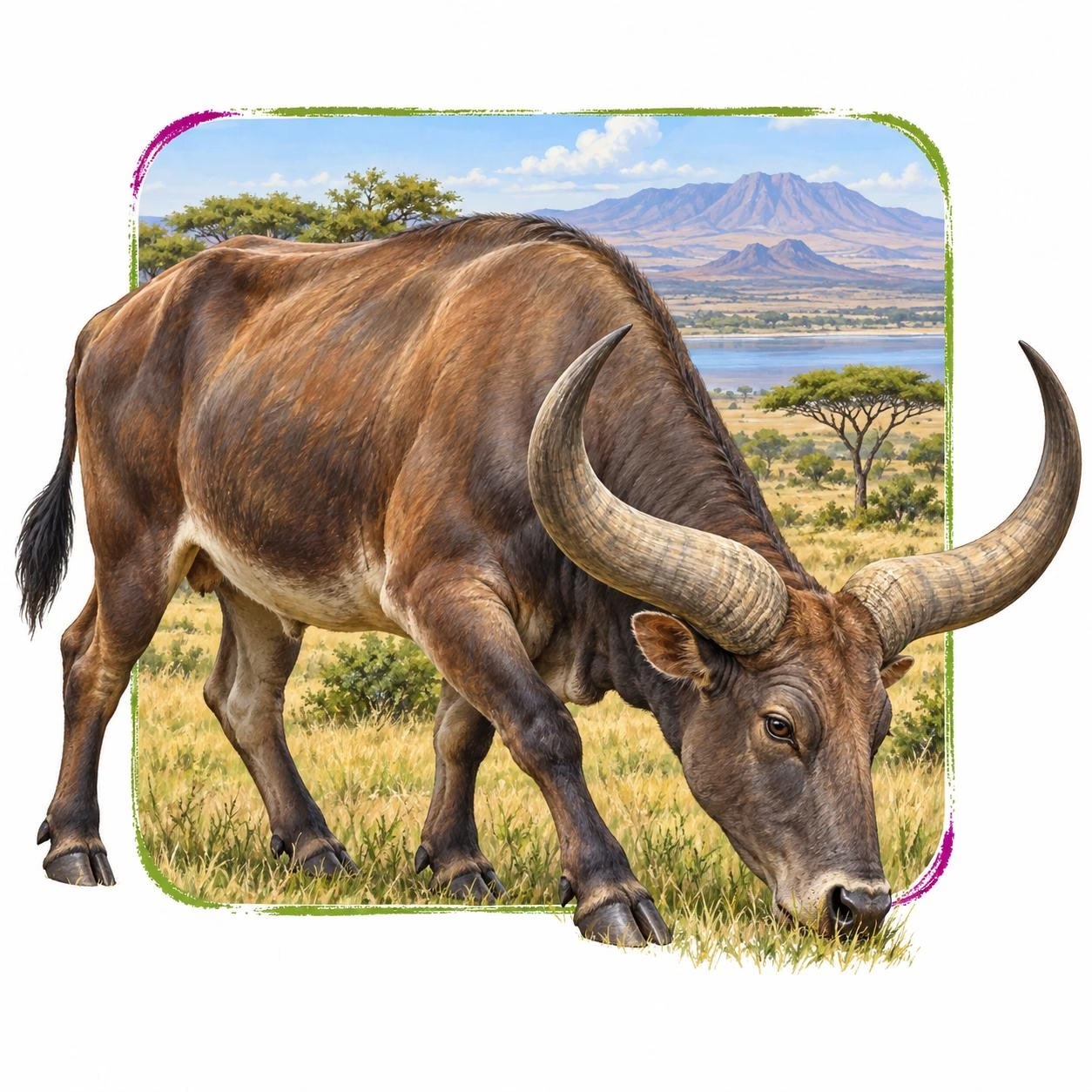
Pelorovis in its natural Early Pleistocene open grasslands, wooded savannas, volcanic plains, river valleys, lake basins, and grazing habitats of eastern and northern Africa habitat