
Pink-Headed Duck Facts for Kids
The Pink-Headed Duck is one of the world’s great bird mysteries. It lived in wetlands of India, Bangladesh, and Myanmar, but it has not been conclusively recorded since the late 1940s. Scientists usually treat it as critically endangered and possibly extinct, because a tiny hidden population has never been fully ruled out.
Quick Pink-Headed Duck Facts
- Animal Type: Possibly extinct bird
- Group: Duck and waterfowl
- Known For: Pink head and neck, dark body, wetland life, ducklings, mystery status, rare records, and possible survival in remote Myanmar wetlands
- Lived During: Holocene, last confirmed records in the late 1940s
- Diet: Poorly known, likely water plants, seeds, mollusks, and small aquatic animals
What You’ll Learn
Discover 10 mysterious pink-headed duck facts for kids about pink heads, wetland habitats, swimming, feeding, and its uncertain modern status, with a quiz, glossary, and activity
These facts are explained simply for kids, parents, teachers, and curious little fact-finders.
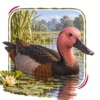
10 Fun Pink-Headed Duck Facts for Kids
1. Pink-Headed Ducks Were Birds
Pink-Headed Ducks were waterfowl, a bird group that includes ducks, geese, and swans.
Kid Decode: Not a flamingo, not a cartoon duck, just a very mysterious waterfowl.
2. They Had Pink Heads
The male Pink-Headed Duck was famous for a rosy pink head and neck with a darker body.
Kid Decode: This duck looked like it dipped its head in sunset.
3. Females Were Duller
Females were less brightly colored than males, with softer brownish tones.
Kid Decode: Bird fashion rule: the males got the bright pink headline.
4. They Lived in Wetlands
Pink-Headed Ducks lived in marshes, swamps, reedbeds, pools, and quiet wetland habitats.
Kid Decode: They preferred soggy places with cover, not open bathtub water.
5. They Were Found in South Asia
Historical records came mostly from India, Bangladesh, and Myanmar.
Kid Decode: Their map once stretched across hidden wetlands and river-country corners.
6. Their Diet Is Poorly Known
Scientists think they ate water plants, seeds, mollusks, and small aquatic animals, but the exact diet is uncertain.
Kid Decode: This duck kept its lunch secrets annoyingly well.
7. They May Have Dived for Food
Body features suggest Pink-Headed Ducks may have been good divers, though behavior is not fully known.
Kid Decode: Possible mystery duck move: vanish underwater, then vanish from history.
8. Baby Pink-Headed Ducks Were Ducklings
Baby Pink-Headed Ducks can be called ducklings, like baby ducks today.
Kid Decode: A duckling would have needed quiet, safe wetland cover.
9. They Have Not Been Confirmed Since the 1940s
The species has not been conclusively seen in the wild since 1948 or 1949, though later reports have not fully ended search efforts.
Kid Decode: The bird sits in the foggy zone between lost and maybe still hiding.
10. Searches Still Continue
Conservationists have searched remote wetlands, especially in Myanmar, but no confirmed living Pink-Headed Duck has been found.
Kid Decode: This duck is a feathered question mark with webbed feet.
The Weirdest Pink-Headed Duck Fact
The Pink-Headed Duck is often discussed on extinct animal lists, but scientists still leave a tiny door open because remote wetlands are hard to search completely.
Try This Pink-Headed Duck Activity
Pink-Headed Duck Drawing Activity
Draw a Pink-Headed Duck in a quiet South Asian wetland. Add a pink head and neck, dark body, duckling, reeds, water plants, small shells, mist, muddy bank, hidden forest edge, and a “mystery wetland duck” label.
Quick Pink-Headed Duck Quiz
- Is the Pink-Headed Duck definitely extinct? Answer: No, it is usually treated as critically endangered and possibly extinct.
- What color made it famous? Answer: Its pink head and neck.
- Where did it live? Answer: Wetlands of South Asia, especially India, Bangladesh, and Myanmar.
- What are baby ducks called? Answer: Ducklings.
- When were the last confirmed records? Answer: The late 1940s.
Mini Glossary
- Waterfowl: A bird group that includes ducks, geese, and swans.
- Wetland: A habitat with water-soaked ground, such as a marsh or swamp.
- Mollusk: A soft-bodied animal, often with a shell, such as a snail or clam.
- Duckling: A baby duck.
- Possibly Extinct: A status used when a species may be gone, but survival has not been completely ruled out.
 Weasel Facts for Kids
 Terrapin Facts for Kids
 Loon Facts for Kids
 Megalosaurus Facts for Kids
More Animal Facts for Kids
Visit the full animal facts library or explore a focused animal group.
More Extinct Animal Facts for Kids
Discover dinosaurs, Ice Age giants, prehistoric sea creatures, recently extinct species, and other animals from the past.
Fact check note: Fact checked with BirdLife Pink-Headed Duck factsheet, Animal Diversity Web diet notes, recent lost-bird search updates, and trusted wetland bird education sources.

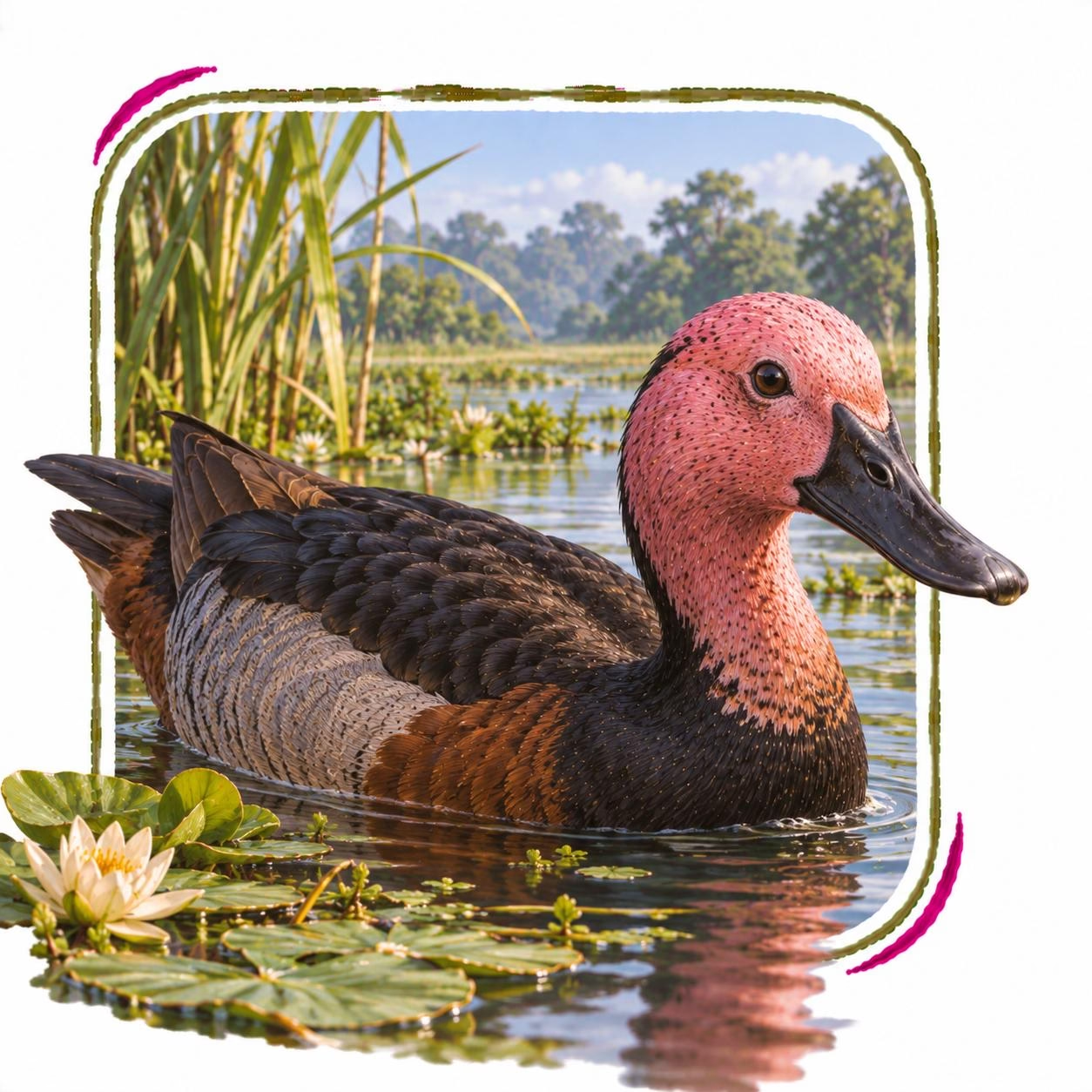
Pink-Headed Duck in its natural South Asian wetlands, marshes, swamps, reedbeds, pools, oxbow lakes, quiet ponds, and remote wetland forests habitat