
Placodus Facts for Kids
Placodus was a stocky placodont that lived in shallow seas during the Middle Triassic. It was not a dinosaur. Its front teeth projected forward like chisels for pulling hard-shelled animals from rocks or the seafloor, while broad flat teeth farther back crushed the shells. Its barrel-shaped body, strong ribs, and long tail made it better suited to coastal water than fast open-ocean swimming.
Quick Placodus Facts
- Animal Type: Prehistoric marine reptile
- Group: Early placodont
- Known For: Chisel-like front teeth, broad crushing teeth, shellfish diet, barrel-shaped body, long tail, and shallow-sea lifestyle
- Lived During: Middle Triassic, roughly 245–235 million years ago
- Diet: Hard-shelled animals such as bivalves, brachiopods, snails, and crustaceans
What You’ll Learn
Learn 10 fascinating placodus facts for kids about crushing teeth, a heavy body, shellfish diets, swimming, and Triassic seas, with a quiz, glossary, and activity
Simple explanations make them fun for children, families, teachers, and young prehistoric explorers.
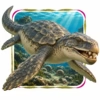
10 Fun Placodus Facts for Kids
1. Placodus Was a Placodont
Placodus belonged to an extinct group of Triassic aquatic reptiles called placodonts. It was not a dinosaur, turtle, fish, or marine mammal.
Kid Decode: It entered the sea with reptile ancestry and a mouth designed for cracking snacks.
2. It Lived in the Middle Triassic
Placodus lived around 240 million years ago, when shallow seas covered large areas of Europe and parts of Asia.
Kid Decode: Its coastal world existed before the first famous giant dinosaurs appeared.
3. It Grew Up to About Three Metres Long
Large Placodus individuals may have reached roughly 2 to 3 metres in length, with a thick body and long tail.
Kid Decode: It was built more like a floating barrel than a sleek torpedo.
4. Its Front Teeth Were Like Chisels
Several strong teeth projected from the front of the jaws and may have helped pry shellfish from rocks or the seabed.
Kid Decode: The front teeth did the prying before the back teeth began the crushing.
5. It Had Flat Crushing Teeth
Broad rounded teeth on the jaws and palate formed hard surfaces for breaking the shells of marine invertebrates.
Kid Decode: Its mouth carried built-in pebble crushers across the roof and floor.
6. It Ate Hard-Shelled Prey
Placodus was a durophage, meaning it specialised in eating animals protected by shells or other hard coverings.
Kid Decode: For this reptile, dinner often arrived inside natural packaging.
7. Its Teeth Were Replaced Vertically
New crushing teeth developed beneath old ones and moved upward, a replacement pattern shared by placodonts.
Kid Decode: When a tooth wore out, its understudy rose from directly below.
8. Its Body Was Heavy and Stiff
Large ribs, belly bones, and dense skeleton parts made the trunk broad and fairly rigid, which may have helped the animal remain near the seafloor.
Kid Decode: It traded bendy speed for ballast and shellfish-hunting stability.
9. It Was Not Covered by a Turtle Shell
Placodus lacked the broad protective carapace of later turtle-like placodonts, although small bony plates occurred along parts of its back.
Kid Decode: It came from the pre-full-armour chapter of the placodont story.
10. Its Fossils Span Europe and Asia
Placodus fossils and close species records are known from Central Europe and China, showing that the genus occupied a wide Triassic coastal region.
Kid Decode: Its flat-toothed fossil trail crosses a surprisingly large slice of the ancient world.
The Weirdest Placodus Fact
Placodus carried crushing teeth not only along its jaws but also across the roof of its mouth, turning its palate into part of a shell-breaking press.
Try This Placodus Activity
Placodus Drawing Activity
Draw Placodus searching a Middle Triassic seafloor. Add a barrel-shaped body, short neck, long flattened tail, sturdy limbs with webbed feet, projecting chisel teeth, broad crushing teeth in a cutaway mouth, clams, snails, brachiopods, rocks, and a “flat tooth” label.
Quick Placodus Quiz
- Was Placodus a dinosaur? Answer: No, it was a placodont and marine reptile.
- During which period did it live? Answer: The Middle Triassic.
- What did its front teeth help it do? Answer: Pry hard-shelled prey from rocks or the seafloor.
- What does durophage mean? Answer: An animal specialised for eating hard-shelled food.
- Did Placodus have a broad turtle-like shell? Answer: No, it lacked the full carapace seen in later placodonts.
Mini Glossary
- Placodont: A Triassic aquatic reptile, often equipped with teeth for crushing hard food.
- Durophage: An animal adapted to eat hard-shelled or hard-covered prey.
- Palate: The roof of the mouth.
- Carapace: A broad hard covering over an animal’s back.
- Bivalve: A mollusc with two hinged shells, such as a clam or mussel.
 Locust Facts for Kids
 European Wildcat Facts for Kids
 Saltwater Crocodile Facts for Kids
 Dimorphodon Facts for Kids
More Animal Facts for Kids
Visit the full animal facts library or explore a focused animal group.
More Extinct Animal Facts for Kids
Discover dinosaurs, Ice Age giants, prehistoric sea creatures, recently extinct species, and other animals from the past.
Fact check note: Fact checked with Pommery and colleagues’ 2021 study of placodont tooth replacement, Gere and colleagues’ 2024 dental-microwear analysis, established Placodus skull and tooth research, and Middle Triassic placodont palaeoecology studies.

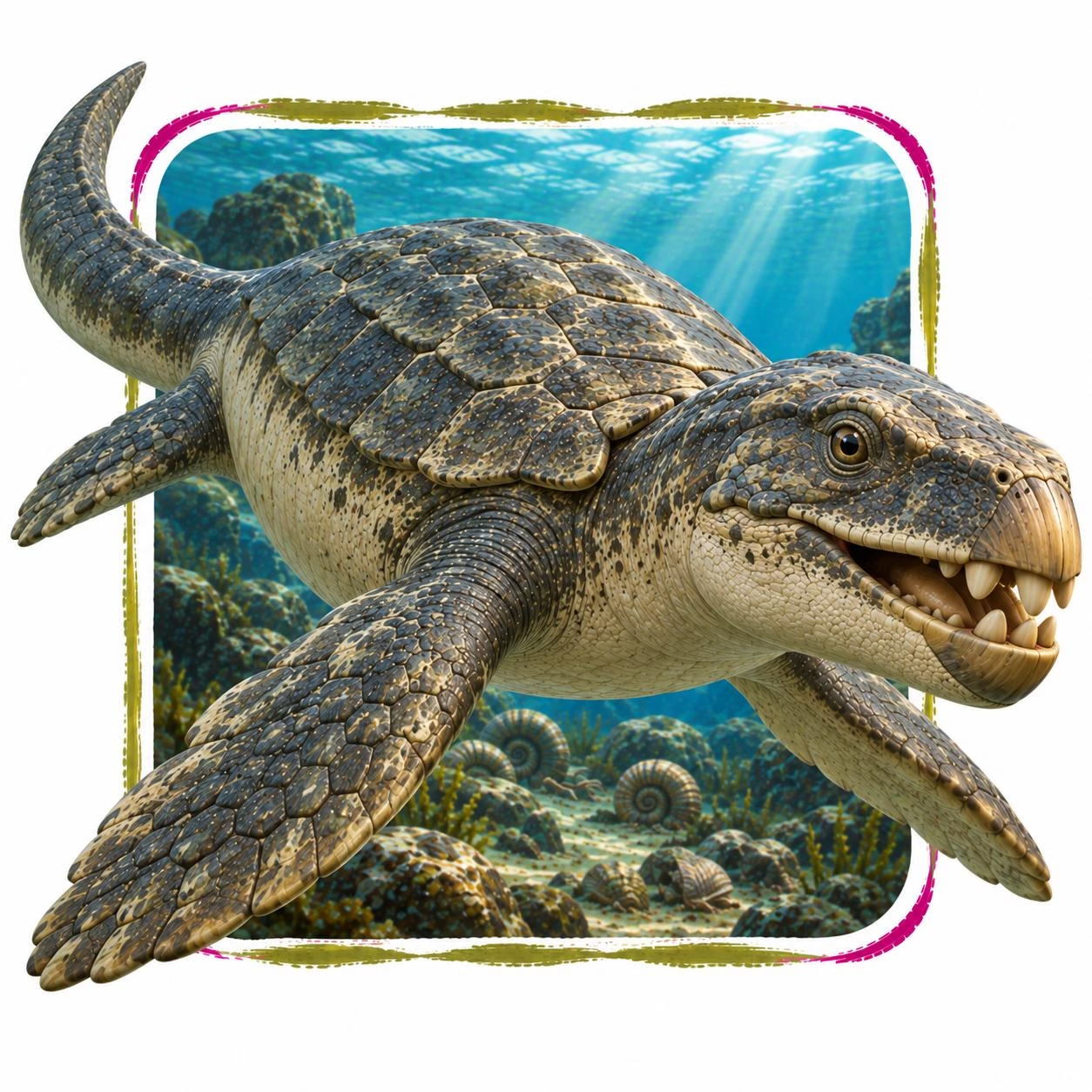
Placodus in its natural Middle Triassic shallow seas, rocky coastal waters, seafloor feeding grounds, warm continental shelves, lagoons, and shell-rich marine habitats habitat