
Platybelodon Facts for Kids
Platybelodon was a strange shovel-tusked proboscidean that lived in Asia during the Middle Miocene. It was an elephant relative, but not a true elephant or modern elephant ancestor. Its lower jaw widened into a broad scoop carrying flat incisor tusks. Older artwork showed it dredging swamp mud, but wear marks and biomechanical studies instead suggest that its trunk and lower tusks cut, stripped, or processed tough vegetation.
Quick Platybelodon Facts
- Animal Type: Extinct proboscidean mammal
- Group: Amebelodontid shovel-tusker
- Known For: Broad spoon-shaped lower jaw, flat lower tusks, flexible trunk, and plant-cutting feeding tools
- Lived During: Middle Miocene, roughly 15–11 million years ago
- Diet: Leaves, bark, grasses, and other vegetation
What You’ll Learn
Discover 10 bizarre platybelodon facts for kids about shovel-shaped lower tusks, trunks, plant diets, wet habitats, and elephant relatives, plus a quiz, glossary, and activity
Clear explanations make them ideal for children, families, teachers, and little fact-hunters.

10 Fun Platybelodon Facts for Kids
1. Platybelodon Was a Proboscidean
Platybelodon belonged to Proboscidea, the mammal order containing elephants and many extinct elephant-like relatives.
Kid Decode: It joined the elephant family parade with a jaw shaped like prehistoric gardening equipment.
2. It Was Not a True Elephant
Platybelodon belonged to a separate shovel-tusked branch and was not a direct ancestor of living elephants.
Kid Decode: The family resemblance was real, but the evolutionary road took a side exit.
3. Its Lower Jaw Was Broad and Flat
The front of the lower jaw expanded into a wide spoon-like platform unlike the narrow lower jaw of a modern elephant.
Kid Decode: Its chin arrived looking ready to serve a banquet.
4. Its Lower Tusks Formed a Cutting Edge
Two flattened lower incisors sat side by side across the front of the jaw and created a broad blade-like surface.
Kid Decode: The famous shovel was really a pair of enormous flattened teeth.
5. It Probably Had a Flexible Trunk
Skull anatomy and modern research support a substantial grasping trunk rather than the short floppy upper lip shown in many old reconstructions.
Kid Decode: The trunk held the plant while the jaw brought the cutting board.
6. It Probably Did Not Dredge Swamp Mud
Microscopic wear on the tusks does not match regular scraping through gritty pond bottoms, weakening the classic swamp-shovelling idea.
Kid Decode: The shovel-shaped mouth fooled artists before the scratches told a different story.
7. It Cut and Stripped Plants
Researchers have proposed that Platybelodon held vegetation with its trunk and rubbed or pulled it across the sharp lower tusks.
Kid Decode: Its face may have worked like trunk-powered garden shears.
8. Young and Adult Diets Differed
Tooth microwear indicates that adults often ate rougher or more abrasive vegetation than younger animals.
Kid Decode: Growing up may have meant graduating from tender leaves to tougher salad.
9. Males Had Larger Upper Tusks
Skulls show strong differences between sexes, with males generally carrying larger and more robust upper tusks.
Kid Decode: The lower shovel handled lunch while the upper tusks may have handled display and rivalry.
10. Its Feet Were Unusual for a Proboscidean
Limited foot fossils suggest that Platybelodon distributed its weight differently from modern elephants and may have been relatively lightly built.
Kid Decode: Even its feet refused to follow the standard elephant instruction manual.
The Weirdest Platybelodon Fact
Platybelodon looked perfectly designed to scoop mud, yet its tusk wear suggests that the broad lower jaw was mainly a vegetation-cutting tool.
Try This Platybelodon Activity
Platybelodon Drawing Activity
Draw Platybelodon feeding in a Middle Miocene Asian woodland and grassland. Add a broad spoon-shaped lower jaw, two flat lower tusks forming a cutting edge, a flexible trunk holding a branch or bundle of grass, slender upper tusks, rounded molars, and a crossed-out picture of the old swamp-dredging idea.
Quick Platybelodon Quiz
- Was Platybelodon a true elephant? Answer: No, it was an extinct proboscidean relative.
- What formed its broad lower cutting surface? Answer: Two flattened lower incisor tusks.
- Did it regularly shovel mud for food? Answer: Evidence suggests that this classic idea is probably wrong.
- What probably held plants during feeding? Answer: A flexible trunk.
- What did Platybelodon eat? Answer: Leaves, bark, grasses, and other vegetation.
Mini Glossary
- Proboscidean: A mammal belonging to the order containing elephants and their extinct relatives.
- Amebelodontid: A member of an extinct family of shovel-tusked proboscideans.
- Mandibular Symphysis: The joined front section of the lower jaw.
- Microwear: Tiny scratches and pits on teeth that reveal clues about diet and tool use.
- Sexual Dimorphism: A consistent difference in body form between males and females.
 Spider Facts for Kids
 Giraffe Facts for Kids
 Scallop Facts for Kids
 Supersaurus Facts for Kids
More Animal Facts for Kids
Visit the full animal facts library or explore a focused animal group.
More Extinct Animal Facts for Kids
Discover dinosaurs, Ice Age giants, prehistoric sea creatures, recently extinct species, and other animals from the past.
Fact check note: Fact checked with Lambert’s 1992 tusk-wear study, Semprebon and colleagues’ 2016 dental-microwear analysis, Wang and Ye’s 2015 postcranial report, Wang and Deng’s 2016 sexual-dimorphism study, and recent finite-element research on long-jawed proboscidean feeding.

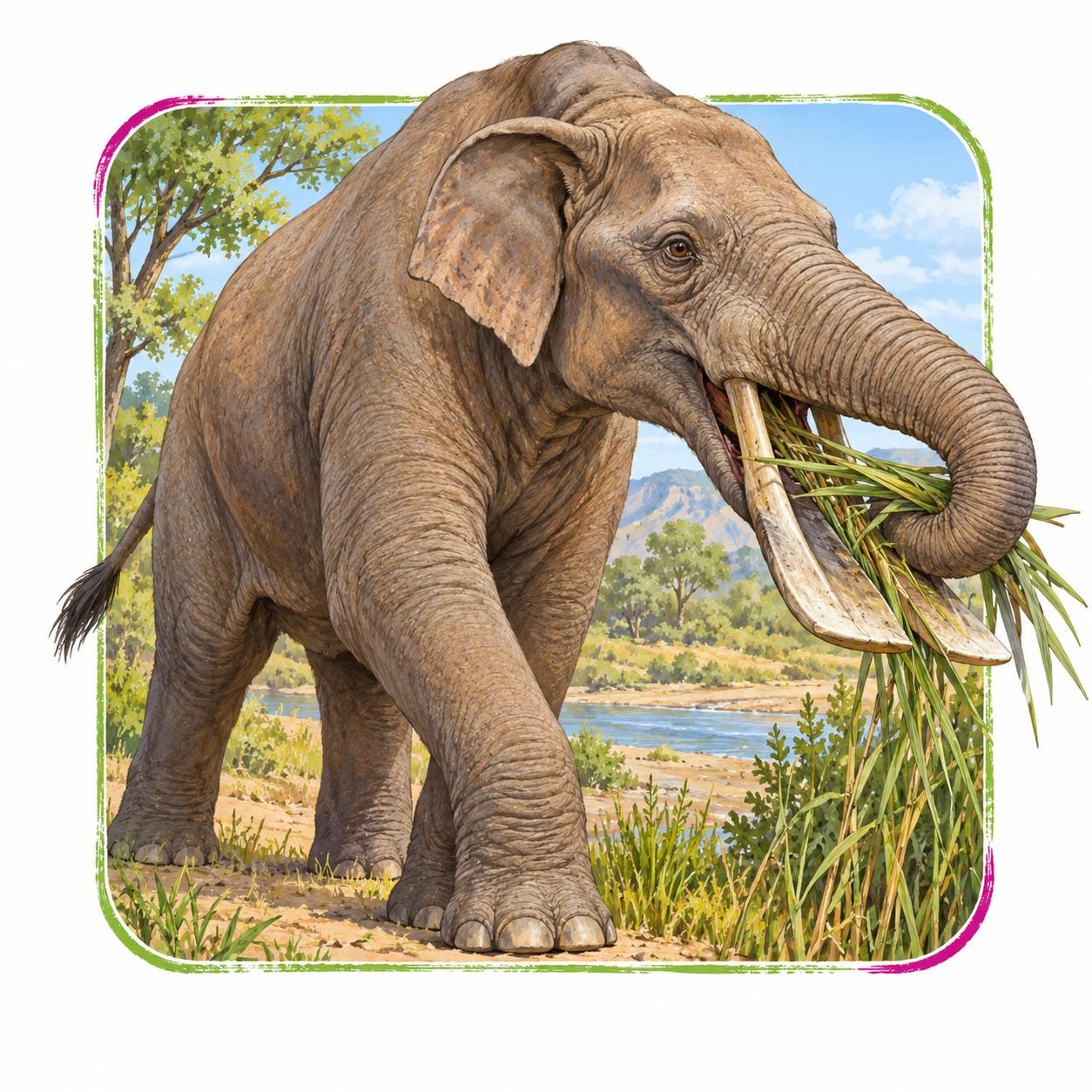
Platybelodon in its natural Middle Miocene open woodlands, wooded grasslands, river floodplains, shrublands, and increasingly dry terrestrial habitats of central and eastern Asia habitat