
Pliohippus Facts for Kids
Pliohippus was an extinct horse relative from late Miocene North America. It was not a dinosaur and not exactly the direct ancestor of modern horses, even though older books often showed it that way. Pliohippus looked very horse-like, had long slim legs, usually a strong main toe, grazing teeth, and deep facial pits on its skull.
Quick Pliohippus Facts
- Animal Type: Prehistoric hoofed mammal
- Group: Equid, or horse family member
- Known For: More horse name, one strong main toe, long slim legs, grazing teeth, foals, late Miocene plains, deep facial fossae, and horse evolution debates
- Lived During: Late Miocene, about 12 to 6 million years ago
- Diet: Grasses, tough plants, leaves, and other open-habitat vegetation
What You’ll Learn
Discover 10 fascinating pliohippus facts for kids about long legs, running, grazing, hooves, and its place in horse evolution, with a quiz, glossary, and activity
These easy facts are written for children, parents, teachers, and curious little fact-finders.
10 Fun Pliohippus Facts for Kids
1. Pliohippus Was a Mammal
Pliohippus was a prehistoric mammal, not a dinosaur or reptile.
Kid Decode: Hoofed, furry, fast, and fossil-famous.
2. Its Name Means More Horse
Pliohippus means more horse, a good fit for an equid that looked more modern than many earlier horses.
Kid Decode: Basically the fossil saying, horse mode loading.
3. It Was an Equid
Pliohippus belonged to Equidae, the horse family.
Kid Decode: Still not exactly a modern horse, but close enough to make the family resemblance obvious.
4. It Had One Strong Main Toe
Many Pliohippus specimens had one main toe on each foot, though some had small side toes.
Kid Decode: The side toes were becoming tiny foot footnotes.
5. It Had Long Slim Legs
Pliohippus had long slender limbs that suggest it was a quick runner in open habitats.
Kid Decode: Grassland life rewards good legs and quick exits.
6. It Ate Grass
Pliohippus was a grazer that fed on steppe grasses and other tough plants.
Kid Decode: This horse relative was built for the open-plain salad bar.
7. It Lived in North America
Florida Museum notes Pliohippus fossils from late Miocene localities in Colorado, the Great Plains, Nebraska, the Dakotas, and Canada.
Kid Decode: Its fossil map is a North American horse trail.
8. It Had Deep Facial Pits
Pliohippus had deep facial fossae, or pits, on the skull, a feature not seen in modern horses.
Kid Decode: Those skull pits are one reason scientists do not call it a direct modern horse ancestor.
9. It Was Once Seen as a Direct Ancestor
Older diagrams often placed Pliohippus directly before modern horses, but many scientists now see it as a close relative or side branch.
Kid Decode: Evolution is not a ladder. It is more of a horse-family hedge maze.
10. Baby Pliohippus Were Foals
Baby Pliohippus can be called foals because it was a horse-family mammal.
Kid Decode: A foal with one strong toe was already close to modern horse foot style.
The Weirdest Pliohippus Fact
Pliohippus looked very modern-horse-like, but its deep skull pits show it was probably not the direct ancestor of living horses.
Try This Pliohippus Activity
Pliohippus Drawing Activity
Draw Pliohippus running across a late Miocene plain. Add one strong main hoof, tiny side-toe clue, long slim legs, foal, grasses, skull pit icon, fossil site tag, and a “more horse” label.
Quick Pliohippus Quiz
- Was Pliohippus a dinosaur? Answer: No, it was a prehistoric mammal.
- What does Pliohippus mean? Answer: More horse.
- What was special about its feet? Answer: Many had one strong main toe on each foot.
- What did Pliohippus eat? Answer: Grasses and other tough plants.
- Was it definitely the direct ancestor of modern horses? Answer: No, many scientists treat it as a close relative or side branch.
Mini Glossary
- Equid: A member of the horse family.
- Grazer: An animal that mainly eats grass.
- Facial Fossa: A hollow or pit in the skull.
- Foal: A baby horse or horse relative.
- Late Miocene: A time period when grasslands and many grazing mammals were widespread.
 Musk Deer Facts for Kids
 Boar Facts for Kids
 Swift Facts for Kids
 Pteranodon Facts for Kids
More Animal Facts for Kids
Visit the full animal facts library or explore a focused animal group.
More Extinct Animal Facts for Kids
Discover dinosaurs, Ice Age giants, prehistoric sea creatures, recently extinct species, and other animals from the past.
Fact check note: Fact checked with Florida Museum Pliohippus fossil horse page, Pliohippus taxonomy summaries, equid evolution notes, and trusted prehistoric mammal education sources.

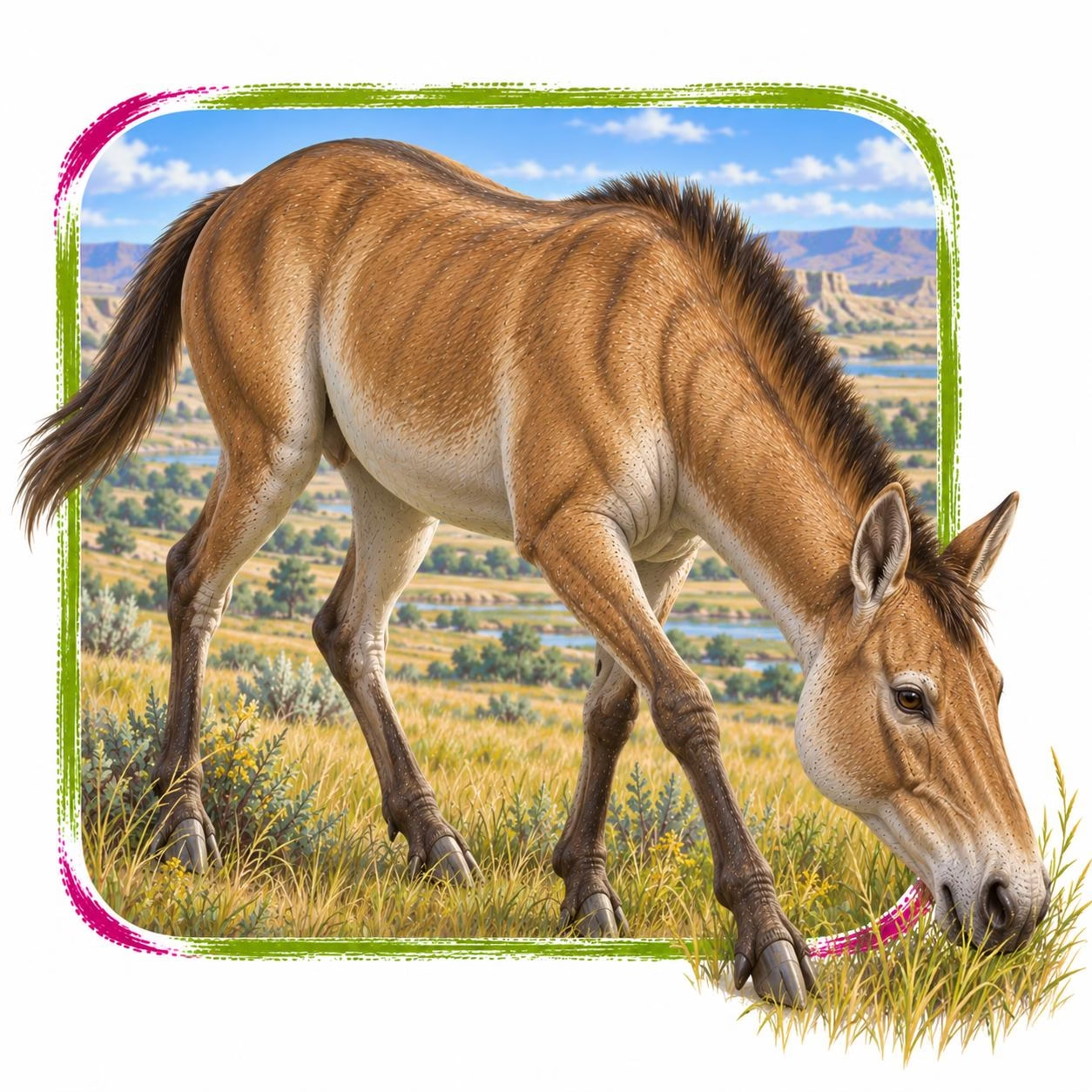
Pliohippus in its natural Late Miocene North American steppe grasslands, Great Plains habitats, Colorado fossil areas, Nebraska fossil beds, Dakota fossil sites, Canadian plains, open prairies, and grazing ecosystems habitat