
Prionosuchus Facts for Kids
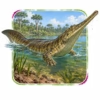
Prionosuchus was a huge aquatic temnospondyl that lived in tropical lakes and wetlands of what is now northeastern Brazil during the Early Permian. It was not a crocodile or dinosaur, although its extremely long snout and fish-eating lifestyle made it look crocodile-like. Most fossils are incomplete, so its maximum body length remains uncertain, but one giant individual may have exceeded 5.5 metres.
Quick Prionosuchus Facts
- Animal Type: Extinct amphibian-grade tetrapod
- Group: Archegosaurid temnospondyl
- Known For: Long narrow skull, sharp teeth, giant fragmentary specimen, aquatic lifestyle, and fish-eating jaws
- Lived During: Early Permian, around 278 million years ago
- Diet: Mainly fish and other aquatic animals
What You’ll Learn
Learn 10 incredible prionosuchus facts for kids about its enormous body, crocodile-like shape, sharp teeth, water habitats, and Permian life, with a quiz, glossary, and activity
Simple explanations make them great for children, families, teachers, and young prehistoric-animal fans.
10 Fun Prionosuchus Facts for Kids
1. Prionosuchus Was a Temnospondyl
Prionosuchus belonged to Temnospondyli, a diverse group of early tetrapods often described as amphibian relatives.
Kid Decode: It came from the broad amphibian chapter, not the crocodile shelf.
2. It Lived in Permian Brazil
Its fossils were found in the Pedra de Fogo Formation of the Parnaíba Basin in northeastern Brazil.
Kid Decode: Its giant jaws rested beneath rocks that once formed tropical lakes and wetlands.
3. Its Skull Was Long and Narrow
Prionosuchus had a stretched, gharial-like snout suited to moving quickly through water and snapping at aquatic prey.
Kid Decode: Its face looked built from the extra-long setting.
4. It Carried Many Sharp Teeth
Rows of pointed teeth lined the jaws, while larger fangs occurred on parts of the palate and lower jaw.
Kid Decode: A fish entering that mouth met several layers of bad news.
5. It Was Mainly Aquatic
The long body, narrow skull, weak limbs, and sensory-groove system suggest that Prionosuchus spent much of its life in water.
Kid Decode: It was less swamp walker and more full-time lake ambush machine.
6. Sensory Grooves Crossed Its Skull
Channels on the skull probably supported a lateral-line system that detected water movement from nearby animals.
Kid Decode: Its head may have felt underwater ripples before its eyes found the source.
7. It Was a Top Predator
Research on the Pedra de Fogo ecosystem places Prionosuchus among the highest-level predators in its freshwater community.
Kid Decode: In its lake, the food web seems to have ended near those long jaws.
8. One Individual Was Enormous
A very fragmentary specimen suggests a skull around 1.6 metres long and a total body length of at least about 5.5 metres.
Kid Decode: Its skull alone may have stretched nearly as long as a grown person.
9. Nine-Metre Estimates Are Uncertain
Popular reconstructions sometimes reach 9 metres, but those figures depend on scaling very incomplete bones and should be treated cautiously.
Kid Decode: The giant is real; the final few metres remain a fossil fog.
10. Its Name Means Saw Crocodile
Prionosuchus combines words meaning saw and crocodile, referring to its toothed crocodile-like appearance rather than its true identity.
Kid Decode: The name says crocodile, while the family tree politely disagrees.
The Weirdest Prionosuchus Fact
Prionosuchus may have been one of the longest amphibian-grade tetrapods ever, yet its most dramatic size estimates come from only a few fragmentary skull bones.
Try This Prionosuchus Activity
Prionosuchus Drawing Activity
Draw Prionosuchus hunting in an Early Permian Brazilian lake. Add a very long narrow snout, rows of pointed teeth, larger palate fangs, sensory grooves on the skull, a long aquatic body, short limbs, powerful tail, fish prey, tree ferns, stromatolites, and a cautious size chart comparing the supported 5.5-metre estimate with the uncertain 9-metre claim.
Quick Prionosuchus Quiz
- Was Prionosuchus a crocodile? Answer: No, it was a temnospondyl.
- Where were its fossils found? Answer: Northeastern Brazil.
- What did it mainly eat? Answer: Fish and other aquatic animals.
- What may sensory grooves on its skull have detected? Answer: Movement in the water.
- Are 9-metre size estimates certain? Answer: No, they are based on fragmentary fossils.
Mini Glossary
- Temnospondyl: A member of a diverse extinct group of early tetrapods, many of which lived like amphibians.
- Archegosaurid: A family of long-snouted aquatic temnospondyls.
- Lateral Line: A sensory system that detects movement and pressure changes in water.
- Piscivore: An animal that mainly eats fish.
- Pedra de Fogo Formation: A Permian rock formation in northeastern Brazil rich in plant, fish, and tetrapod fossils.
 Catfish Facts for Kids
 Millipede Facts for Kids
 Crow Facts for Kids
 Tyrannosaurus Rex (T-Rex) Facts for Kids
More Animal Facts for Kids
Visit the full animal facts library or explore a focused animal group.
More Extinct Animal Facts for Kids
Discover dinosaurs, Ice Age giants, prehistoric sea creatures, recently extinct species, and other animals from the past.
Fact check note: Fact checked with Price’s 1948 original description, Cox and Hutchinson’s 1991 review of Pedra de Fogo vertebrates, and Cisneros and colleagues’ 2015 reconstruction of the Early Permian Pedra de Fogo ecosystem.

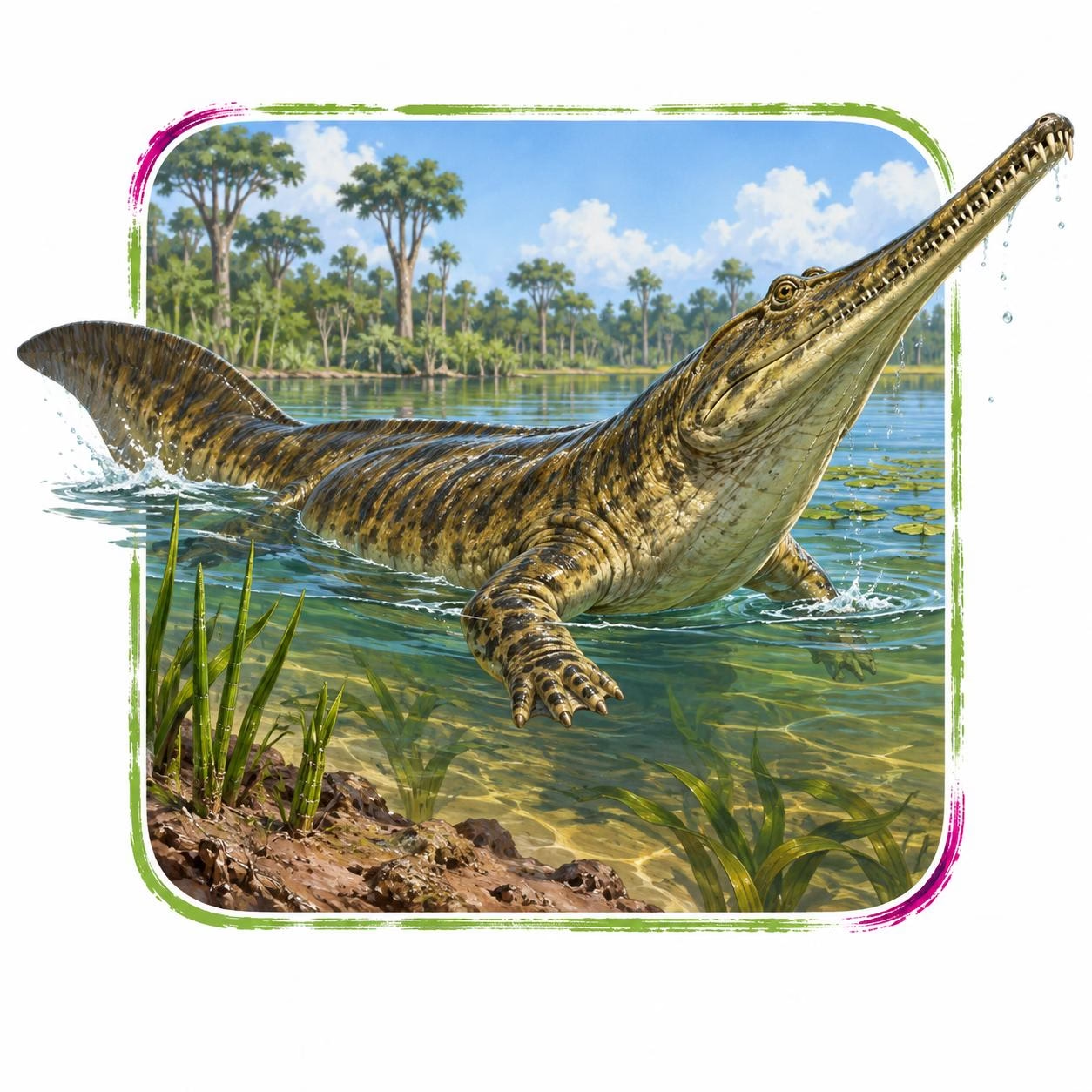
Prionosuchus in its natural Early Permian tropical continental lakes, deep freshwater basins, seasonally wet floodplains, river channels, ponds, and forested wetlands of northeastern Brazil habitat