
Pterodactyl Facts for Kids
“Pterodactyl” is often used casually for any pterosaur, but this page focuses on Pterodactylus antiquus. It was a small short-tailed flying reptile that lived about 150 million years ago around subtropical islands and lagoons in what is now Germany. It was not a dinosaur, bird, or bat, although it lived during the age of dinosaurs and flew on skin-covered wings.
Quick Pterodactyl Facts
- Scientific Name: Pterodactylus antiquus
- Animal Type: Pterosaur and flying reptile
- Time: Late Jurassic, around 150 million years ago
- Fossil Location: Mainly the Solnhofen limestone of Bavaria, Germany
- Adult Wingspan: About 1 metre based on the largest mature material
- Known For: Long pointed jaws, many small teeth, short tail, skin wings, and an enormously lengthened fourth finger
- Likely Diet: Small fish and invertebrates
- Habitat: Warm island, shoreline, and lagoon environments
- Status: Extinct
What You’ll Learn
Learn 10 soaring pterodactyl facts for kids about wing fingers, flying reptiles, long jaws, fossils, and what the word pterodactyl really means, plus a quiz, glossary, and activity
These simple facts are written for kids, parents, teachers, and curious young minds.
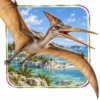
10 Fun Pterodactyl Facts for Kids
1. Pterodactyl Was a Specific Pterosaur
Pterodactylus is one genus within Pterosauria, the great group of extinct flying reptiles. Calling every pterosaur a pterodactyl is like calling every dinosaur Tyrannosaurus.
Kid Decode: The famous nickname belongs properly to one small branch of a much bigger flying family.
2. It Was Not a Dinosaur
Pterosaurs and dinosaurs were close archosaur relatives, but they formed separate evolutionary groups. Pterodactylus flew over dinosaur-age landscapes without being a dinosaur itself.
Kid Decode: Living beside dinosaurs does not turn another reptile into one.
3. Adults Were About One Metre Across
The best evidence suggests an adult Pterodactylus had a wingspan around 1 metre, far smaller than airplane-sized giant pterosaurs. Many known fossils are juveniles and are smaller still.
Kid Decode: The real Pterodactylus was closer to a large modern bird in span than a movie monster.
4. One Giant Finger Supported Each Wing
A hugely lengthened fourth finger formed the main outer support of each wing. A flexible skin-and-tissue membrane stretched from the body along this finger, creating a powered flight surface unlike a bird’s feathered wing.
Kid Decode: Its name means “wing finger” because one finger became a flying framework.
5. The Jaws Held Many Small Teeth
A long, narrow, pointed skull carried numerous slender conical teeth, with smaller teeth farther back. The teeth could grasp small slippery animals rather than grind plants.
Kid Decode: The narrow mouth worked like a toothed pair of feeding tongs.
6. Its Tail Was Very Short
Pterodactylus belonged to the pterodactyloid pterosaurs, which had reduced tails compared with many earlier pterosaurs. It should not be drawn with the long diamond-tipped tail often added to fantasy creatures.
Kid Decode: This flying reptile left the long steering-ribbon tail to some earlier relatives.
7. Light Bones Helped With Flight
Like other flying vertebrates, pterosaurs evolved lightweight skeletons with thin-walled, air-filled bones in many parts of the body. Strong muscles and reinforced wing bones still had to handle the forces of takeoff and flapping.
Kid Decode: Its skeleton balanced low weight with the strength needed to beat large wings.
8. It Probably Walked on All Fours
Pterodactyloid anatomy and trackways from related forms show a four-limbed stance on the ground, using folded wing fingers and hind feet. Pterodactylus was therefore not helpless whenever it landed.
Kid Decode: Folded wings could become front limbs for a four-footed walk.
9. Hatchlings May Have Flown Very Early
Tiny Pterodactylus fossils have adult-like flight structures. Recent study of two storm-injured hatchlings supports the idea that very young individuals could already perform powered flight, though they were vulnerable to severe weather.
Kid Decode: A palm-sized hatchling may have entered the Jurassic sky almost immediately.
10. Fine Lagoon Mud Preserved Delicate Fossils
Solnhofen’s calm, oxygen-poor lagoon sediments buried fragile skeletons before they were destroyed. More than fifty specimens of different sizes have helped scientists separate growth changes from different species.
Kid Decode: Quiet Jurassic mud saved paper-thin bones for scientists 150 million years later.
The Weirdest Pterodactyl Fact
When the first Pterodactylus fossil was described in 1784, scientists had never recognized a pterosaur before. Its strange combination of long finger, membrane wing, reptile skull, and teeth was so unfamiliar that early researchers debated whether it was a marine animal or an airborne reptile.
Try This Pterodactyl Activity
Build a Wing-Finger Model
Trace one hand on paper. Label the thumb and first three fingers as short pterosaur digits, then tape a long paper strip to the fourth finger to represent the enlarged wing finger. Add a triangular paper membrane from the long finger toward a drawn body and ankle. Compare it with a bird wing, where feathers—not one enormous finger—form most of the flight surface.
Quick Pterodactyl Quiz
- Was Pterodactylus a dinosaur? Answer: No, it was a pterosaur.
- When did it live? Answer: During the Late Jurassic, around 150 million years ago.
- What supported the outer wing? Answer: An enormously lengthened fourth finger.
- Did it have teeth? Answer: Yes, many small conical teeth.
- Where were many fossils found? Answer: In the Solnhofen limestone of Bavaria, Germany.
Mini Glossary
- Pterosaur: An extinct flying reptile in the group Pterosauria.
- Jurassic: The geologic period from about 201 to 145 million years ago.
- Wing Membrane: Flexible skin and tissue forming a flight surface.
- Fossil: Preserved remains or evidence of ancient life.
- Pterodactyloid: A mostly short-tailed branch of pterosaurs.
 Leatherback Turtle Facts for Kids
 Wombat Facts for Kids
 Pigeon Facts for Kids
 Beelzebufo Facts for Kids
More Animal Facts for Kids
Visit the full animal facts library or explore a focused animal group.
More Extinct Animal Facts for Kids
Discover dinosaurs, Ice Age giants, prehistoric sea creatures, recently extinct species, and other animals from the past.
Fact check note: Fact checked against Natural History Museum and Field Museum pterosaur guidance; Carnegie Museum of Natural History’s Pterodactylus overview; peer-reviewed revisions of Pterodactylus antiquus anatomy and growth; Solnhofen fossil research; and the 2025 Current Biology study of hatchling flight and storm injuries. Name use, relationships, age, size, wing anatomy, teeth, tail, locomotion, early flight, fossil preservation, and discovery history were cross-checked.

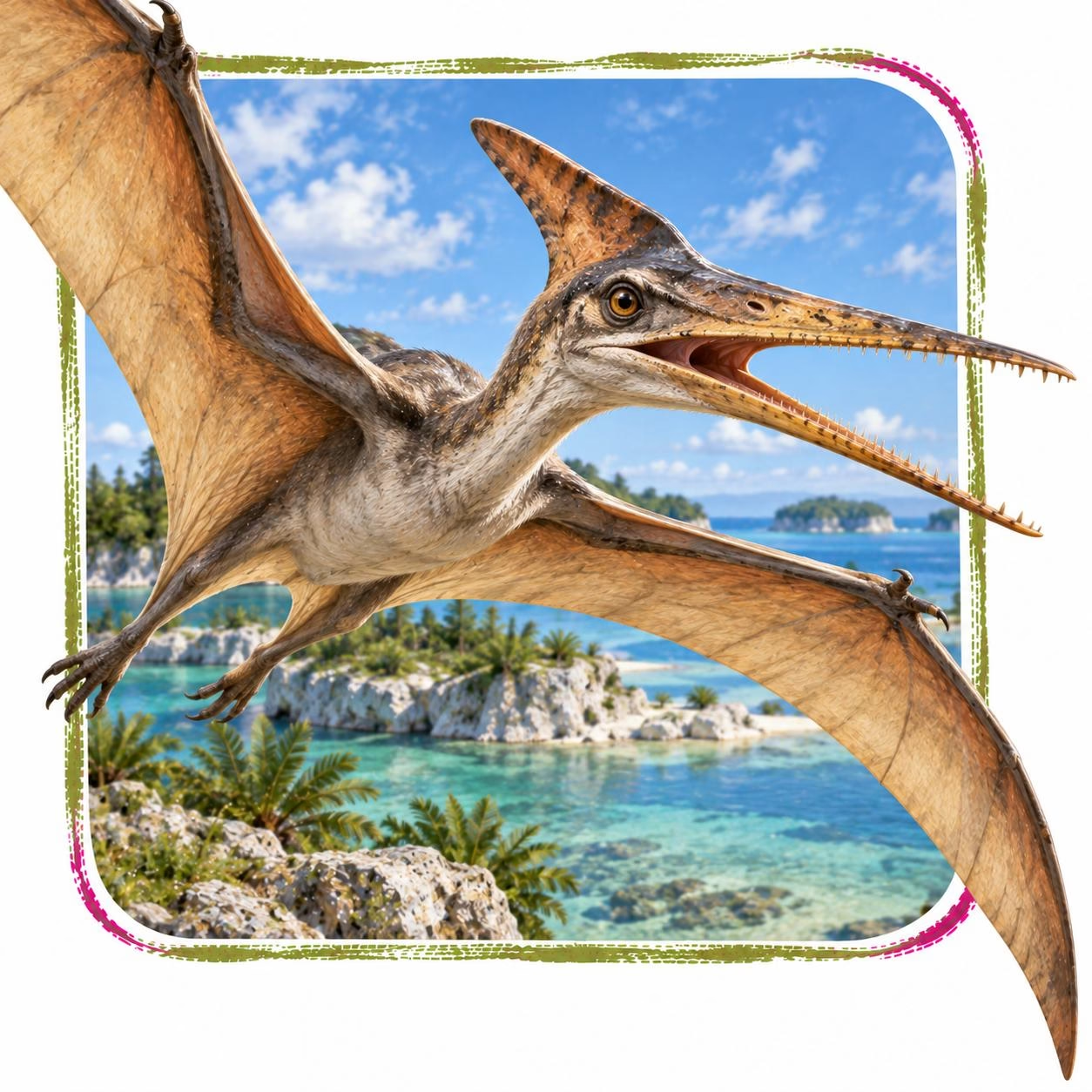
Pterodactyl in its natural Late Jurassic subtropical limestone islands, shorelines, and shallow lagoons of the Solnhofen archipelago habitat