
Rhamphosuchus Facts for Kids
Rhamphosuchus was a gigantic long-snouted crocodilian that lived on the Indian subcontinent during the Neogene. It belonged to the gavialoid branch containing gharials and their relatives, but its jaws were broader and more powerfully built than those of the living fish-specialist gharial. The fossils are mostly incomplete snouts and jaws, so its exact length, body shape, and diet remain partly uncertain.
Quick Rhamphosuchus Facts
- Animal Type: Extinct giant crocodilian
- Group: Gavialoid
- Known For: Huge size, long but robust snout, closely spaced teeth, possible nasal ghara, and South Asian river fossils
- Lived During: Oligocene or Early Miocene to Pliocene, with different species at different times
- Diet: Fish and probably other aquatic or waterside vertebrates
What You’ll Learn
Explore 10 enormous rhamphosuchus facts for kids about its long snout, giant jaws, aquatic life, hunting, and gharial relatives, with a quiz, glossary, and activity
These easy facts are made for kids, parents, teachers, and curious young learners.
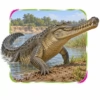
10 Fun Rhamphosuchus Facts for Kids
1. Rhamphosuchus Was a Gavialoid
Rhamphosuchus belonged to the long-snouted crocodilian branch containing the living gharial and many extinct relatives.
Kid Decode: It was a gharial cousin, but one built with a much heavier set of jaws.
2. Scientists Recognise More Than One Species
A 2025 review retained the type species Rhamphosuchus crassidens and moved the older R. pachyrhynchus into the same genus.
Kid Decode: The genus gained a second official giant after a scientific name reshuffle.
3. Rhamphosuchus pachyrhynchus Reached Giant Size
The largest known remains of R. pachyrhynchus indicate a crocodilian roughly 6 to 8 metres long.
Kid Decode: Even the smaller named giant could stretch beyond a delivery truck.
4. Rhamphosuchus crassidens May Have Been Larger
The type species is commonly estimated at roughly 8 to 11 metres, but incomplete material makes the upper figure uncertain.
Kid Decode: Its missing skeleton turns every measuring tape into a cautious hypothesis.
5. The Oldest Estimates Were Far Too Long
Nineteenth-century researchers suggested 15 to 18 metres by scaling incomplete jaws from modern gharials, an approach later rejected.
Kid Decode: The first reconstruction grew a monster partly from mathematics wearing oversized shoes.
6. Its Snout Was Long but Robust
Unlike the nearly parallel-sided snout of a living gharial, the jaws of Rhamphosuchus broadened noticeably toward the rear.
Kid Decode: Its beak-like face started narrow and finished with heavyweight shoulders.
7. Its Teeth Varied in Size
Closely packed tooth sockets held teeth of different sizes, including enlarged teeth near the front of the jaws.
Kid Decode: The tooth row was not one tidy picket fence; several posts were much larger.
8. Its Bite Closed With an Overbite
Many lower teeth fitted inside the upper tooth row rather than interlocking outside it as in living gharials.
Kid Decode: Its jaw shut more like an alligator’s covered bite than a modern gharial’s toothy zipper.
9. It May Have Had a Ghara
Skull anatomy suggests that at least some Rhamphosuchus may have carried a nasal swelling comparable with the ghara of male living gharials.
Kid Decode: A soft-tissue nose knob is possible, but no fossil photograph survived to confirm it.
10. It Was Probably More Than a Fish Specialist
The strong snout and varied teeth suggest a generalist predator able to catch fish and possibly larger vertebrates, though particular bite-marked fossils cannot be assigned with certainty.
Kid Decode: The river menu may have included more than fish, but the chef left no labelled leftovers.
The Weirdest Rhamphosuchus Fact
Rhamphosuchus was once estimated at 15 to 18 metres long, but later research reduced it dramatically; even the smaller estimates still place some individuals among the largest crocodilians known.
Try This Rhamphosuchus Activity
Rhamphosuchus Drawing Activity
Draw Rhamphosuchus waiting in a Neogene South Asian river. Add a huge crocodilian body, long but broadening snout, closely spaced teeth of different sizes, eyes and nostrils above the water, fish, turtles, riverbank mammals, and two length bars comparing the 6–8-metre R. pachyrhynchus estimate with the more uncertain larger R. crassidens.
Quick Rhamphosuchus Quiz
- Was Rhamphosuchus a dinosaur? Answer: No, it was a giant crocodilian.
- Which modern group was it related to? Answer: Gharials and other gavialoids.
- How long may R. pachyrhynchus have grown? Answer: About 6 to 8 metres.
- Why is the exact size uncertain? Answer: The fossils are mainly incomplete skull and jaw pieces.
- Did it certainly eat only fish? Answer: No, its robust jaws suggest a more varied diet was possible.
Mini Glossary
- Crocodilian: A reptile from the group containing crocodiles, alligators, caimans, and gharials.
- Gavialoid: A gharial or one of its extinct evolutionary relatives.
- Longirostrine: Having a long, narrow snout.
- Alveolus: A socket in the jaw that holds a tooth.
- Ghara: A rounded growth on the tip of the snout in adult male living gharials.
 Polecat Facts for Kids
 Osprey Facts for Kids
 Rockhopper Penguin Facts for Kids
 Sinosauropteryx Facts for Kids
More Animal Facts for Kids
Visit the full animal facts library or explore a focused animal group.
More Extinct Animal Facts for Kids
Discover dinosaurs, Ice Age giants, prehistoric sea creatures, recently extinct species, and other animals from the past.
Fact check note: Fact checked with Courville and colleagues’ 2025 taxonomic review of giant longirostrine crocodilians from Pakistan, Head’s 2001 Rhamphosuchus body-size reassessment, Martin’s 2019 review of Siwalik gavialoids, and comparative crocodilian body-size research.

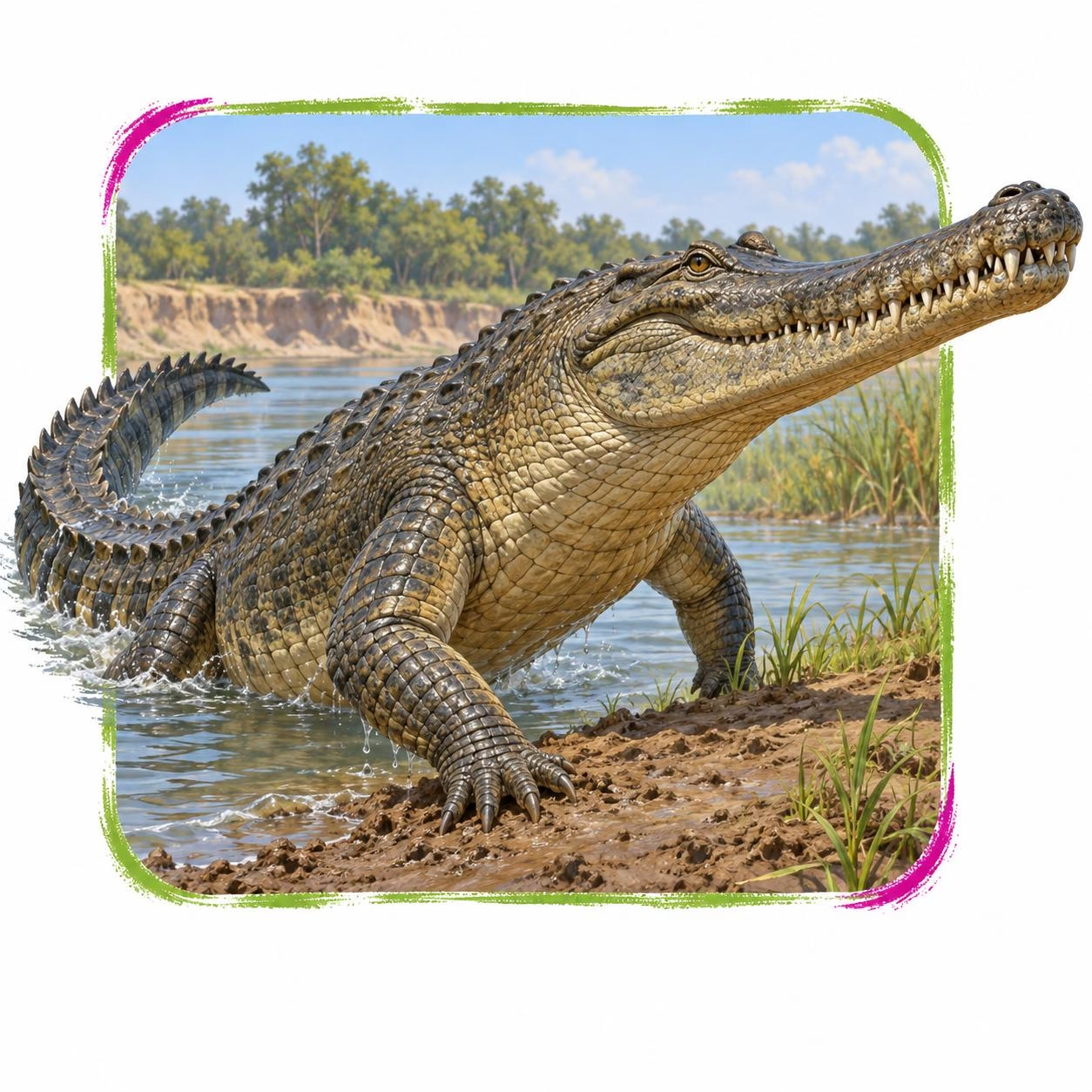
Rhamphosuchus in its natural Neogene rivers, floodplains, lakes, channels, wetlands, and waterside forests of the Siwalik and Bugti regions of the Indian subcontinent habitat