
Samotherium Facts for Kids
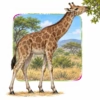
Samotherium was an extinct giraffid that lived across parts of Europe and Asia during the Late Miocene, with related records extending into nearby regions. It was a true member of the giraffe family but was not simply a short modern giraffe. Samotherium major had a neck anatomically intermediate between the short-necked okapi and the extremely long-necked giraffe, while long legs and a pair of ossicones completed its distinctive appearance.
Quick Samotherium Facts
- Animal Type: Extinct giraffid mammal
- Group: Palaeotragine or samothere giraffid
- Known For: Intermediate-length neck, long legs, paired ossicones, mixed-feeding teeth, and Samos fossils
- Lived During: Mainly Late Miocene, roughly 11–5 million years ago
- Diet: Leaves, shoots, herbs, and some grasses
What You’ll Learn
Learn 10 fascinating samotherium facts for kids about its short neck, ossicones, plant diet, and connection to giraffe evolution, with a quiz, glossary, and activity
These simple facts are written for kids, parents, teachers, and curious young minds.
10 Fun Samotherium Facts for Kids
1. Samotherium Was a True Giraffid
Samotherium belonged to Giraffidae, the mammal family containing modern giraffes and okapis.
Kid Decode: It held a genuine giraffe-family passport even though its neck stopped halfway to the modern extreme.
2. Its Neck Was Intermediate in Length
Detailed study of Samotherium major shows a neck longer than an okapi’s but shorter than a modern giraffe’s.
Kid Decode: Its neck occupied the evolutionary middle lane between forest browser and sky-high leaf collector.
3. It Still Had Seven Neck Vertebrae
Like nearly all mammals, Samotherium had seven cervical vertebrae; neck length changed by altering the proportions of those bones rather than adding more.
Kid Decode: The neck grew longer without purchasing a single extra vertebra.
4. Different Neck Bones Changed in Different Ways
The front and rear cervical vertebrae show a mosaic of okapi-like, giraffe-like, and intermediate features.
Kid Decode: Its neck was an anatomical patchwork rather than a simple half-sized giraffe copy.
5. It Had Long Legs
Samotherium had elongated limbs that raised its body well above the ground and helped it reach vegetation.
Kid Decode: The legs joined the upward trend before the neck reached modern giraffe proportions.
6. It Carried a Pair of Ossicones
Many Samotherium skulls bear two permanent bony head structures called ossicones, whose shape varied among species and individuals.
Kid Decode: Its headgear came as one skin-covered pair rather than branching antlers.
7. Ossicones Were Not Antlers
Ossicones developed as separate bone structures that fused with the skull and remained permanently covered by skin in life.
Kid Decode: They stayed attached year after year instead of dropping off after a season.
8. It Was Not Always a Strict Browser
Tooth-wear studies of Samotherium boissieri indicate mixed feeding that included herbaceous plants as well as leaves.
Kid Decode: The menu moved between leafy branches and the greener dishes growing closer to the ground.
9. Its Name Means Beast of Samos
Samotherium was named after the Greek island of Samos, where important fossils were discovered.
Kid Decode: One Aegean island gave this giraffe relative a permanent scientific name tag.
10. It Lived in the Pikermian Biome
Samotherium inhabited Late Miocene landscapes containing open woodland, shrubland, and grassland with a diverse community of large mammals.
Kid Decode: Its neighbours formed a busy mammal mosaic across the sunlit Greco-Iranian world.
The Weirdest Samotherium Fact
Its seven neck bones form a mosaic between okapi and giraffe anatomy, revealing that different parts of the giraffid neck elongated in stages.
Try This Samotherium Activity
Samotherium Drawing Activity
Draw Samotherium walking through a Late Miocene woodland and grassland mosaic. Add long legs, a neck halfway between an okapi and giraffe, one pair of backward-curving ossicones, a long face, leafy branches, herbs, grasses, and a seven-vertebra neck diagram beside silhouettes of an okapi and giraffe.
Quick Samotherium Quiz
- Was Samotherium a true giraffid? Answer: Yes, it belonged to the giraffe family.
- How did its neck compare with those of living giraffids? Answer: It was intermediate between the okapi and giraffe.
- How many neck vertebrae did it have? Answer: Seven.
- What were the bony structures on its head called? Answer: Ossicones.
- What does Samotherium mean? Answer: Beast of Samos.
Mini Glossary
- Giraffid: A member of the mammal family containing giraffes, okapis, and extinct relatives.
- Ossicone: A permanent skin-covered bony structure on the skull of a giraffid.
- Cervical Vertebra: One of the bones forming the neck.
- Mixed Feeder: An herbivore that eats both browse and grass or herbs.
- Pikermian Biome: A Late Miocene Eurasian community of open woodland and grassland mammals.
 Shark Facts for Kids
 Iguana Facts for Kids
 Jackal Facts for Kids
 Tarbosaurus Facts for Kids
More Animal Facts for Kids
Visit the full animal facts library or explore a focused animal group.
More Extinct Animal Facts for Kids
Discover dinosaurs, Ice Age giants, prehistoric sea creatures, recently extinct species, and other animals from the past.
Fact check note: Fact checked with Danowitz and colleagues’ 2015 cervical-anatomy study, Danowitz and colleagues’ 2015 giraffid neck-evolution analysis, Solounias and colleagues’ Samotherium diet research, Hou and colleagues’ ossicone studies, and Marra and colleagues’ 2025 Samotherium boissieri report.

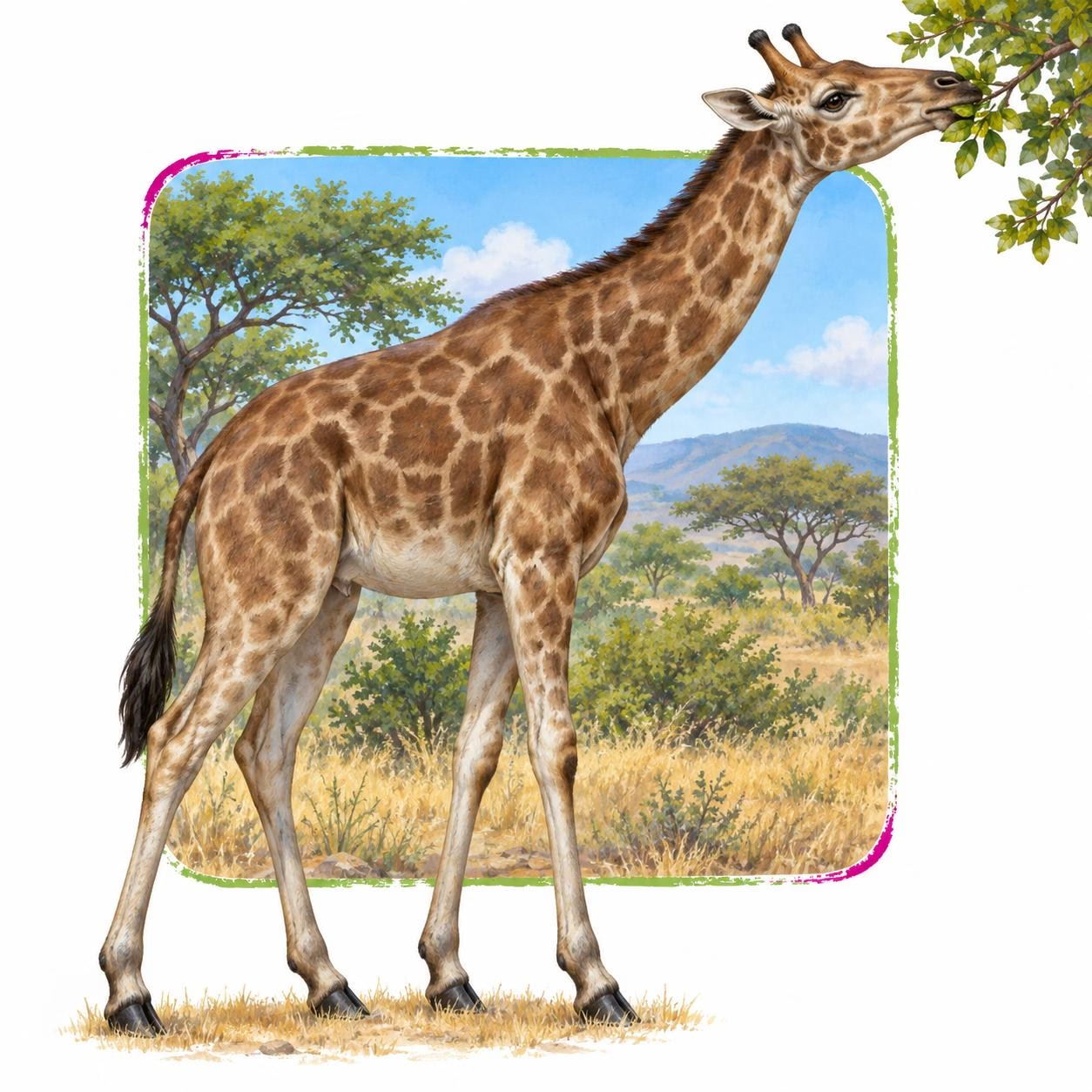
Samotherium in its natural Late Miocene open woodlands, wooded grasslands, shrublands, dry savannas, forest edges, and mixed Pikermian habitats across Eurasia habitat