
Sinomastodon Facts for Kids
Sinomastodon was an elephant-like proboscidean that lived across parts of Asia from the Late Miocene into the Early Pleistocene. It was not a mastodon from the genus Mammut, despite its name meaning Chinese mastodon. Its short lower jaw lacked permanent projecting tusks, while two upper tusks curved gently upward and bunodont molars crushed plant food.
Quick Sinomastodon Facts
- Animal Type: Extinct proboscidean mammal
- Group: Gomphothere-grade elephantoid
- Known For: Short lower jaw, upward-curving upper tusks, bunodont molars, elephant-like body, and Asian fossils
- Lived During: Late Miocene to Early Pleistocene, roughly 7–1 million years ago
- Diet: Plant food; browsing or mixed feeding varied by species and region
What You’ll Learn
Explore 10 fascinating sinomastodon facts for kids about tusks, trunks, plant diets, Asian habitats, and its place among prehistoric elephant relatives, with a quiz, glossary, and activity
These facts use simple language for kids, parents, teachers, and curious young learners.
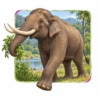
10 Fun Sinomastodon Facts for Kids
1. Sinomastodon Was a Proboscidean
Sinomastodon belonged to Proboscidea, the mammal order containing elephants and many extinct elephant-like relatives.
Kid Decode: It joined the elephant family parade through a branch with its own Asian design.
2. Its Name Means Chinese Mastodon
The name Sinomastodon combines a word for China with mastodon, although it was not a true mastodon of the genus Mammut.
Kid Decode: The name sounds familiar, but the family-tree paperwork tells a different story.
3. It Lived Across Asia
Fossils assigned to Sinomastodon are known from China and other parts of eastern, southern, and southeastern Asia.
Kid Decode: Its fossil trail wandered from cool northern regions toward tropical island landscapes.
4. Its Lower Jaw Was Short
Unlike many earlier gomphotheres, Sinomastodon had a shortened lower jaw rather than a long projecting mandibular symphysis.
Kid Decode: The giant jaw extension had been trimmed back to a more elephant-like outline.
5. It Lacked Permanent Lower Tusks
Adults did not carry the long projecting lower tusks seen in many earlier four-tusked proboscideans.
Kid Decode: The lower tusk department closed while the upper pair kept the spotlight.
6. Its Upper Tusks Curved Upward
The upper tusks were rounded in cross-section, lacked a long enamel band, and curved gently upward.
Kid Decode: Its ivory spears pointed forward with a quiet upward sweep.
7. Its Molars Had Rounded Cusps
Sinomastodon had bunodont cheek teeth with rounded hill-like cusps arranged into transverse ridges.
Kid Decode: Its back teeth looked more like rows of blunt hills than flat grinding files.
8. One Individual Was About Two Metres Tall
A reconstructed Sinomastodon hanjiangensis individual was estimated at about 2.07 metres at the shoulder and roughly 2.1 tonnes.
Kid Decode: It stood elephant-sized without reaching the height of the biggest living elephants.
9. Some Species Were Browsers
Dental microwear from southern Chinese Sinomastodon indicates a browsing diet rich in leaves, twigs, and other soft plant material.
Kid Decode: Tiny scratches on fossil teeth preserved the ghost of an ancient leafy menu.
10. Other Populations Ate More Grass
Stable-isotope evidence from Java suggests that some Sinomastodon populations included much more grass, showing that diet differed across habitats.
Kid Decode: The genus changed its lunch plan as Asian landscapes changed around it.
The Weirdest Sinomastodon Fact
Sinomastodon looked increasingly elephant-like because its lower jaw had shortened and lost permanent tusks, yet its rounded gomphothere-style molars remained.
Try This Sinomastodon Activity
Sinomastodon Drawing Activity
Draw Sinomastodon walking through an Early Pleistocene Asian woodland. Add an elephant-like body, a short lower jaw, no projecting lower tusks, two gently upward-curving upper tusks, a hanging trunk, rounded-cusp molars in a cutaway bubble, leafy branches, patches of grass, and an Asia fossil map.
Quick Sinomastodon Quiz
- Was Sinomastodon a dinosaur? Answer: No, it was a proboscidean mammal.
- What does its name mean? Answer: Chinese mastodon.
- Did adults have long lower tusks? Answer: No, the lower jaw lacked permanent projecting tusks.
- How tall was one reconstructed individual? Answer: About 2.07 metres at the shoulder.
- Did every population eat exactly the same plants? Answer: No, diets ranged from browsing to more grass-rich feeding.
Mini Glossary
- Proboscidean: A mammal belonging to the order containing elephants and their extinct relatives.
- Gomphothere: A member of a diverse group of extinct elephant-like proboscideans.
- Brevirostrine: Having a shortened lower jaw or snout.
- Bunodont: Having molars with rounded cusps.
- Microwear: Tiny scratches and pits on teeth that provide clues about diet.
 American Badger Facts for Kids
 Wolf Facts for Kids
 American Goldfinch Facts for Kids
 Glyptodon Facts for Kids
More Animal Facts for Kids
Visit the full animal facts library or explore a focused animal group.
More Extinct Animal Facts for Kids
Discover dinosaurs, Ice Age giants, prehistoric sea creatures, recently extinct species, and other animals from the past.
Fact check note: Fact checked with Wang and colleagues’ 2012 description of the first Quaternary Sinomastodon skull from China, Zhang and colleagues’ 2017 dental-microwear study, Puspaningrum and colleagues’ 2020 Java isotope research, and Larramendi’s proboscidean body-size analysis.

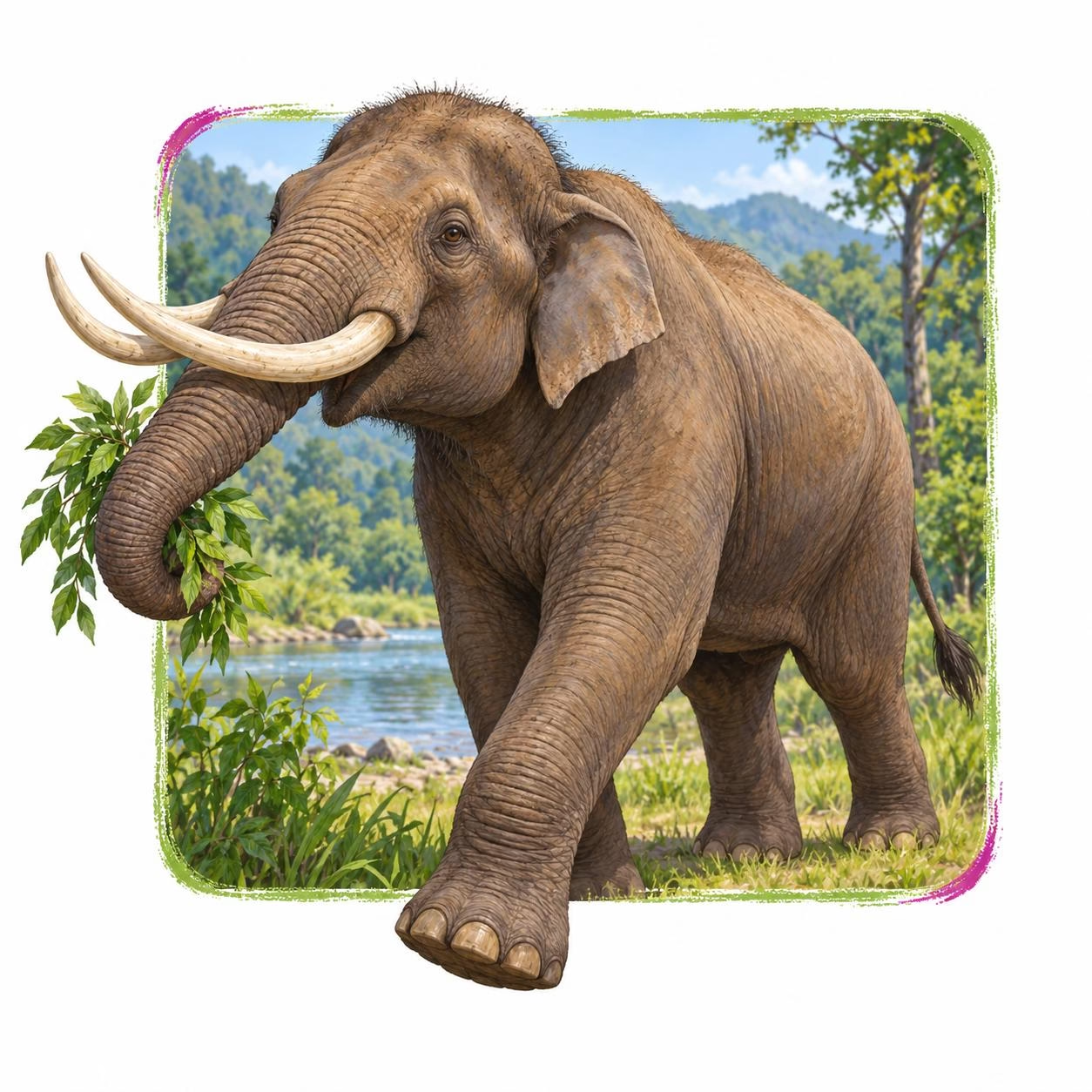
Sinomastodon in its natural Late Miocene to Early Pleistocene woodlands, forest edges, river valleys, wooded grasslands, subtropical lowlands, and tropical Asian habitats habitat