
Sinomegaceros Facts for Kids
Sinomegaceros was a genus of giant deer that lived across central and eastern Asia from the Late Pliocene into the Late Pleistocene. It was related to other giant deer such as Megaloceros, but its antlers had a distinctive broad, flattened brow tine near the base. Species varied greatly in size and antler shape, and ancient DNA suggests that eastern Sinomegaceros and western Megaloceros had a tangled evolutionary history that may have included interbreeding.
Quick Sinomegaceros Facts
- Animal Type: Extinct giant deer
- Group: Megacerine cervid
- Known For: Broad palmate brow tines, large body, robust jaws, and Asian Ice Age fossils
- Lived During: Late Pliocene to Late Pleistocene, roughly 3 million to 12,000 years ago
- Diet: Grasses, herbs, leaves, and other vegetation, varying by species
What You’ll Learn
Discover 10 impressive sinomegaceros facts for kids about huge antlers, deer-like bodies, grazing, Asian habitats, and Ice Age life, with a quiz, glossary, and activity
These facts are explained simply for kids, parents, teachers, and curious little fact-finders.
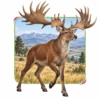
10 Fun Sinomegaceros Facts for Kids
1. Sinomegaceros Was a True Deer
Sinomegaceros belonged to Cervidae, the mammal family containing living deer, elk, moose, and their extinct relatives.
Kid Decode: It was a genuine deer, although some species carried antlers broad enough to resemble portable shields.
2. It Lived Across Asia
Fossils are known from China, Japan, Korea, Siberia, Tajikistan, and other parts of central and eastern Asia.
Kid Decode: Its fossil trail crossed an enormous slice of the continent from mountain basins to cool northern plains.
3. Its Antlers Had Palmate Brow Tines
The first major branch near the antler base widened into a broad, flattened plate, a signature feature of many Sinomegaceros species.
Kid Decode: Its antlers began with a bony hand fan before the main beam continued upward.
4. Some Antlers Were Enormous
A nearly complete Sinomegaceros ordosianus antler has a palmate section about 67 centimetres long and 53 centimetres wide.
Kid Decode: One flattened antler section was broad enough to cover much of a classroom desk.
5. Species Varied Greatly in Size
Published estimates range from about 220 kilograms for Sinomegaceros pachyosteus to more than 500 kilograms for some central Asian giant deer.
Kid Decode: The genus contained heavyweight deer and then several even heavier relatives.
6. Its Lower Jaw Was Very Strong
Sinomegaceros pachyosteus had an unusually deep and thickened lower jaw capable of handling substantial chewing forces.
Kid Decode: Its jaw looked as though an ordinary deer mandible had visited a bone-strengthening workshop.
7. Some Species Were Grass Eaters
Tooth and jaw studies suggest that species such as S. pachyosteus and the Japanese S. yabei were adapted largely to grazing.
Kid Decode: The broad-antlered giant may have spent much of the day mowing ancient grasslands.
8. Ancient DNA Revealed a Family Puzzle
Mitochondrial genomes show a very close relationship between Sinomegaceros and Megaloceros, with the western giant deer nested among eastern genetic lineages.
Kid Decode: The giant-deer family tree behaves less like a tidy ladder and more like antlers crossing in a thicket.
9. The Two Giant-Deer Lineages May Have Interbred
Researchers interpret the mitochondrial pattern as possible gene flow between Sinomegaceros and Megaloceros after their lineages separated.
Kid Decode: Even enormous antlers did not prevent neighbouring giant-deer populations from swapping genes.
10. Humans Butchered One Japanese Species
At Lake Nojiri in Japan, broken Sinomegaceros yabei bones occur with human-made objects and impact marks consistent with marrow extraction.
Kid Decode: An Ice Age meal left cracked leg bones and archaeological clues beside a vanished lake.
The Weirdest Sinomegaceros Fact
Ancient DNA suggests that eastern Sinomegaceros and the western Irish elk lineage were distinct giant deer that later interbred, tangling their mitochondrial family tree.
Try This Sinomegaceros Activity
Sinomegaceros Drawing Activity
Draw Sinomegaceros on an Ice Age Asian grassland. Add a large deer body, long legs, a robust neck, antlers with broad palmate brow tines, grasses, distant mountains, and small comparison panels showing a modern deer, Megaloceros, and a cracked Lake Nojiri leg bone.
Quick Sinomegaceros Quiz
- Was Sinomegaceros a true deer? Answer: Yes, it belonged to the deer family.
- Where did it live? Answer: Central and eastern Asia.
- What was unusual about its antlers? Answer: The brow tine widened into a broad palmate plate.
- Did every species have the same size and diet? Answer: No, both varied across the genus.
- What did ancient DNA suggest? Answer: Sinomegaceros and Megaloceros were closely related and may have interbred.
Mini Glossary
- Cervid: A member of the deer family.
- Megacerine: A giant-deer relative with specialised antlers.
- Palmate: Broad and flattened like the palm of a hand.
- Pachyostosis: Unusual thickening and increased density of bone.
- Mitogenome: The complete genetic material contained in mitochondria.
 Vicuña Facts for Kids
 Javan Rhino Facts for Kids
 Mole Facts for Kids
 Dorudon Facts for Kids
More Animal Facts for Kids
Visit the full animal facts library or explore a focused animal group.
More Extinct Animal Facts for Kids
Discover dinosaurs, Ice Age giants, prehistoric sea creatures, recently extinct species, and other animals from the past.
Fact check note: Fact checked with Xiao and colleagues’ 2023 Sinomegaceros mitogenome study, van der Made and Tong’s 2008 giant-deer phylogeny, Fu and colleagues’ 2022 jaw-biomechanics study, Mei and colleagues’ 2023 S. ordosianus antler description, and Lake Nojiri archaeological research.

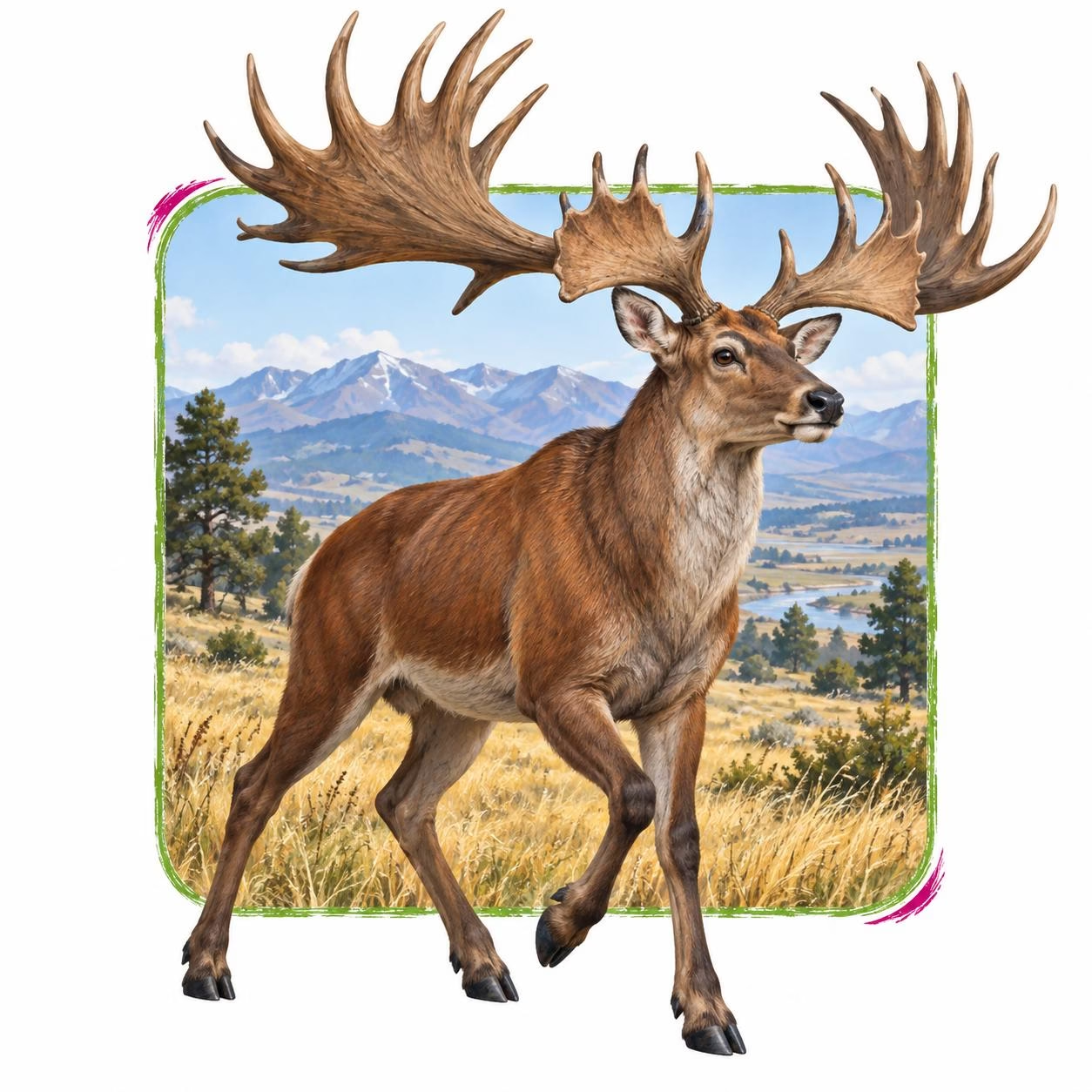
Sinomegaceros in its natural Late Pliocene and Pleistocene grasslands, open woodlands, steppe, river valleys, mountain basins, and cool temperate plains across central and eastern Asia habitat