
Steneosaurus Facts for Kids
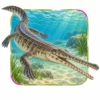
Steneosaurus is a famous historical name once used for many long-snouted Jurassic crocodyliforms. Modern researchers found that those animals did not form one natural genus, and the poorly preserved type specimen could not be diagnosed clearly. Most recent studies therefore treat Steneosaurus as an invalid or doubtful genus and place its former species into better-defined genera such as Macrospondylus, Charitomenosuchus, Neosteneosaurus, and others.
Quick Steneosaurus Facts
- Animal Type: Historical name for extinct teleosauroid crocodyliforms
- Group: Thalattosuchian taxonomy puzzle
- Known For: Long narrow snouts, many teeth, body armor, coastal life, and a major scientific reclassification
- Lived During: Jurassic, though the old name covered species from several times and places
- Diet: Fish and other animals, varying among former species
What You’ll Learn
Learn 10 intriguing steneosaurus facts for kids about long snouts, sharp teeth, swimming, Jurassic seas, and the fossil puzzle around its name, with a quiz, glossary, and activity
These simple facts are written for kids, parents, teachers, and curious young minds.
10 Fun Steneosaurus Facts for Kids
1. Steneosaurus Is a Historical Genus Name
Scientists used Steneosaurus for nearly two centuries, but most modern revisions no longer consider it a useful valid genus.
Kid Decode: The name became a museum drawer that collected far too many unrelated fossils.
2. Its Name Means Narrow Lizard
Steneosaurus comes from Greek words referring to narrowness and lizard, matching the long slender snouts of many fossils once placed there.
Kid Decode: The name advertised the snout before anyone untangled the family tree.
3. The Type Species Was Steneosaurus rostromajor
A 2020 study formally selected S. rostromajor as the type species because nineteenth-century authors had never clearly fixed one under modern naming rules.
Kid Decode: After almost two hundred years, the genus finally received an official lead specimen.
4. The Type Fossil Is a Chimera
The material labelled as the type combines pieces that do not securely belong to one individual and may not even represent one taxon.
Kid Decode: Its most important fossil was a puzzle box containing pieces from more than one picture.
5. The Fossil Could Not Diagnose a Genus
Poor preservation and a lack of unique features led researchers to call S. rostromajor a nomen dubium and Steneosaurus undiagnostic.
Kid Decode: The specimen could not provide a reliable fossil password for identifying the genus.
6. It Became a Wastebasket Taxon
Almost every teleosauroid species was placed in Steneosaurus at some point, except members of the long-established genus Machimosaurus.
Kid Decode: For generations, an uncertain marine crocodile often landed in the Steneosaurus basket.
7. Former Species Now Have New Names
Animals once called Steneosaurus bollensis, S. leedsi, and S. edwardsi are now commonly called Macrospondylus bollensis, Charitomenosuchus leedsi, and Neosteneosaurus edwardsi.
Kid Decode: Several familiar fossils received fresh name tags after the scientific cupboard was reorganised.
8. Many Were Long-Snouted Fish Eaters
Numerous former Steneosaurus species had tubular snouts and many pointed teeth, adaptations suited to seizing fish and small aquatic prey.
Kid Decode: Their jaws worked like toothy fishing tongs sweeping through Jurassic water.
9. They Wore Crocodile-Like Armor
Teleosauroids generally carried rows of osteoderms and scaly skin, unlike the smooth unarmored bodies of fully marine metriorhynchids.
Kid Decode: These coastal swimmers kept the armored jacket their ocean-going cousins discarded.
10. There Was No Single Steneosaurus Body
Because the old genus mixed slender fish catchers, larger generalists, and animals from different times and regions, one exact size, diet, or reconstruction cannot fit them all.
Kid Decode: Steneosaurus was less one creature and more an entire costume rack.
The Weirdest Steneosaurus Fact
A genus used in books and museums for almost two centuries was dismantled because its type fossil was a poorly preserved chimera that could not identify one clear animal.
Try This Steneosaurus Activity
Steneosaurus Taxonomy Activity
Draw an old museum cabinet labelled Steneosaurus with several long-snouted teleosauroids inside. Add arrows moving them into new drawers labelled Macrospondylus, Charitomenosuchus, and Neosteneosaurus. Include a magnified view of the mixed type fossil and a detective-style “nomen dubium” clue card.
Quick Steneosaurus Quiz
- Is Steneosaurus widely accepted as a valid modern genus? Answer: No, most recent revisions treat it as invalid or undiagnostic.
- What was its type species? Answer: Steneosaurus rostromajor.
- What is a fossil chimera? Answer: A specimen assembled from parts belonging to more than one source.
- Why was Steneosaurus called a wastebasket taxon? Answer: Many different teleosauroids were placed in it.
- Name one former species with a new genus. Answer: Macrospondylus bollensis, Charitomenosuchus leedsi, or Neosteneosaurus edwardsi.
Mini Glossary
- Teleosauroid: An armored marine or coastal crocodyliform from the thalattosuchian group.
- Type Species: The species that fixes the meaning of a genus name.
- Chimera: A fossil specimen mistakenly combining parts from different organisms or sources.
- Nomen Dubium: A doubtful scientific name based on material that cannot be identified clearly.
- Wastebasket Taxon: A name used to hold many poorly understood or unrelated species.
 Matamata Turtle Facts for Kids
 Common Warthog Facts for Kids
 Cowfish Facts for Kids
 Monolophosaurus Facts for Kids
More Animal Facts for Kids
Visit the full animal facts library or explore a focused animal group.
More Extinct Animal Facts for Kids
Discover dinosaurs, Ice Age giants, prehistoric sea creatures, recently extinct species, and other animals from the past.
Fact check note: Fact checked with Johnson, Young and Brusatte’s 2020 paper Emptying the wastebasket, Johnson and colleagues’ 2020 teleosauroid phylogeny, Spindler and colleagues’ 2021 teleosauroid skin evidence, and Young and colleagues’ 2024 history and nomenclature of Thalattosuchia.

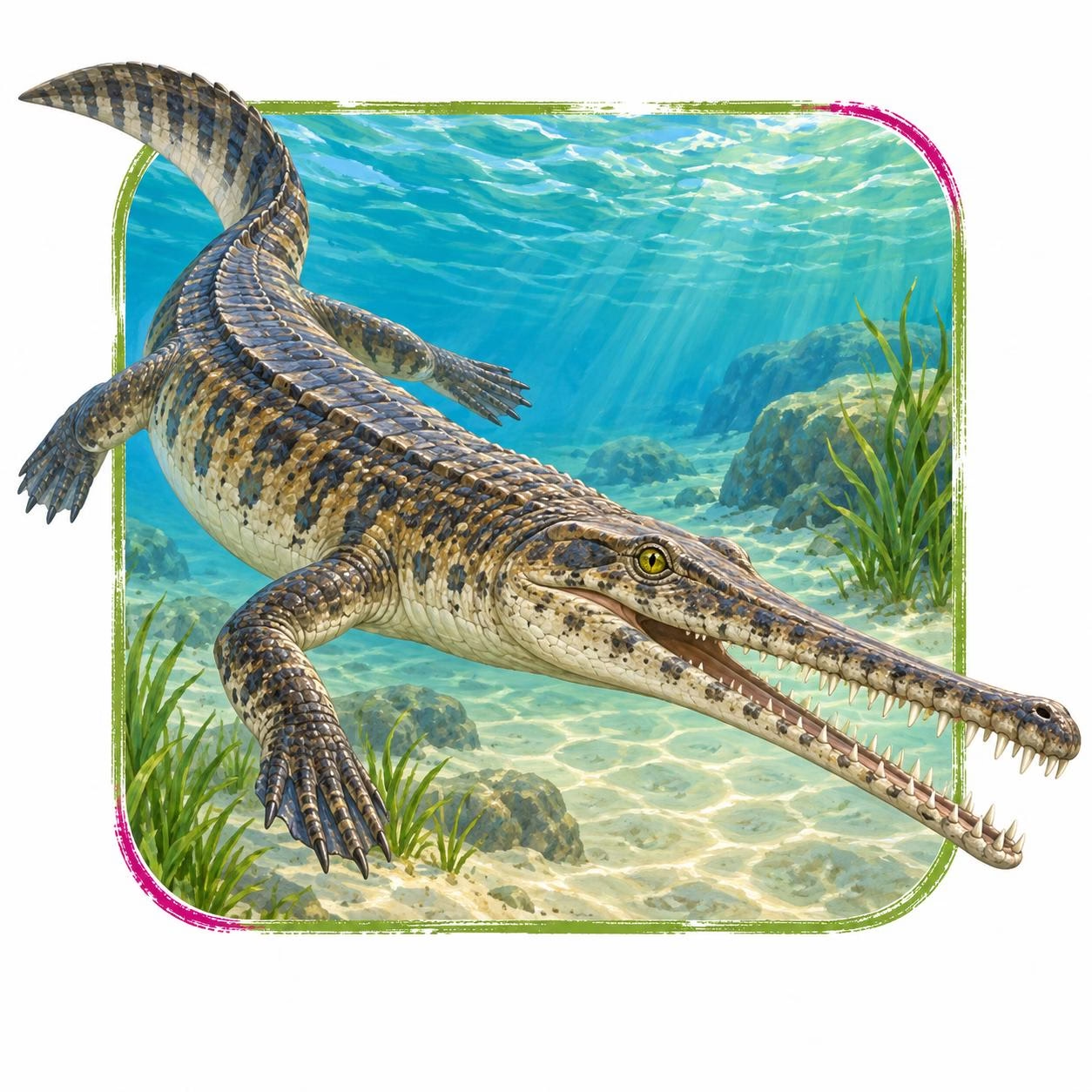
Steneosaurus in its natural Jurassic coastal seas, lagoons, estuaries, brackish channels, rivers, and shallow marine environments represented by the many former species habitat