
Stethacanthus Facts for Kids
Stethacanthus was a shark-like prehistoric fish that lived before and during the Carboniferous Period. It was not a dinosaur, but a cartilaginous fish famous for a strange flat dorsal fin on mature males. That fin looked a bit like an ironing board covered with tiny tooth-like spikes.
Quick Stethacanthus Facts
- Animal Type: Extinct cartilaginous fish
- Group: Stethacanthid shark-like fish
- Known For: Ironing-board-shaped dorsal fin, tooth-like skin spikes, shark-like body, small size, and ancient ocean fossils
- Lived During: Late Devonian to Carboniferous Period
- Diet: Small fish, brachiopods, crinoid pieces, and other small sea animals
What You’ll Learn
Learn 10 unusual stethacanthus facts for kids about its strange dorsal structure, shark-like body, fins, teeth, and ancient oceans, with a quiz, glossary, and activity
These simple facts are made for kids, parents, teachers, and curious young minds.
10 Fun Stethacanthus Facts for Kids
1. Stethacanthus Was Not a Dinosaur
Stethacanthus was a shark-like cartilaginous fish, not a dinosaur or marine reptile.
Kid Decode: It belonged to the ancient fish department, where fins got very experimental.
2. It Had a Strange Dorsal Fin
Mature male Stethacanthus had a flat-topped dorsal fin that looked like an anvil or ironing board.
Kid Decode: This fish looked like it was carrying a tiny table on its back.
3. Its Fin Had Tiny Spikes
The odd fin was covered with small tooth-like structures called denticles.
Kid Decode: Its back fin had a built-in bristle brush. Prehistoric fashion was bold.
4. Its Head Had Denticles Too
Some Stethacanthus fossils show tooth-like denticles on the head as well as the fin.
Kid Decode: Head spikes and back brush? This fish believed in accessories.
5. It Was Shark-Like
Stethacanthus looked somewhat like a shark, but it belonged to extinct shark-like fish groups, not modern sharks.
Kid Decode: Shark-ish, ancient, and gloriously odd.
6. It Had a Cartilage Skeleton
Like sharks and rays, Stethacanthus had a skeleton made mostly of cartilage instead of hard bone.
Kid Decode: Cartilage is bendy, so the harder parts get most of the fossil fame.
7. It Ate Small Sea Animals
Stethacanthus was probably a carnivore that ate small fish and other little marine animals.
Kid Decode: This was not a giant ocean monster. It was a small snack hunter.
8. It Lived in Ancient Seas
Stethacanthus fossils are known from places including North America, Europe, Asia, and Australia.
Kid Decode: This little weird-fin fish had a surprisingly wide fossil passport.
9. The Fin May Have Been for Display
Scientists think the strange fin may have been used for display, species recognition, or other behavior, but the exact purpose is still debated.
Kid Decode: The ironing-board fin is still holding onto some fossil secrets.
10. Young Stethacanthus Are Not Well Known
Scientists do not know every detail about baby Stethacanthus, but young animals would have started much smaller than adults.
Kid Decode: The baby chapter is still hiding under the ancient sea rug.
The Weirdest Stethacanthus Fact
Stethacanthus had a flat dorsal fin covered in tiny tooth-like spikes, making it one of the strangest shark-like fishes ever found.
Try This Stethacanthus Activity
Stethacanthus Drawing Activity
Draw a Stethacanthus swimming through a Carboniferous sea. Add a shark-like body, flat ironing-board dorsal fin, tiny denticles, spiky head patch, small fish prey, crinoids, fossil pieces, bubbles, waves, and a “spine-brush fish” label.
Quick Stethacanthus Quiz
- Was Stethacanthus a dinosaur? Answer: No, it was a shark-like fish.
- What was strange about mature male Stethacanthus? Answer: They had an ironing-board-shaped dorsal fin.
- What covered the strange fin? Answer: Tiny tooth-like denticles.
- Was Stethacanthus made with a bony skeleton or cartilage skeleton? Answer: Cartilage skeleton.
- What did Stethacanthus likely eat? Answer: Small fish and other small sea animals.
Mini Glossary
- Cartilaginous Fish: A fish with a skeleton made mostly of cartilage instead of bone.
- Dorsal Fin: A fin on the back of a fish.
- Denticle: A tiny tooth-like scale found on shark-like fish skin.
- Carboniferous: A period after the Devonian when many shark-like fishes lived.
- Carnivore: An animal that eats meat.
 Flying Squirrel Facts for Kids
 Chamois Facts for Kids
 Black-Capped Chickadee Facts for Kids
 Kaprosuchus Facts for Kids
More Animal Facts for Kids
Visit the full animal facts library or explore a focused animal group.
More Extinct Animal Facts for Kids
Discover dinosaurs, Ice Age giants, prehistoric sea creatures, recently extinct species, and other animals from the past.
Fact check note: Fact checked with Stethacanthus fossil references, symmoriiform shark spine-brush research, Carboniferous shark-like fish summaries, and trusted paleontology education sources.

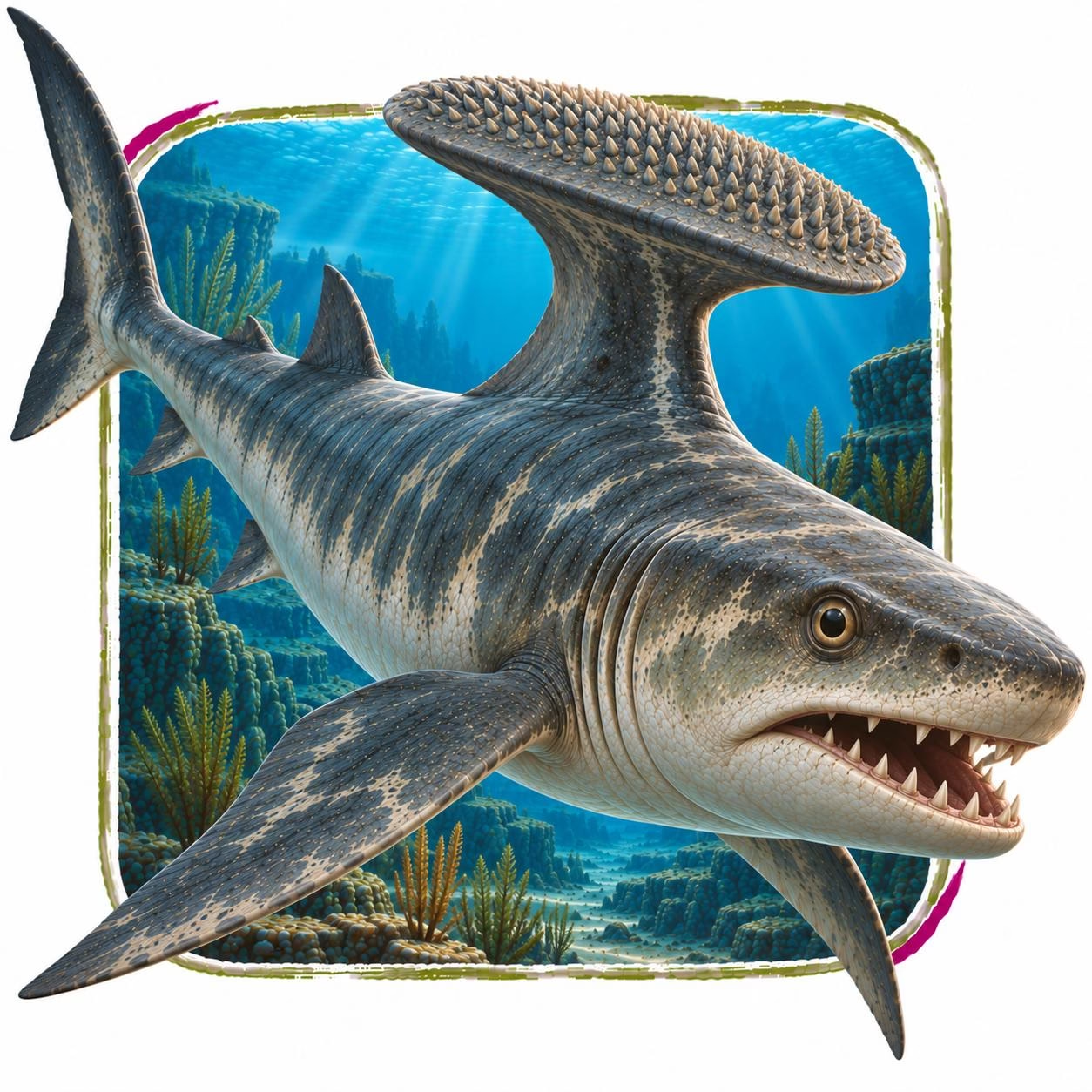
Stethacanthus in its natural Devonian and Carboniferous oceans, reefs, shallow seas, and coastal waters habitat